Qantas Braces for 800 Million Dollar Fuel Surge Amid Middle East Conflict as Airline Pivots to European Routes

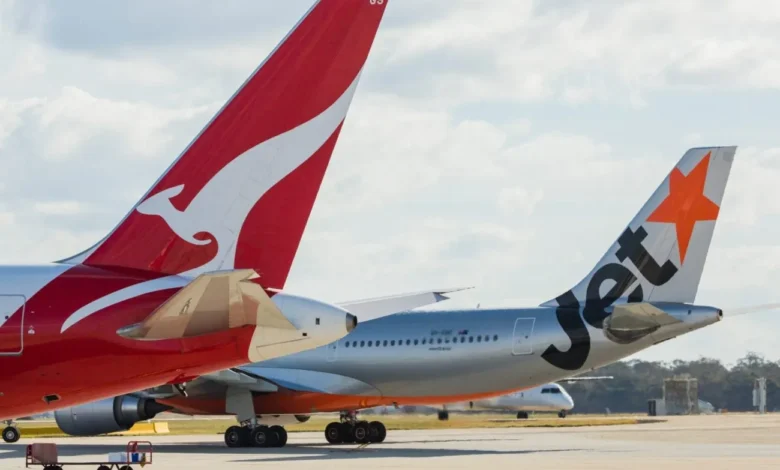
Qantas Airways Limited has issued a stark warning to investors and the global aviation industry, cautioning that a dramatic spike in jet fuel prices—precipitated by the escalating conflict in the Middle East—is projected to increase its annual fuel bill by as much as A$800 million ($569 million). The Australian flag carrier, often regarded as a bellwether for the Asia-Pacific aviation sector, announced on Tuesday that the sudden volatility in energy markets has necessitated an immediate and aggressive restructuring of its flight schedules. To mitigate the financial impact, the airline will reduce its capacity in the United States and domestic Australian markets while simultaneously redeploying its fleet to capitalize on higher-yielding European routes. This strategic realignment comes as the industry grapples with a geopolitical landscape that has fundamentally altered the economics of long-haul travel in a matter of weeks.
The primary driver of this fiscal distress is the sharp appreciation in jet fuel costs, which have more than doubled since the outbreak of hostilities on February 28. While Qantas has historically maintained a robust hedging program to protect against fluctuations in the price of Brent crude oil, the current crisis has exposed a critical vulnerability: the "crack spread," or the cost of refining crude oil into usable aviation kerosene. As refining margins soar globally, the airline finds itself exposed to costs that traditional crude-based hedging instruments cannot fully offset.
The Financial Impact of the Middle East Crisis
The projected A$800 million increase represents a significant blow to Qantas’s bottom line, occurring at a time when the carrier was seeking to solidify its post-pandemic recovery. According to the company’s latest financial disclosures, the airline has successfully covered approximately 90% of its crude oil exposure for the remainder of the fiscal year. However, hedging the price of the raw commodity provides only a partial shield. The real challenge lies in the refining process.
Jet fuel refining margins have surged from a historical average of approximately $20 per barrel to unprecedented levels as global refinery capacity remains constrained and supply chains are rerouted to avoid conflict zones. Qantas executives noted that because there is no liquid market to hedge the refining component effectively at these scales, the airline must absorb the majority of these "margin" costs directly. This imbalance means that even if crude oil prices stabilize, the price of the finished jet fuel remains prohibitively high, creating a persistent drag on operational margins.
Market analysts suggest that the A$800 million figure could fluctuate depending on the duration of the conflict and the stability of global shipping lanes. Nevertheless, the scale of the warning has already prompted a reassessment of the airline’s earnings guidance for the second half of the year. Investors are closely watching how the carrier manages its "fuel pass-through" strategy—essentially how much of these costs will be transferred to consumers through higher ticket prices and fuel surcharges.
Strategic Realignment: Cutting US and Domestic Services
In response to the mounting fuel bill, Qantas is implementing a tactical shift in its network geography. The airline confirmed it would be trimming capacity on several key routes, most notably in the United States and within the Australian domestic market. The decision to scale back U.S. operations marks a significant departure from the carrier’s recent expansionist strategy in North America.
The U.S. market, while high-volume, has become increasingly competitive, with several American carriers increasing their trans-Pacific capacity. By reducing its presence on these routes, Qantas aims to exit lower-yielding segments where fuel costs are currently outpacing revenue growth. Domestically, the airline is also tightening its belt. The Australian internal market is highly sensitive to price increases; as Qantas raises fares to cover fuel costs, demand in the leisure sector often softens. By reducing domestic frequency, the airline hopes to maintain high load factors and protect its yields.
The aircraft freed up from these reductions will not sit idle. Instead, Qantas is redeploying its long-range fleet, including the Boeing 787 Dreamliner and the Airbus A380, to its European network. Despite the increased distance and associated fuel burn, European routes are currently offering significantly higher yields. Demand for premium travel between Australia and major European hubs like London, Paris, and Rome remains resilient, allowing the airline to command prices that can better absorb the inflated cost of kerosene.
Chronology of the Energy Surge
To understand the current predicament, one must look at the timeline of events that led to this market destabilization:
- Pre-February 28: Jet fuel prices were trading within a manageable range, supported by a gradual recovery in global refinery output following the pandemic-era shutdowns. Refining margins hovered around the $18–$22 per barrel mark.
- February 28: The commencement of major hostilities in the Middle East sent immediate shockwaves through the Brent crude market. Within 48 hours, prices spiked by over 15% as traders priced in the risk of supply disruptions through the Strait of Hormuz.
- March 5–15: As the conflict intensified, global energy markets began to focus on the "middle distillates" (diesel and jet fuel). Reports of damaged refinery infrastructure and the redirection of tankers around the Cape of Good Hope led to a localized shortage of jet fuel in the Asia-Pacific and European regions.
- Late March: Qantas and other major carriers began internal reviews of their fuel spend. It became clear that crude hedging was insufficient to cover the "crack spread" jump, which had now surpassed $40 per barrel in some regional markets.
- The Tuesday Announcement: Qantas officially notified the Australian Securities Exchange (ASX) of the A$800 million impact and the subsequent network changes.
Official Responses and Industry Sentiment
The reaction from the aviation industry and government stakeholders has been one of cautious concern. While Qantas remains profitable, the suddenness of the fuel surge has highlighted the fragility of the sector’s recovery.
A spokesperson for Qantas stated, "The current geopolitical environment has created an unprecedented disconnect between crude oil prices and the price of jet fuel. While our hedging program is performing as intended regarding the raw commodity, the surge in refining margins is a global phenomenon that requires a proactive management of our network. Our priority is to ensure we are flying our aircraft on the routes where the return on investment is highest, allowing us to maintain our financial strength while continuing to serve our customers."
Industry bodies, such as the International Air Transport Association (IATA), have echoed these sentiments. IATA analysts have noted that fuel typically accounts for 25% to 30% of an airline’s total operating costs. A doubling of this expense in such a short period is unsustainable without significant adjustments to capacity and pricing. "What we are seeing with Qantas is a textbook example of an airline using operational flexibility to counter macroeconomic shocks," said an IATA representative. "The shift toward European routes suggests that the ‘premium’ end of the market is currently the only segment capable of sustaining these cost levels."
Technical Analysis: The Crack Spread Problem
The crux of the issue for Qantas is a technical market mechanic known as the "jet fuel crack spread." This represents the difference between the price of a barrel of crude oil and the price of the refined product. Historically, this spread was predictable, allowing airlines to hedge only the crude oil component and remain relatively safe.
However, several factors have caused the crack spread to decouple from crude prices:
- Refinery Constraints: Global refining capacity has not kept pace with the post-pandemic surge in travel demand. When a geopolitical crisis occurs, the limited capacity is prioritized for diesel (used in military and industrial applications), further squeezing the supply of jet fuel.
- Logistics and Insurance: The cost of transporting refined fuel has skyrocketed. War-risk insurance premiums for tankers operating in or near the Middle East have increased tenfold, a cost that is passed directly to the airline at the pump.
- Regional Imbalances: Australia, which has limited domestic refining capacity, is particularly vulnerable to these shifts. The country relies heavily on imports from Singapore and North Asia, making it a "price taker" in the global market.
Broader Implications and Future Outlook
The implications of Qantas’s announcement extend beyond its own balance sheet. If the "Spirit of Australia" is forced to cut capacity and raise fares, it is highly likely that its competitors, including Virgin Australia and Rex, will face similar pressures. This could lead to a general increase in the cost of travel for Australians, potentially dampening consumer spending in other sectors of the economy.
Furthermore, the pivot to Europe highlights a growing trend in global aviation: the "flight to yield." As operational costs rise, airlines are increasingly abandoning the "low-cost, high-volume" model for long-haul travel, focusing instead on high-margin business and premium economy passengers. This could result in a permanent reduction in affordable international travel options if fuel prices remain elevated over the long term.
Looking ahead, Qantas is expected to accelerate its investment in more fuel-efficient aircraft. The carrier’s "Project Sunrise"—the plan to fly non-stop from Sydney to London and New York—relies on the Airbus A350-1000, which offers significantly better fuel burn than the older aircraft in the fleet. While these planes are not due to arrive in significant numbers for several years, the current crisis provides a powerful incentive for the airline to modernize its fleet as quickly as possible.
In the short term, the market will be looking for Qantas’s full-year results to see how successfully the capacity shifts have mitigated the A$800 million hit. If the strategy proves successful, it may provide a blueprint for other carriers caught in the crossfire of global energy volatility. For now, however, the message from Qantas is clear: the era of cheap fuel is over, and the map of global aviation is being redrawn in response.