Ashton and Michael Kutcher Open Up About Surviving Childhood Health Crises, Sibling Rivalry, and the Road to Reconnection

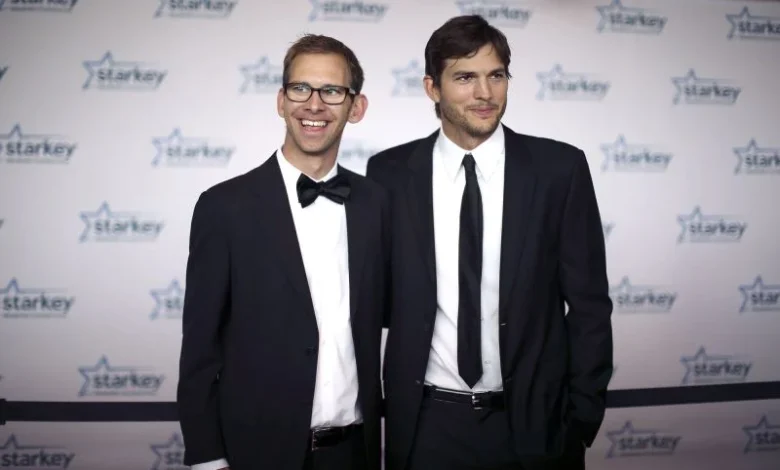
The complexities of twin dynamics have long fascinated psychologists and the public alike, but few pairs have navigated a journey quite as harrowing, public, and ultimately redemptive as Ashton and Michael Kutcher. In a rare and deeply vulnerable joint appearance on the Paramount+ docuseries The Checkup with Dr. David Agus, the brothers sat down to unpack decades of shared trauma, health battles, professional disparities, and emotional estrangement. Hosted by Dr. David Agus—who also serves as Ashton’s personal physician—the episode provided a rare window into the private lives of two men whose early bond was forged in medical crises and tested by the glaring light of Hollywood stardom.
Throughout the deeply emotional interview, the Kutchers addressed everything from Michael’s lifelong battle with cerebral palsy and a near-fatal heart failure in their youth to Ashton’s recent struggles with the autoimmune disorder vasculitis. More importantly, they offered a raw examination of the psychological toll that fame, survivor’s guilt, and miscommunication took on their relationship, culminating in a hard-won mutual respect that has redefined their adulthood.
A Childhood Defined by Medical Crises
Long before Ashton Kutcher became a household name starring in the late-1990s and early-2000s sitcom That ’70s Show, and long before he established himself as a prominent Silicon Valley venture capitalist and anti-human-trafficking activist, his world revolved entirely around the intensive care unit. Born five minutes after his brother, Michael Kutcher faced severe medical hurdles from infancy, highlighted by a diagnosis of cerebral palsy, a neurological disorder that affects muscle tone and movement.
However, the defining crisis of their childhood arrived when the boys were teenagers. Michael contracted viral myocarditis, a dangerous inflammation of the heart muscle that caused his heart to swell to three to four times its normal size and ultimately fail.
The gravity of the situation was etched into Ashton’s memory as he recounted visiting his brother in the hospital during a critical moment. Fighting back tears during the interview, the actor recalled walking into Michael’s hospital room and immediately sensing that the situation had turned fatal.
"I go in the room and I’m like, ‘Whoa,’” Ashton said. “I’m like… ‘Everything is not ok.’ And he flatlines in the room and I know that noise because now I’ve been visiting occasionally."
The psychological weight of that moment drove Ashton to a dark place. Overwhelmed by the imminent loss of his twin, the future actor confessed that he momentarily contemplated leaping from a hospital balcony, entertaining the desperate notion that his own heart could be harvested and transplanted into his dying brother’s chest.
Fortunately, modern medicine intervened in the nick of time. Michael received a life-saving heart donor match within a startling 24-hour window, undergoing a successful heart transplant that granted him a second chance at life. Yet, the medical hurdles did not end there. Years later, Michael was forced to undergo open-heart surgery after doctors discovered a dangerous blood clot, compounding a lifetime of physical adversity that few teenagers or young adults could fathom enduring.
Survivor’s Guilt and the Shadow of Hollywood Stardom
While Michael was fighting for his life through successive surgical procedures, Ashton’s life took a dramatically different trajectory. Discovered by a modeling scout in Iowa, Ashton relocated to New York and Los Angeles, rapidly securing high-profile modeling campaigns and landing a breakout television role on That ’70s Show.
Almost overnight, Ashton was thrust into the blinding spotlight of international celebrity. But as his bank account grew and his face appeared on magazine covers and television screens across the globe, the actor was consumed by a profound sense of survivor’s guilt.
“How do I get to be this lucky?” Ashton recalled asking himself. Reflecting on the stark disparity in their fates, he added, “For my brother… to be born with cerebral palsy, then have a heart transplant, then have this random blood clot, these things that you’re just like, ‘Who has to go through that?’”
This disparity created an unspoken emotional barrier between the brothers. Ashton, out of profound empathy and guilt, began treating Michael with kid gloves, viewing him through a lens of perpetual fragility. However, this protective stance—driven by love—inadvertently diminished Michael’s autonomy.
The turning point came when Michael delivered a blunt, necessary rebuke that forever altered their dynamic.
“He looked at me and he said, ‘Every time you feel sorry for me, you make me less,’” Ashton shared. “‘He said, ‘This is the only life I’ve ever known, so stop feeling sorry for the only thing I have.’ And that then created an entire shift back to where I think we are today, which is straight up equals again.”
Navigating Resentment and Jealousy
Despite resolving the friction caused by Ashton’s pity, the brothers faced another significant hurdle: professional jealousy and the suffocating nature of Ashton’s fame. For Michael, watching his twin brother become a global celebrity brought complicated feelings of inadequacy and resentment.
During their conversation with Dr. Agus, Michael candidly admitted that he drifted away from his brother because he struggled to cope with the glaring inequality in public attention.
“There was a moment when I viewed him as receiving more attention than I was,” Michael said. “That kind of drove me down to a place where I was jealous.”
The psychological burden of living in the shadow of a famous sibling is well-documented by family therapists, but the added layer of physical disabilities made Michael’s journey uniquely challenging. However, maturity and open communication eventually pierced the emotional armor Michael had built around himself.
“The brothers talked it through,” Michael noted, explaining how he managed to reconcile his feelings. “And once I took all of the fame and everything out of it, I was able to just, you know, come back to him.”
Compounding these interpersonal trials was a public relations misstep that tested their boundaries in the media eye. Years prior, Ashton publicly revealed Michael’s cerebral palsy diagnosis during a television interview without consulting him first. At the time, Michael had chosen to keep his medical condition private, managing his public life on his own terms.
When Dr. Agus brought up the incident, Ashton expressed genuine contrition, admitting that he was entirely unaware his brother viewed the diagnosis as a secret. Fortunately, even this boundary violation was smoothed over through honest dialogue, reflecting the robust foundation of forgiveness the twins had built over a lifetime.
Broader Impact and the Power of Advocacy
Today, both Kutchers have channeled their personal adversities into platforms for advocacy and public health education. Michael has embraced his identity as a prominent advocate for individuals with cerebral palsy and organ donation awareness, using his platform to dismantle stigmas surrounding disabilities and champion the life-saving importance of heart transplants.
Meanwhile, Ashton has continually used his platform to speak openly about health vulnerabilities—most notably his public battle with vasculitis, a rare autoimmune disease that temporarily impaired his vision, hearing, and equilibrium. By pulling back the curtain on their medical histories and relational fractures, the Kutcher twins have contributed to a broader cultural conversation surrounding chronic illness, the psychological complexities of caregiving, sibling dynamics, and the hidden costs of sudden fame.
The Checkup with Dr. David Agus serves as a clinical and human exploration of resilience, proving that even the deepest rifts caused by trauma, guilt, and celebrity can be mended through radical honesty, mutual accountability, and unconditional familial love. For Ashton and Michael Kutcher, the journey from the edge of tragedy to the stability of adulthood has culminated in what they value most: standing shoulder-to-shoulder, as true equals.
Related posts: