The ongoing tension between federal immigration enforcement agencies and progressive judicial and executive actions has reached a critical flashpoint, highlighted by high-profile legal battles over prolonged immigration detentions, executive pardons, and accusations of judicial activism. In a development that has reignited fierce debates across the United States regarding national security, the separation of powers, and public safety, Department of Homeland Security (DHS) General Counsel James Percival recently issued a sharp warning concerning what he termed an "epidemic of judicial activism." This condemnation followed a federal judge’s decision in California to order the release of a documented MS-13 murder suspect while removal proceedings were actively underway.
Percival and other administration officials argue strenuously that individuals flagged and wanted for violent crimes, particularly cartel-affiliated or transnational gang-related offenses such as murder, must remain securely inside immigration detention facilities throughout the entirety of their removal proceedings. However, this California case represents only one front in a sprawling, multi-jurisdictional legal war between the federal government and state-level officials who oppose aggressive immigration enforcement crackdowns. Parallel to the disputes over violent criminal aliens, a major legal showdown at the highest levels of the American judiciary has similarly been upended by executive pardons, stalling a landmark Supreme Court test on noncitizen bond rights and prolonged detentions.
The Supreme Court Case and the Impact of Executive Pardons
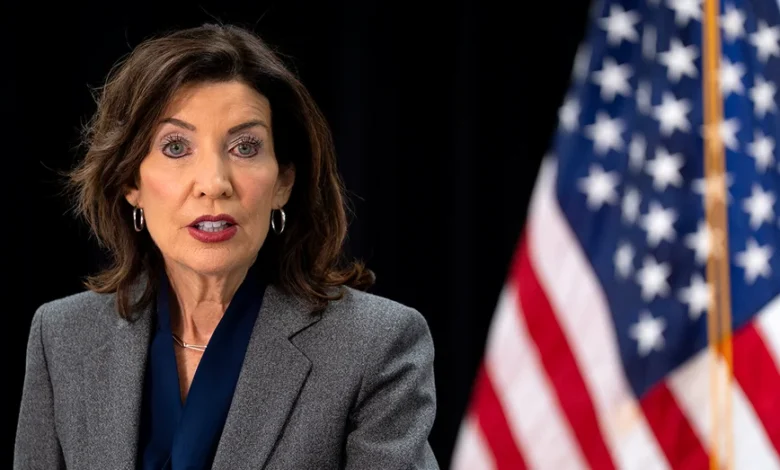
The legal landscape surrounding immigration detention shifted dramatically when the Supreme Court of the United States announced it would no longer hear oral arguments in a pivotal case centered on the bond rights of noncitizens detained for lengthy periods. The high court ruled the case, Genalo v. Black, effectively moot after New York Democratic Governor Kathy Hochul issued a full pardon to a lawfully present Dominican citizen who had previously pleaded guilty to second-degree assault.

Governor Hochul pardoned Keisy Guerrero Mariano—identified in court records simply as "Keisy GM"—in late August. This executive action effectively scuttled the Trump administration’s appeal to the Supreme Court. The administration had asked the high justices to affirm that noncitizens, including lawful permanent residents holding green card status, do not possess an inherent legal right to a bond hearing during prolonged periods of administrative detention, provided they have committed crimes that officially mandate deportation under federal law.
Governor Hochul, a vocal critic of the Trump administration’s hardline immigration enforcement agenda and deportation crackdowns, executed the pardon precisely as the administration’s legal briefs were due. Solicitor General John Sauer formally acknowledged to the Supreme Court that the case was indeed moot, though he emphasized that the administration would aggressively seek an "alternative vehicle" to challenge the underlying legal precedent. Sauer indicated that the administration intends to locate a suitable pending case to allow the Supreme Court to definitively resolve the scope of Fifth Amendment due process rights in immigration detentions during its 2026-2027 term.
Chronology of a Legal Battle: The Mariano and Black Cases
The lawsuit that ultimately wound its way to the highest court in the land centered on the administrative challenges brought by two primary plaintiffs: Keisy Guerrero Mariano and Carol Williams Black, a Jamaican national with lawful standing in the United States. Both men were convicted criminals who had been taken into federal custody by U.S. Immigration and Customs Enforcement (ICE).
The timeline of Mariano’s interactions with the immigration enforcement apparatus spans more than a decade:

- 2015: Mariano is convicted of second-degree assault in New York State, serving a designated term of imprisonment that renders him legally removable under federal immigration statutes.
- 2020: Following the completion of his state sentence, ICE officers officially arrest Mariano, placing him into administrative immigration detention to initiate removal proceedings.
- November 2021: U.S. District Judge John P. Cronan of the Southern District of New York denies Mariano’s habeas corpus petition, upholding the government’s authority to hold him without bond.
- 2022: Mariano is released from ICE custody after spending nearly two years detained, benefiting from a sweeping nationwide federal injunction that required the release of select detainees due to mounting COVID-19 health risks within correctional facilities.
- May 2024: In a major appellate ruling, the U.S. Court of Appeals for the Second Circuit overrules Judge Cronan’s earlier decision. The appeals court rules that the federal government is constitutionally mandated to grant noncitizens an individualized bond hearing once administrative detention becomes "unreasonably long," declaring that failing to do so violates the Fifth Amendment’s due process clause.
- June 2025: The Supreme Court agrees to hear the government’s appeal of the Second Circuit’s ruling.
- August 2025: New York Governor Kathy Hochul issues a full pardon to Mariano. Because the criminal conviction underpinning his mandatory deportation and detention status is legally erased by the pardon, the basis for the federal government’s detention dissolves, rendering the Supreme Court case moot.
Compounding the mootness of the Supreme Court docket, the co-plaintiff in the litigation, Carol Williams Black—who was convicted in New York in 2000 of sexually abusing a minor under the age of 11—departed the United States entirely and filed a formal court declaration verifying that he would not seek re-entry into the country, prompting the high court to dismiss his portion of the proceedings as well.
Reactions and Criticism from Legal Experts
The strategic use of state-level executive pardons to short-circuit federal immigration appeals has provoked sharp rebukes from legal scholars and state attorneys general across the country, who view the practice as an end-run around constitutional separation of powers and public safety enforcement.
Iowa Solicitor General Eric Wessan took to social media to voice his stark disapproval of the maneuver. "Pretty wild to fully pardon an aggravated felon to (1) stop the felon from getting deported and (2) stop the Supreme Court from ruling on an issue," Wessan posted online, noting the irony that the contentious litigation had persisted for years through the federal court system. Wessan praised Solicitor General Sauer’s pledge to continue fighting the underlying constitutional doctrine established by the Second Circuit, while posing a rhetorical question that echoed broader conservative concerns: "I wonder how many non-American felons Governors like Hochul will choose to fully pardon and free to avoid them facing consequences for their actions."
The controversy follows a string of similar friction points between state executives and federal immigration authorities. Earlier, the Department of Homeland Security publicly condemned a Minnesota state board for unanimously granting a pardon to an undocumented immigrant who had been convicted of three separate assault charges. Critics argue that utilizing state clemency powers to shield individuals with criminal records from federal removal creates a dangerous jurisdictional loophole that undermines national immigration enforcement priorities.

Broader Implications for Immigration Policy and Judicial Authority
The intersection of state executive clemency and federal immigration law carries profound implications for the future of national border security and interior enforcement. Under the U.S. Constitution, the federal government maintains exclusive authority over immigration and naturalization. However, states retain broad sovereign powers to issue pardons for state-level criminal convictions. When state governors utilize clemency specifically to negate the criminal predicates used by federal agencies like ICE to mandate deportation, it creates a direct constitutional and operational friction point.
For the Trump administration, establishing a definitive precedent regarding prolonged immigration detention is a cornerstone of its broader enforcement strategy. The administration contends that dangerous noncitizens, particularly those with histories of violent felonies, gang affiliations, or sexual offenses, pose an ongoing risk to public safety and should not be released into domestic communities simply because removal proceedings are protracted through complex litigation.
Conversely, civil rights advocates and immigration defense organizations maintain that indefinite or prolonged detention without access to a bond hearing constitutes a violation of fundamental constitutional due process protections guaranteed under the Fifth Amendment, regardless of an individual’s immigration or criminal history.
As the Department of Homeland Security continues to push back against judicial rulings that mandate bond hearings or facilitate the release of high-profile criminal suspects—such as the recent California case involving the MS-13 murder suspect—the legal battles over the boundaries of executive authority, judicial activism, and immigration enforcement are virtually guaranteed to return to the Supreme Court docket in upcoming terms.