The Great School Experiment: How ProPublica Reporters Exposed the Lack of Oversight in the Private Education Sector

It began as a casual question and a flicker of curiosity uttered during a meeting of ProPublica journalists who this year are reporting on publicly funded private schools. The newsroom was engaged in a deep dive into the rapid expansion of private education across the United States, specifically examining the surge of institutions operating out of unconventional spaces—ranging from barns and farmhouses to co-working hubs and residential parks. As these institutions increasingly rely on taxpayer-funded vouchers and state-sponsored scholarship programs, the investigative team began to question the integrity of the regulatory framework governing these entities. The fundamental question posed by an editor—"What if ProPublica tried to establish a private school?"—quickly evolved from a hypothetical prompt into a rigorous journalistic investigation.
The objective was not to operate an educational institution, but to test the thesis that in many American jurisdictions, the barriers to entry for opening a private school are virtually nonexistent. For long-time education reporters, the experiment served as a litmus test for state-level oversight, attempting to determine whether there are any meaningful safeguards to prevent unqualified individuals from establishing schools and, in some cases, accessing public funds to finance their operations.
The Landscape of Modern Private Education
The context for this investigation is a significant shift in the American educational landscape. In recent years, numerous states have aggressively pursued school choice initiatives. According to data from the National Center for Education Statistics and various state-level policy reports, the proliferation of voucher programs—often styled as Education Savings Accounts (ESAs)—has provided a financial lifeline to a burgeoning private school market.
However, as ProPublica’s broader reporting has indicated, this rapid growth has not been matched by an equivalent increase in regulatory scrutiny. In states like Arkansas, West Virginia, and North Carolina, the transition from an idea to an accredited, state-recognized, or even publicly funded school can often be completed with little more than a filing fee and a basic registration form. This lack of oversight has prompted concerns among educators and policymakers alike regarding student safety, the quality of instruction, and the potential for the misappropriation of public resources.
Chronology of the Experiment
The team modeled their approach on historical precedents of investigative "stunts," such as the 1970s Chicago "Mirage Tavern" investigation, where journalists operated a bar to expose systemic corruption, and John Oliver’s 2015 effort to highlight tax-exempt loopholes by founding a church.

To maintain ethical standards, the team established a rigid set of ground rules:
- Transparency: They would not use aliases. Every application used official newsroom contact information, and in some cases, they explicitly disclosed their identity as journalists.
- No Enrollment: They had no intention of accepting students, ensuring that no real children would be impacted by the experiment.
- Fiscal Responsibility: They would terminate any process that required them to use public resources or violate the law for personal gain.
The experiment was launched in three states, with partnerships formed between ProPublica and local investigative outlets: the Arkansas Times, Mountain State Spotlight, and The Assembly.
By June 2026, the team began filing paperwork. In Arkansas, the process was startlingly streamlined. After paying a $45 fee and affirming that the school would adhere to the state requirement of displaying an American flag, the "ProPublica-Arkansas Times Curiosity Academy" was legally recognized. The Secretary of State’s office issued a certificate of organization shortly thereafter. When the team investigated the possibility of tapping into public funds as a "microschool," they found that the application process took roughly ten minutes and required neither a background check nor a demonstration of fiscal stability or educational curriculum.
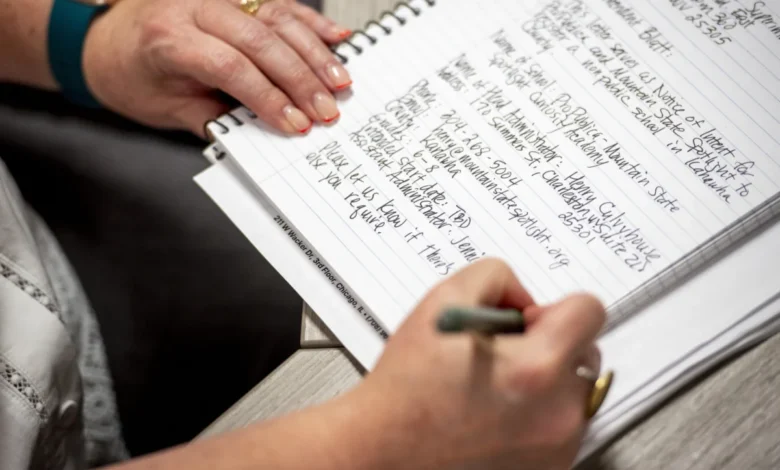
In West Virginia, the process proved similarly minimalist. Reporters hand-wrote the required information and submitted it to the state. The requirement for proving educational competence was limited to a copy of a college transcript from the 1990s. West Virginia officials confirmed that they maintain no mechanism to deny a microschool based on the qualifications of its operator.
In North Carolina, the team encountered a slight hurdle regarding safety inspections. While they could use the address of a partner brewery to meet the requirement for a physical facility with sanitation reports, the realization that they would eventually need to involve state fire and health inspectors led them to halt the process, as they refused to strain public resources for a fabricated project.
Regulatory Disparities and Official Responses
The responses from state officials highlight the stark divide between traditional public school requirements and those applied to the growing private microschool sector. When asked about the lack of vetting, representatives from state departments of education generally maintained that their role is to facilitate parental choice rather than act as a gatekeeper for school quality.

Kaelin Clay, a spokesperson for the Arkansas Department of Education, noted that the state reviews applications to ensure they meet basic statutory requirements, but emphasized that the underlying philosophy of the voucher program is to provide families with the "freedom to choose" their learning environment. Similarly, a spokesperson for the West Virginia Department of Education stated that the agency "does not approve or deny the operation of microschools for any reason, including the qualifications of the owner/operator," citing a total lack of legal authority for such oversight.
Broader Implications and Policy Analysis
The ability of journalists to successfully register "Curiosity Academies" in multiple states without facing meaningful vetting procedures raises significant questions about the future of education policy. From a public policy standpoint, the implications are two-fold:
- Safety and Accountability: Without mandatory background checks, facility inspections, or curriculum reviews, there is a legitimate concern that vulnerable students could be placed in environments that are not only academically deficient but potentially unsafe.
- Fiscal Integrity: As states funnel millions of dollars in taxpayer-funded vouchers into private entities, the absence of financial oversight creates a moral hazard. Without rigorous auditing, the risk of fraud or the mismanagement of public funds increases significantly.
Critics of current voucher legislation argue that the "freedom of choice" mantra has been used to dismantle essential protections. Supporters, however, contend that regulation is a form of government overreach that hinders the innovation and agility that microschools provide. The ProPublica experiment serves as a data point in this ongoing debate, suggesting that the current regulatory pendulum may have swung too far toward deregulation, leaving the public sector—and the students it serves—exposed to unforeseen risks.
Moving Forward
As the ProPublica team begins to shutter their "academies," the lasting impact of their work lies in the documentation of the ease with which the system can be navigated. By securing an official certificate of organization and receiving guidance from state employees on how to access public funds, the journalists have provided a clear, evidence-based demonstration of the current regulatory environment.
The experiment concludes with a call for public engagement. Through the launch of a dedicated quiz—"Do you have what it takes to open a school?"—ProPublica is inviting the public to engage with the administrative reality of these policies. The project underscores a critical lesson in modern journalism: sometimes, the most effective way to report on a system is to briefly inhabit it. As policymakers continue to deliberate the future of school choice, the findings from this investigation will likely remain a central reference point for those calling for increased accountability in the private education sector. Whether states will respond with new, more robust legislative frameworks remains an open question, but the "Curiosity Academies" have succeeded in proving that the barrier to entry is, quite literally, just a few minutes of paperwork and a $45 fee.