The Battle Over Climate Liability: How Federal Court Rulings Are Reshaping State Efforts to Make Big Oil Pay

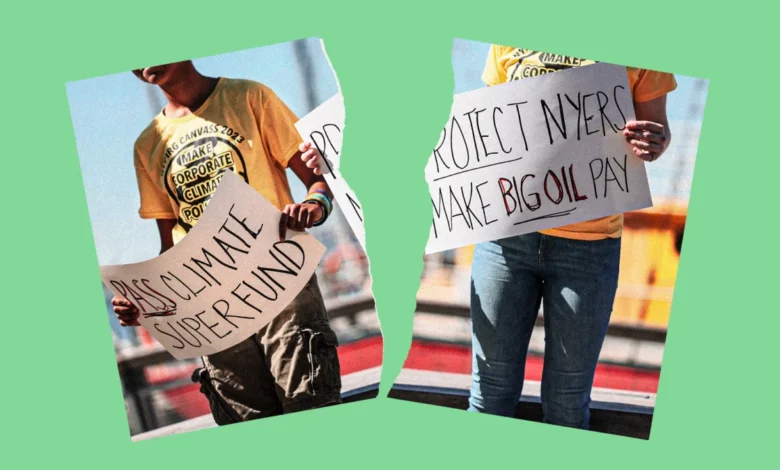
The legal landscape regarding climate change accountability has undergone a seismic shift this week, as a federal judge in New York issued a definitive ruling striking down the state’s Climate Change Superfund Act. This decision, delivered on the fourth day of New York’s annual Climate Week, marks a significant victory for the Trump administration and a coalition of fossil fuel interests, effectively stalling a legislative movement designed to shift the financial burden of climate adaptation from taxpayers to major energy corporations.
Judge P. Kevin Castel ruled that the New York law—which would have required oil and gas giants to pay $75 billion over 25 years to fund infrastructure and disaster recovery—was unconstitutional. The court reasoned that the state legislation was preempted by the federal Clean Air Act and impermissibly interfered with the federal government’s exclusive authority to manage foreign affairs. This ruling mirrors a similar decision handed down just weeks prior by Judge Brenda Sannes, further solidifying a judicial trend that prioritizes federal regulatory supremacy over state-level climate initiatives.
The Genesis of the Climate Superfund Movement
The "polluter pays" model, which gained significant traction in 2024, is rooted in the legislative framework of the 1980s federal Superfund statute, originally designed to hold industrial entities accountable for the cleanup of hazardous waste sites. State lawmakers, primarily in Democratic-leaning jurisdictions, sought to apply this logic to the climate crisis. The premise is straightforward: as extreme weather events—ranging from catastrophic flooding to record-breaking heat waves—become more frequent and costly, the companies historically responsible for the majority of greenhouse gas emissions should contribute to the recovery costs.
The momentum for these bills accelerated following the 2023 legislative sessions, where lawmakers in Vermont, Minnesota, Washington, and Connecticut began drafting their own versions of climate superfund laws. Proponents argued that municipal budgets were being stretched to the breaking point by the need to upgrade bridges, roads, and storm drainage systems to withstand the impacts of a warming planet. By forcing fossil fuel companies to pay into a dedicated state fund, legislators hoped to protect taxpayers from bearing the entirety of these "externalized" climate costs.
A Chronology of Legal and Legislative Conflict
The legal pushback against these state laws has been swift and well-funded. The timeline of this conflict reveals a coordinated effort by industry groups and federal agencies:
- 2023: Vermont experiences record-breaking flash flooding, prompting state lawmakers to fast-track climate liability legislation. Similar initiatives are introduced in New York and Minnesota.
- 2024: New York formally enacts its Climate Change Superfund Act. Meanwhile, the U.S. Chamber of Commerce and the American Petroleum Institute launch legal challenges against Vermont’s version of the law.
- Early 2025: The U.S. Department of Justice (DOJ) elevates its involvement, filing motions for summary judgment against both New York and Vermont, arguing that state laws are a form of unconstitutional overreach.
- May 2025: The Trump administration moves to shutter federal climate data repositories, including the NOAA Billion-Dollar Weather and Climate Disasters database, which had previously provided the data backbone for state-level climate litigation.
- September 2026: Two federal judges in New York issue back-to-back rulings invalidating the state’s legislation, citing federal preemption and foreign policy interference.
The Economic Burden of Climate Disasters
The data supporting the necessity of these funds remains compelling despite the legal setbacks. According to records archived by Climate Central after the federal government ceased reporting, Minnesota alone faced 62 confirmed weather or climate disaster events exceeding $1 billion in damages between 1980 and 2024.
State Representative Athena Hollins, a leader in Minnesota’s legislative push, has noted that the state could face upwards of $20 billion in climate-related infrastructure costs by 2040—a figure equivalent to nearly one-third of the current state budget. These costs are not merely abstract projections; they represent the tangible decline of agricultural productivity and the degradation of the outdoor recreation sector, both of which are central to the state’s economy. Similar pressures are being felt in Connecticut, where the legacy of Hurricane Sandy in 2012 served as a stark warning of the vulnerability of coastal infrastructure to rising sea levels and intensified storm surges.
Official Responses and the Stance of the Justice Department
The federal government has adopted a position of strict opposition to state-level climate litigation. In a statement following the New York ruling, DOJ official Adam Gustafson characterized the court’s decision as a necessary check on state power, stating that the federal government—not individual states—is responsible for setting national policy on global pollution.
However, critics point to a clear contradiction in this stance. In February 2026, the Environmental Protection Agency (EPA) rescinded its own authority to regulate greenhouse gas emissions, effectively creating a regulatory vacuum. This creates a "catch-22" for states: they are prohibited by the courts from taking action because the federal government is supposedly in charge, yet the federal government has simultaneously dismantled its own capacity to address the problem.
Industry groups, including the American Petroleum Institute, have consistently framed these lawsuits as "anti-energy" and a threat to national economic stability. They argue that climate change is a global phenomenon that cannot be addressed through piecemeal state-level taxation of individual companies.
Broader Implications for Future Litigation
The recent rulings in New York have created a "legal roadmap" that opponents of climate regulation are likely to replicate in other jurisdictions. However, the path forward remains complex.
State lawmakers in Washington and Vermont remain defiant. Washington State Representative Shaun Scott views the judicial setbacks not as a defeat, but as a strategic indicator of where to fortify future legislation. By analyzing the "landmines" identified by Judge Castel, proponents believe they can draft more resilient bills that specifically address state-level impacts while avoiding the pitfalls of foreign policy or broad federal preemption arguments.
The most critical test remains the upcoming Supreme Court case, Suncor Energy v. Boulder. While the specific legal questions in that case differ from the superfund statutes, a broad ruling by the Supreme Court regarding the scope of federal versus state climate liability could either provide a definitive end to these state-led efforts or open a new window for legal maneuvers.
The Grassroots vs. The Lobbying Machine
A comprehensive report from Brown University’s Climate and Development Lab highlights the disconnect between public sentiment and the political reality. Across the U.S., polling data consistently shows a 3-to-1 ratio of support for climate superfund legislation among the public. In Vermont, 12,000 petition signatures were collected in a state with a population of only 650,000, underscoring the significant grassroots pressure on lawmakers.
Yet, the Brown report also emphasizes that industry lobbying significantly outweighs pro-climate advocacy in the halls of state legislatures. The influence of these behind-the-scenes interactions is often what dictates the failure or success of a bill before it even reaches a floor vote.
Despite the current legal climate, proponents like Vermont State Senator Anne Watson argue that the necessity of the legislation will only grow more apparent. "The costs of climate change are falling on residents and municipalities that simply cannot afford it," Watson said. "We are not giving up. It is a matter of time before the industry is held accountable."
As the legal battles continue, the central tension remains unresolved: how should the immense costs of a global environmental crisis be distributed within a federalist system? While the courts have currently sided with the fossil fuel industry, the fiscal reality of climate change continues to mount at the local level, ensuring that the push for "polluter pays" legislation will remain a defining feature of the American political landscape for the foreseeable future.
Related posts: