Lindsay Clancy Faces Retrial for Murder After Judge Denies Bid to Dismiss Case Following Deadlocked Jury

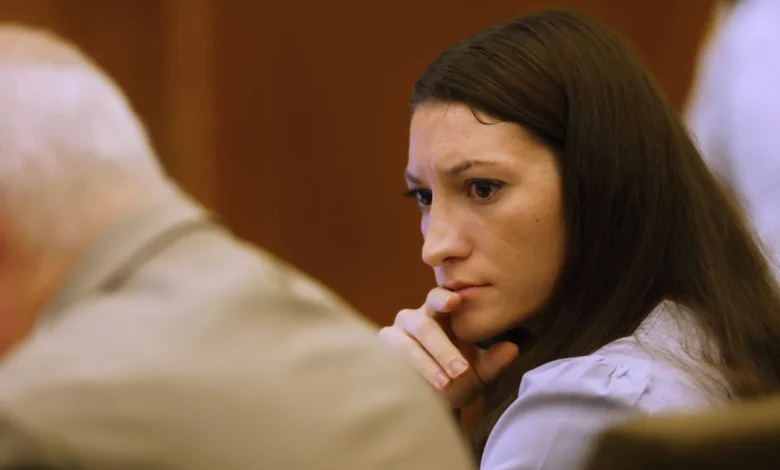
Massachusetts Superior Court Judge William Sullivan issued a comprehensive 17-page ruling on Monday, November 10, 2026, denying a defense motion to dismiss the high-profile first-degree murder case against Lindsay Clancy. The former labor and delivery nurse, now 36, is accused of strangling her three young children—5-year-old Cora, 3-year-old Dawson, and 8-month-old Callan—inside their Duxbury home in January 2023. Clancy has admitted to the physical acts of killing her children but has maintained a plea of not guilty by reason of insanity, arguing that she was suffering from severe postpartum psychosis at the time.
The court’s recent decision clears the legal pathway for prosecutors to pursue a retrial, rejecting defense arguments that constitutional protections against double jeopardy should bar the state from trying her a second time. The ruling follows an earlier trial that ended in a mistrial when the jury became hopelessly deadlocked after extensive deliberations. With Judge Sullivan finding no legal impediment to moving forward, the case returns to the spotlight, reigniting national conversations regarding postpartum mental health, the legal standard for insanity defenses, and the complexities of jury deliberations in emotionally charged capital and high-severity cases.
Background Context and the 2023 Tragedy
The events underlying the prosecution date back to January 24, 2023, a winter evening that deeply shook the tight-knit coastal community of Duxbury, Massachusetts, and drew intense nationwide media scrutiny. Lindsay Clancy, who had worked as a labor and delivery nurse at Massachusetts General Hospital, was struggling with a profound mental health crisis following the birth of her youngest child, Callan.
According to defense filings, medical experts, and family statements, Clancy experienced a rapid and severe deterioration in her mental state in the months leading up to the tragedy. She was reportedly diagnosed with generalized anxiety disorder and postpartum depression, which quickly escalated into postpartum psychosis—a rare, serious psychiatric emergency characterized by hallucinations, delusions, and a severe detachment from reality. Despite seeking professional help through various outpatient programs and medication adjustments, her condition allegedly went unrecognized in its full severity before the tragic incident unfolded.
On the evening of January 24, Clancy’s husband, Patrick Clancy, briefly left the home to pick up takeout. During those few minutes, Lindsay Clancy allegedly used exercise bands to strangle Cora, Dawson, and Callan. Following the incident, she attempted to take her own life by jumping from a second-story window of the family home, resulting in severe spinal injuries that left her paralyzed from the waist down.
First responders who arrived at the scene described a horrific and profoundly tragic environment. When Patrick Clancy returned home, he found his wife injured in the yard and quickly discovered his unconscious children inside. Despite emergency life-saving measures, the three children were pronounced dead over the following days.
Chronology of the Legal Proceedings
The legal battle following the tragedy has spanned nearly four years, marked by numerous complex pre-trial motions, psychiatric evaluations, and intense courtroom arguments.
Following her medical stabilization, Clancy was formally arraigned from her hospital bed in February 2023, where she faced three counts of murder and multiple charges of strangulation and assault and battery with a dangerous weapon. Throughout the initial arraignment and subsequent proceedings, her defense team, led by prominent defense attorney Kevin Reddington, maintained that Clancy lacked the criminal responsibility required for a conviction, arguing that the psychosis completely overbore her capacity to understand the nature of her actions or conform her conduct to the requirements of the law.
The case proceeded to a high-stakes jury trial earlier in 2026. The trial featured extensive testimony from forensic psychiatrists, medical professionals, and family members, all detailing the intense pressures of postpartum psychiatric disorders and the specific timeline of Clancy’s mental health treatments.
However, the trial concluded in a mistrial when the jury, after days of deliberation, announced it was deadlocked. Reports emerged that a single juror—referred to in court documents as “Juror Doe” and later identified in hearings as Michael Desronvil—had held out against a unanimous guilty verdict, refusing to convict Clancy and prompting the declaration of a mistrial.
The Controversy Over Juror Doe and the Motion to Dismiss
Following the mistrial, the legal landscape shifted toward the conduct of the jury itself. Prosecutors raised concerns regarding Michael Desronvil, alleging that he had failed to follow the trial judge’s instructions during deliberations and may have engaged in misconduct by refusing to deliberate in good faith.
In late October and early November 2026, Judge Sullivan presided over specific hearings aimed at dissecting the interactions within the jury room. The defense argued that the case should be dismissed entirely, while prosecutors scrutinized Desronvil’s actions. However, in his November 10 ruling, Judge Sullivan rejected the prosecution’s assertions of juror misconduct that would warrant a dismissal prejudicial to the defense, concluding that the evidence “did not reasonably suggest Juror Doe’s inability to deliberate or refusal to follow the law.”
Simultaneously, the defense had argued that subjecting Clancy to a second trial would violate the constitutional prohibition against double jeopardy, given that a jury had already been empaneled and the trial had concluded without a valid verdict. Judge Sullivan systematically dismantled this argument in his 17-page opinion, noting established legal precedent that a retrial is fully permissible under constitutional law when a jury genuinely deadlocks and a mistrial is declared out of manifest necessity.
Official Responses and Prosecution Intentions
On November 2, shortly after the conclusion of the juror conduct hearings, the Plymouth County District Attorney’s Office formally announced its intention to retry Lindsay Clancy on the original charges. Prosecutors maintain that despite her documented struggles with postpartum mental health, Clancy exhibited a level of planning and premeditation that refutes the insanity defense. During the initial trial, the state argued that Clancy understood the gravity of her actions, pointing to actions she took prior to the incident as evidence of cognitive awareness and purposeful intent.
Legal analysts suggest that the prosecution’s decision to move forward reflects the immense public interest and gravity of the case, as well as the office’s belief that a properly instructed jury can reach a conviction. State attorneys are expected to rely heavily on expert psychiatric witnesses to counter the defense’s claims of postpartum psychosis, attempting to prove that Clancy retained legal responsibility under Massachusetts’ stringent standard for criminal insanity.
Conversely, the defense remains steadfast in its position. Attorney Kevin Reddington has continually emphasized that Clancy was a dedicated mother and healthcare professional who was fundamentally altered by a medical condition that modern healthcare systems failed to adequately diagnose and treat in time. The defense team is expected to appeal various procedural aspects of the upcoming retrial while preparing to re-present their comprehensive psychiatric evidence to a new jury.
Broader Impact and Societal Implications
The case of Lindsay Clancy continues to resonate deeply across the United States, serving as a focal point for ongoing discussions surrounding maternal mental health, the stigma of psychiatric illness, and the criminal justice system’s handling of severe mental health crises.
Advocacy groups specializing in postpartum mood and anxiety disorders have closely followed the proceedings, arguing that the case highlights a systemic failure to recognize the extreme danger posed by untreated postpartum psychosis. Unlike common postpartum depression, which typically involves feelings of sadness and overwhelm, postpartum psychosis is a psychiatric emergency that can include terrifying delusions—such as the belief that harming children is a way to save them or protect them from perceived external horrors. Medical professionals have long called for greater public awareness, mandatory screenings during routine pediatric and obstetrical visits, and specialized psychiatric beds for mothers experiencing acute postpartum crises.
At the same time, the legal dimensions of the case raise profound questions regarding the application of the insanity defense in contemporary American jurisprudence. Jurors tasked with evaluating cases involving severe mental illness often face immense psychological strain, balancing the tragic loss of innocent lives against medical testimony detailing how neurological and psychiatric conditions can completely subvert human agency.
As the case prepares to enter its next chapter, court administrators will begin the complex logistical process of scheduling pre-trial conferences and setting a tentative date for the retrial. For the community of Duxbury, the families of the victims, and all parties involved, Judge Sullivan’s ruling ensures that the painful process of seeking legal resolution will continue, keeping a profound national tragedy at the forefront of public and legal consciousness.