Laura Brand Testifies in Support of Husband Russell Brand During High-Stakes Sexual Assault Trial at Southwark Crown Court

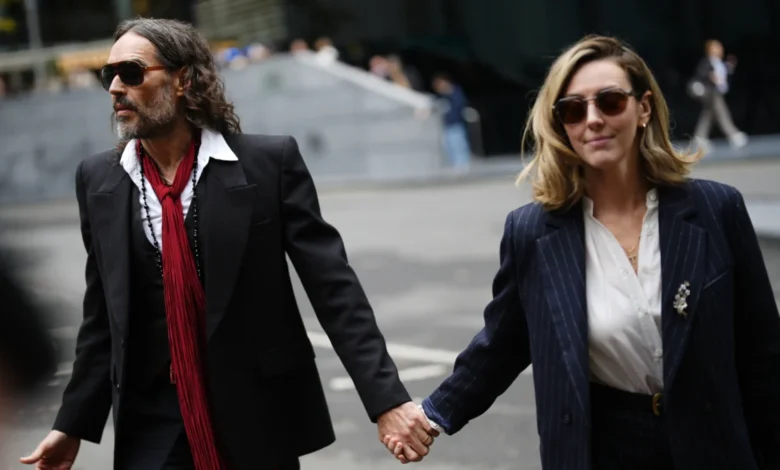
The ongoing criminal proceedings against comedian and broadcaster Russell Brand reached a pivotal moment at Southwark Crown Court this week as his wife, Laura Brand, took the witness stand to offer character testimony. As the legal battle continues to unfold, the defense has sought to contrast the public allegations of systemic misconduct against the domestic reality described by those closest to the accused. Brand, a former high-profile presenter and actor known for roles in films such as Forgetting Sarah Marshall and St. Trinian’s, stands trial facing seven charges, including three counts of rape, three charges of sexual assault, and one count of attempted indecent assault. These allegations involve six different women and span a decade-long period from 1999 to 2009.
The Testimony of Laura Brand
Laura Brand, who married the performer in 2017 and with whom she shares three children, provided a narrative that focused heavily on the defendant’s personal evolution and his capacity for domestic stability. Addressing the court on Thursday, she described their initial romantic involvement, which began in 2006 when she was 19 and he was 31. She characterized their early relationship as one that developed at her own pace, asserting that she felt “entirely cared for and looked after.”
Central to her testimony was the emotional connection she shares with the defendant. “I feel very seen by him,” she stated, adding that this was a depth of connection she had not experienced in other relationships. She described him as a “caring and kind” individual, emphasizing his role as an attentive father and husband. Her testimony served as a strategic pillar for the defense, which aims to challenge the prosecution’s depiction of Brand as a predatory figure by highlighting his growth into a committed, monogamous family man in his later years.
Chronology of the Legal Allegations
The allegations forming the basis of the Crown’s case cover a significant period of Brand’s career, a time when he was widely recognized for his high-energy, hedonistic persona in British media. The prosecution’s case relies on testimony from six women who allege that Brand used his celebrity status and manipulative tactics to commit sexual violence.
Key incidents cited in the prosecution’s evidence include:
- 1999: An allegation of rape occurring in a Bournemouth hotel room following a comedy performance.
- 2004: An allegation of sexual assault and oral rape within a Soho bar.
- 2009: An allegation of anal rape at Brand’s private residence in Hampstead following a consensual sexual encounter.
Brand has maintained his innocence, vehemently denying all criminal wrongdoing. His defense team, led by Ian Winter, has spent the trial attempting to discredit the accounts of the complainants and frame the defendant as a man who has undergone a profound personal and spiritual transformation.
Procedural Friction and Judicial Intervention
The proceedings on Thursday were marked by moments of intense procedural tension. During her cross-examination by lead prosecutor Riel Karmy-Jones, the court witnessed a sharp disagreement regarding the scope of the testimony. When the defense attempted to elicit Laura Brand’s opinion on the “truth” of the allegations against her husband, Justice Bennathan intervened decisively, noting that she was not an expert witness and could not provide commentary on the veracity of the claims.
Further friction occurred when the defense attempted to ask for her view on his character in a broader sense, prompting an objection from the prosecution, who labeled the line of questioning as “wholly unacceptable.” These interruptions underscore the difficulty of balancing character testimony with the rigid requirements of criminal evidence law. Furthermore, the prosecution challenged the consistency of Laura Brand’s public statements, specifically referencing a 2020 podcast appearance where she suggested she had not seen Brand for years prior to their 2014 reunion, a claim that contradicted her testimony regarding their ongoing, albeit sporadic, contact.
The Transformation Narrative: Baptism and Authorship
A notable element of the defense’s strategy has been the introduction of Brand’s recent religious conversion as evidence of his character reform. In April 2024, following the public emergence of these allegations, Brand was baptized. This spiritual pivot has been complemented by the publication of his book, How To Become A Christian In Seven Days, which frames his life in the context of redemption and acknowledgment of past errors.
The defense appears to be positioning Brand not as the man he was during the period of the alleged offenses, but as a man who has fundamentally changed. By linking his domestic life with his wife to his recent religious practice, the legal team is attempting to cultivate a jury perception of a man who has left his former, controversial lifestyle behind. However, the prosecution maintains that these developments are irrelevant to the specific criminal acts alleged to have taken place during the 1999–2009 period.
Broader Context and Media Implications
The trial of Russell Brand has become a lightning rod for broader discussions regarding celebrity, power dynamics, and the statute of limitations in sexual assault cases. The case has forced a public reckoning with the British media landscape of the early 2000s, an era when many of these allegations are purported to have occurred.
From a legal standpoint, the case serves as a test of how the British justice system handles historical sexual assault allegations, particularly when the accused has undergone significant public rehabilitation or rebranding. If the defense succeeds in creating reasonable doubt by emphasizing the subjective, positive experiences of current associates, it could significantly impact the jury’s final deliberation. Conversely, the prosecution is tasked with ensuring that the specific, granular details provided by the complainants remain the focus of the trial, rather than the defendant’s current, curated public image.
Analytical Overview
The outcome of the trial will likely depend on whether the jury perceives the testimonies of the complainants as credible, consistent, and corroborated by other forms of evidence, or if the defense’s portrayal of a “changed man” is sufficient to cast doubt on the state’s case. Character testimony, while common in criminal trials, is often viewed with caution by juries, who are instructed to separate the defendant’s current personality from the actions alleged to have occurred years prior.
As the trial moves into its next phase, the focus will likely shift back to the forensic examination of the specific incidents. The tension in the courtroom, illustrated by the sharp exchanges between the bench, the prosecution, and the defense, highlights the high stakes of the litigation. For the victims, the trial represents a pursuit of justice that has been delayed by decades; for Brand, it represents a battle for his reputation and his liberty.
The legal proceedings are expected to continue for several more weeks. The court remains under intense public and media scrutiny, as the case involves not only the guilt or innocence of a prominent public figure but also touches upon systemic issues regarding the treatment of women within the entertainment industry. The jury’s eventual verdict will set a precedent for how historical allegations against high-profile figures are adjudicated in the modern legal climate, where the intersection of personal narrative and forensic evidence remains a complex and volatile terrain.
With the defense’s case now largely focused on establishing a narrative of personal accountability and familial stability, the burden remains on the Crown to prove the charges beyond a reasonable doubt. The contrast between the testimony of the complainants—who describe a history of coercion and abuse—and the testimony of his wife, who describes a relationship of mutual respect and clarity, creates a bifurcated reality that the jury must now reconcile. The conclusion of this trial will undoubtedly mark a defining moment in the public discourse surrounding Russell Brand and the broader movement for accountability in media and culture.