Appeals Court Overturns Closure of Controversial Florida Detention Center Alligator Alcatraz

The U.S. Court of Appeals for the 11th Circuit issued a landmark 2-1 ruling on Tuesday, effectively permitting the continued operation of the Florida immigrant detention center colloquially known as "Alligator Alcatraz." The decision vacates a previous lower court order that had mandated the facility’s closure on the grounds that its construction and operation violated fundamental federal environmental protections. This ruling marks a significant victory for the administration of Governor Ron DeSantis and carries profound implications for the intersection of state-funded immigration enforcement and federal environmental oversight.
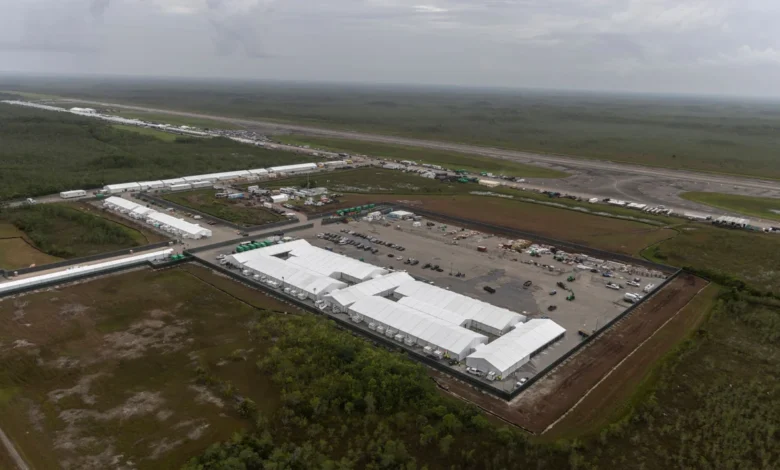
Located deep within the Florida Everglades at the site of the Dade-Collier Training and Transition Airport in Ochopee, the facility has been a flashpoint of legal and humanitarian controversy since its inception. Built in the summer of 2024, the center was established to provide the Department of Homeland Security (DHS) with additional detention capacity as the state and federal governments navigated a surge in immigration-related enforcement and deportation proceedings. However, the facility’s remote location and the conditions within its walls have drawn fierce criticism from human rights advocates, environmentalists, and federal lawmakers alike.
The Legal Threshold: NEPA and Federal Control
The central legal question before the three-judge panel of the 11th Circuit was whether the National Environmental Policy Act (NEPA) applied to a facility built on state land and funded primarily by state coffers. NEPA requires federal agencies to assess the environmental effects of their proposed actions prior to making decisions. Environmental groups, led by Friends of the Everglades, argued that because the facility exists solely to serve federal immigration enforcement goals, it should be classified as a "major federal action," thereby necessitating a comprehensive environmental impact statement.
In the majority opinion, Chief Judge William Pryor, an appointee of President George W. Bush, rejected this interpretation. Pryor concluded that the plaintiffs failed to demonstrate that the federal government exercised sufficient control over the project to trigger NEPA requirements. "Federal authority is, at most, indirect," Pryor wrote. He emphasized that while the federal government sets the terms under which the facility may be used for the detention of undocumented immigrants, the state of Florida made the sovereign decision to dedicate its own land and resources to the project.
The court further noted that the state has already expended at least $390 million on the facility’s operation. Although Florida is currently seeking reimbursement from the federal government, the majority ruled that the prospect of future federal funding does not retroactively transform a state-led project into a federal one.
In a sharp dissent, Judge Nancy Abudu, a President Biden appointee, argued that the majority’s view ignored the reality of the partnership between the state and federal governments. Abudu contended that immigration is an inherently federal responsibility and that Florida’s participation in the federal detention scheme subjects it to federal regulatory standards. She described the majority’s ruling as "just plain wrong," suggesting it creates a loophole where states can bypass environmental safeguards by fronting the costs for federal functions.
A Chronology of Conflict and Construction
The timeline of "Alligator Alcatraz" is marked by rapid development and immediate legal pushback. The project began in mid-2024 as part of Governor DeSantis’s broader initiative to take an aggressive stance on border security and immigration enforcement within Florida.
- June 2024: Construction begins at the Dade-Collier Training and Transition Airport, a site originally intended to be a massive international jetport in the 1960s but largely abandoned due to environmental concerns.
- Late June 2024: Florida Attorney General James Uthmeier releases a video highlighting the facility’s isolation, noting that those who might attempt to escape would face "alligators and pythons." Environmental groups immediately file suit, alleging violations of NEPA.
- July 2025: Aerial photography confirms the facility is fully operational, housing hundreds of detainees in a high-security environment surrounded by protected wetlands.
- August 2025: A federal district judge in Miami rules in favor of environmentalists, ordering the state to wind down operations and dismantle the facility within 60 days, citing the lack of environmental review.
- September 2025: The 11th Circuit Court of Appeals grants a stay on the lower court’s order, allowing the facility to remain open while the appeal is adjudicated.
- March 2026: Reports of systemic abuse surface, prompting a federal investigation by U.S. Senators Jon Ossoff and Dick Durbin.
- April 2026: The 11th Circuit issues its final ruling, overturning the closure order.
Environmental Concerns in the Big Cypress Ecosystem
The primary grievance of the environmental plaintiffs involves the facility’s proximity to the Big Cypress National Preserve. The Everglades ecosystem is one of the most fragile in North America, serving as a critical habitat for several endangered species. Advocates argue that the industrial-scale operation of a detention center in this wilderness area is inherently destructive.
One of the most pressing concerns involves the Florida panther. With an estimated population of only 200 remaining in the wild, the panther is highly susceptible to habitat fragmentation and vehicular strikes. Court filings indicate that the increased traffic of supply trucks, buses, and staff vehicles on the narrow roads leading to Ochopee significantly raises the mortality risk for these large cats.
Furthermore, the high-intensity security lighting required for a detention center has disrupted the nocturnal environment. Eve Samples, executive director of Friends of the Everglades, noted that approximately 2,000 acres of habitat have been impacted by light pollution. This "sky glow" interferes with the foraging and mating habits of local bat populations and other nocturnal wildlife that rely on total darkness for survival. The facility’s waste management and potential for nutrient runoff into the surrounding wetlands also remain points of contention, as the Everglades are highly sensitive to changes in water chemistry.
Human Rights Allegations and Living Conditions
Beyond the environmental impact, "Alligator Alcatraz" has become synonymous with reports of harsh living conditions. The facility’s nickname, a reference to the famous island prison and the local predator population, reflects the perceived severity of the environment.
Detainees have reported chronic mosquito infestations, a byproduct of the facility’s location in a swampy region. Reports of frequent flooding during Florida’s rainy season have also surfaced, leading to concerns about mold and sanitation. Medical care has been described as "lackluster" in various testimonies, with detainees claiming that serious ailments often go untreated for weeks.
In March 2026, the investigation launched by Senators Ossoff and Durbin brought to light allegations regarding the use of "the box." This practice allegedly involves shackling detainees and placing them in small, outdoor cages in direct sunlight for extended periods. While the Florida Division of Emergency Management has denied these claims, labeling them "false," the allegations have been bolstered by accounts from attorneys who represent those held at the site.
Recent tensions at the facility culminated in reports of physical altercations. Attorneys alleged that guards used pepper spray on detainees who were protesting the disconnection of telephone services—a move that critics say was intended to limit communication with legal counsel following a court order to expand access to the facility.
Financial and Political Implications
The survival of Alligator Alcatraz is a significant political win for Governor DeSantis, who has frequently clashed with the Biden administration over immigration policy. By funding and operating the facility at the state level, Florida has asserted its autonomy in immigration enforcement, a domain traditionally reserved for the federal government.
However, the financial burden is substantial. The $390 million spent thus far comes from state taxpayers, and the path to federal reimbursement remains uncertain. If the Federal Emergency Management Agency (FEMA) or DHS declines to reimburse the state—perhaps citing the same lack of environmental compliance that sparked the lawsuit—the project could become a long-term fiscal drain.
From a policy perspective, the 11th Circuit’s ruling may provide a blueprint for other states looking to implement localized immigration solutions. By structuring projects as state-led initiatives on state land, other jurisdictions may attempt to bypass the rigorous and often lengthy federal environmental review processes that typically accompany large-scale infrastructure projects.
Broader Impact and Future Litigation
The ruling does not mark the absolute end of the legal battle. The 11th Circuit has remanded the case back to the district court for further proceedings. While the current ruling removes the immediate threat of closure based on NEPA, other legal avenues remain open, including potential challenges based on humanitarian standards and state-level environmental regulations.
"This fight is far from over," said Eve Samples of Friends of the Everglades. She emphasized that the group intends to continue its advocacy in the district court, focusing on the "flagrant assault" the facility represents to the Everglades’ integrity.
For the hundreds of detainees currently held in Ochopee, the ruling means their status remains unchanged. They continue to wait for deportation or asylum hearings in a facility that remains one of the most isolated and controversial outposts of the American immigration system. As the case returns to the lower courts, the eyes of legal experts and human rights monitors will remain fixed on the swampy expanse of the Everglades, where the balance between state power, federal law, and environmental preservation continues to be tested.