AirAsia Sets March 2027 Target for Inaugural Bahrain Flights Following Geopolitical Delays

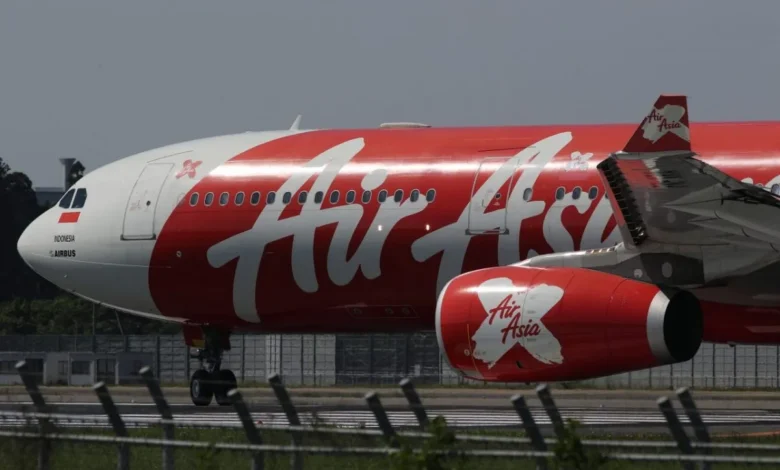
Low-cost carrier giant AirAsia has officially announced a targeted launch date of March 2027 for its first passenger flights to Bahrain, marking a significant milestone in the airline’s long-term strategy to establish a vital Gulf hub. This announcement represents the first concrete timeline provided by the aviation group since escalating geopolitical tensions in the Middle East, notably the conflict involving the United States and Iran, forced management to reassess and recalibrate its expansion roadmap.
The unveiling of the revised launch window coincided with a critical corporate governance milestone for the carrier. On November 1, the airline group formally appointed a seven-member, entirely non-executive board of directors for the newly minted entity, AirAsia Bahrain. This leadership structure is designed to provide independent oversight, strategic guidance, and regulatory alignment as the carrier navigates the complex approvals process required to launch operations in the Middle East.
Despite the hurdles posed by regional instability, executive leadership remains steadfast in its strategic vision. Tony Fernandes, chief executive officer of AirAsia’s parent organization, Capital A, and adviser to the AirAsia Group, reaffirmed the carrier’s dedication to the Middle Eastern market. While acknowledging the disruptions caused by external forces, Fernandes emphasized that the core ambition has not diminished. "While the geopolitical situation in the region has required us to adjust our initial plans, our commitment to Bahrain has not changed," Fernandes stated. He added that the group continues to monitor developments in the region closely, targeting the commencement of operations by March 2027, subject to favorable operational conditions.
A Strategic Pivot to the Middle East
The establishment of a Middle Eastern hub has long been a central pillar of AirAsia’s broader ambition to bridge Southeast Asia with the Gulf, Europe, and Africa through a low-cost, long-haul model. Bahrain presents an attractive strategic foothold due to its geographic positioning, open economic policies, and ambitions to expand its own aviation and tourism sectors. By establishing a base in the Kingdom, AirAsia aims to tap into high-yield traffic flows connecting Asia with the Middle East and beyond, utilizing the fifth-freedom traffic rights that such a base could unlock.
However, executing this strategy has proven exceptionally challenging. The modern airline industry operates in an environment acutely sensitive to geopolitical friction. The outbreak of hostilities between the United States and Iran introduced severe operational risks, including airspace closures, heightened insurance premiums, and unpredictable security assessments. For an ultra-low-cost carrier operating on razor-thin margins, safety considerations and financial viability must take precedence over aggressive expansion timelines. Consequently, the initial rollout schedule had to be shelved while management adopted a wait-and-see approach, allowing regional tensions to subside and airspace security to stabilize.
The Long-Haul Evolution and Historical Context
To understand the weight of AirAsia’s current Middle Eastern ambitions, it is necessary to examine the evolution of its long-haul affiliate, AirAsia X. Founded to democratize long-haul travel through low fares, AirAsia X initially expanded rapidly across Asia, Oceania, and Europe. However, high fuel costs, fluctuating currency exchange rates, and intense competition from legacy carriers operating with government subsidies eventually squeezed profitability.
A defining moment in this journey occurred in 2012, when AirAsia X made the difficult decision to terminate its high-profile Kuala Lumpur to London route. The route, which had captured global attention as a symbol of low-cost long-haul viability, proved unsustainable under the weight of escalating European jet fuel prices and high airport taxes. For nearly a decade following that retreat, the group exercised caution regarding long-haul expansion outside its core Asian markets, focusing instead on densifying its regional network and fortifying its short-haul dominance.
The strategic pendulum began to swing back toward long-haul ambitions in early 2024. Just two weeks before the outbreak of the regional conflict that would ultimately disrupt its Bahrain plans, AirAsia X made waves across the global aviation community by announcing its intention to resume flights to the United Kingdom. The carrier planned to utilize advanced, fuel-efficient aircraft to re-establish a European link, signaling renewed confidence in its long-haul cost structure. The sudden escalation of the U.S.-Iran conflict, however, forced an immediate strategic pause, compelling executives to prioritize the safer, more proximate Middle Eastern market integration via Bahrain over immediate European re-entry.
Corporate Governance and Regulatory Milestones
The appointment of the seven-member non-executive board for AirAsia Bahrain on November 1 is a critical precursor to securing the necessary Air Operator’s Certificate (AOC) and commercial operating permits. In civil aviation, regulatory authorities such as the Bahrain Civil Aviation Affairs (CAA) require rigorous proof of financial backing, operational competence, and corporate governance before granting permissions to a new airline entity.
By assembling a board composed entirely of non-executive members, AirAsia ensures a high standard of corporate governance, transparency, and independence. This structure reassures local regulators, financial institutions, and potential partners that AirAsia Bahrain will operate with sound financial controls and strategic oversight distinct from its Malaysian parent operations. The board will be tasked with steering the joint venture through regulatory hurdles, establishing local infrastructure, hiring key personnel, and finalizing commercial agreements with Bahrain International Airport.
Economic Implications and Market Dynamics
The entry of a major low-cost long-haul group like AirAsia into Bahrain is expected to reshape the competitive landscape of the regional aviation market. Traditionally, the Middle Eastern aviation hub model has been dominated by major network legacy carriers such as Emirates, Qatar Airways, and Etihad Airways, which rely on sixth-freedom traffic and extensive widebody fleets to connect passengers between East and West.
AirAsia’s low-cost model introduces a different value proposition. By stimulating price-sensitive demand, the carrier could attract a new demographic of travelers who previously found long-distance travel economically prohibitive. Furthermore, increased passenger volumes passing through Bahrain International Airport would directly benefit the Kingdom’s tourism sector, hospitality industry, and retail economy, aligning closely with Bahrain’s Economic Vision 2030, which seeks to diversify the national economy away from oil dependency.
Industry analysts note that while the March 2027 target gives the airline ample time to prepare, the success of the venture remains tethered to external variables beyond the control of airline executives. Geopolitical stability in the Persian Gulf, sustained economic growth in Southeast Asia, and the continued availability of fuel-efficient long-haul aircraft will dictate whether the timeline holds firm. Supply chain bottlenecks affecting aircraft manufacturers, such as Airbus and Boeing, also pose a lingering threat to fleet deployment schedules across the global airline industry.
Broader Outlook for Capital A and AirAsia Group
For Capital A, the parent company undergoing a broader corporate restructuring to regularize its financial status and exit its status as a financially distressed entity (Practice Note 17 or PN17 in Malaysia), the successful launch of AirAsia Bahrain is more than just an operational expansion—it is a statement of global ambition. The restructuring aims to separate the aviation businesses from the digital and aviation services arms, creating a cleaner balance sheet that can attract international institutional investment.
As March 2027 approaches, all eyes will be on the skies above the Gulf and the boardrooms in Kuala Lumpur and Manama. If AirAsia successfully lands its first passenger flight in Bahrain by the targeted date, it will validate the resilience of the low-cost long-haul business model and open a new chapter in transcontinental connectivity. Until then, the airline group must walk a delicate line between aggressive strategic planning and cautious risk management in one of the world’s most dynamic yet volatile regions.