Senator Bill Cassidy calls for radical honesty from the White House regarding vaccine safety as measles cases reach a three-decade high.

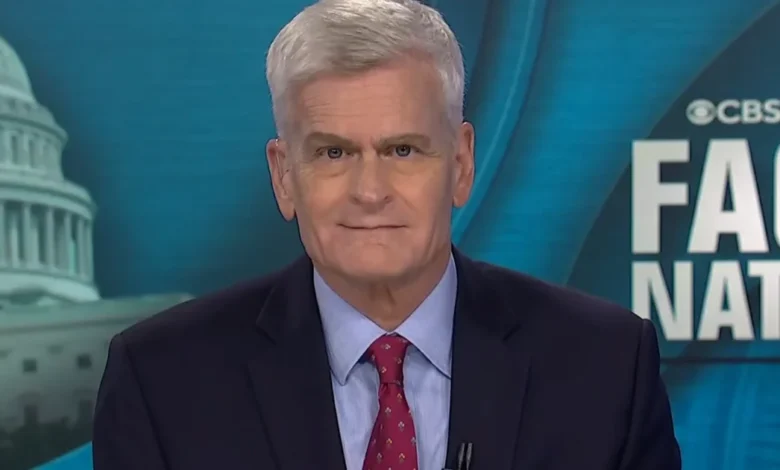
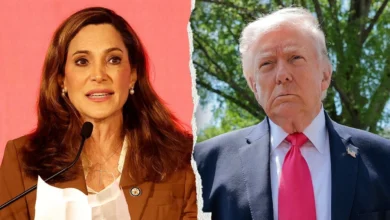
In a sharp rebuke of the current administration’s rhetoric on public health, Senator Bill Cassidy (R-LA) took to the airwaves this past Sunday to challenge President Trump’s recent public statements regarding childhood immunizations. As a physician and the outgoing chair of the Senate Health, Education, Labor and Pensions Committee, Cassidy’s comments come at a critical juncture for the United States, which is currently experiencing its most severe measles outbreak in over thirty years. The senator’s plea for "radical honesty" underscores a deepening rift between established medical consensus and the administration’s unconventional policy directives regarding vaccine administration and safety.
The Current Public Health Landscape
The United States is currently grappling with a resurgence of vaccine-preventable diseases that many health experts believed were under control. Data from the Centers for Disease Control and Prevention (CDC) indicates that measles—a highly contagious viral disease—has reached case counts not seen since the early 1990s. The implications of this surge are profound, leading to increased hospitalizations and, tragically, fatalities among both children and adults who lack immunity.
The measles, mumps, and rubella (MMR) vaccine has been the cornerstone of pediatric health for decades. Extensive peer-reviewed research has consistently demonstrated the safety and efficacy of the vaccine, which is administered as a combined dose to ensure broad, reliable protection. However, recent months have seen the administration shift toward a policy of skepticism, with the President issuing an executive order last month that advocates for splitting the MMR vaccine into separate, spaced-out doses.
Chronology of the Controversy
The tension surrounding the administration’s vaccine policy has escalated throughout the latter half of 2026. The timeline of these developments reflects a growing polarization:
- Mid-2026: Measles case counts begin to climb significantly, prompting public health officials to urge renewed focus on the standard vaccination schedule.
- August 2026: President Trump issues an executive order challenging the current MMR administration schedule, suggesting that the vaccine should be divided into three separate components.
- September 2026: In an Oval Office address, the President announces his intent to mandate that pharmaceutical companies reconfigure childhood vaccines into smaller, more frequent doses, claiming this will reduce the risk of autism—a claim that has been thoroughly debunked by the global medical community.
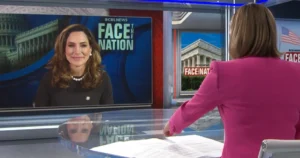
- September 20, 2026: Senator Bill Cassidy appears on "Face the Nation," publicly demanding that the administration disclose the evidence—if any—that informs these directives.
Examining the Administration’s Claims
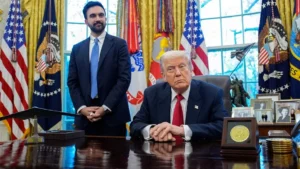
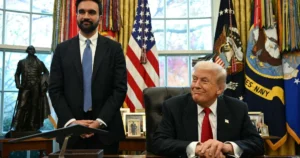
The President’s recent remarks to reporters in the Oval Office suggest a fundamental change in how the federal government views the immunization schedule. By proposing that children receive up to five doses over six-month intervals, the administration is effectively upending decades of pediatric clinical practice. The President’s assertion that reducing the "dose size" will lead to a "massive reduction in autism" stands in direct contradiction to the findings of the American Academy of Pediatrics, the National Institutes of Health, and the World Health Organization.
Senator Cassidy, drawing on his background as a medical doctor, noted that these policy proposals lack a basis in clinical science. "Have the president come forward—what is he basing this on? Who’s giving him advice?" Cassidy asked during his interview. The senator expressed concern that the dissemination of unverified claims regarding vaccine "lethality" could have irreversible consequences for public health, potentially leading parents to opt out of life-saving immunizations for their children.
The Physician’s Perspective: Public Health as a Collective Responsibility
Cassidy’s arguments extend beyond the clinical efficacy of vaccines; he frames the issue as a matter of civic duty. By comparing the refusal of vaccination to the dangers of driving under the influence, the senator highlighted the "victimless" fallacy often associated with personal medical choices. When an individual chooses not to vaccinate, they are not only putting themselves at risk but also jeopardizing those who are medically unable to be vaccinated, such as infants and the immunocompromised.
"You can drink and get drunk, but if you drive, you’re going to hurt other people," Cassidy noted. "You can get measles, but when you start spreading it to other people, a 40-year-old dies, an 18-year-old dies, children in a neonatal intensive care unit are at risk."
Recent data from Pennsylvania underscores this reality, with reports of measles-related deaths in both a 40-year-old and an 18-year-old. These tragedies serve as a grim reminder that measles is not merely a childhood nuisance, but a potentially fatal systemic infection.
Legislative and Confirmation Hurdles
The debate is not merely rhetorical; it is influencing the confirmation process for key health officials. The Senate Health, Education, Labor and Pensions Committee, which Cassidy currently leads, is tasked with vetting the administration’s nominees for critical health agencies.
During the confirmation process for Surgeon General nominee Nicole Saphier, the committee sought clarity on her stance regarding vaccines. Saphier testified that the MMR vaccine is not lethal, a position that ultimately secured her Senator Cassidy’s vote. In contrast, the upcoming hearing for FDA commissioner nominee Heidi Overton will serve as a litmus test for the administration’s adherence to evidence-based science. Cassidy has made it clear that he expects a commitment to "radical honesty" from the nominee, specifically regarding the safety of the current immunization schedule.
Broader Implications for Healthcare Policy
The friction between the White House and medical experts raises significant questions about the future of the federal public health apparatus. If the administration continues to promote policies that conflict with the established safety profiles of pharmaceuticals, it may lead to a broader erosion of public trust in federal health agencies such as the FDA and the CDC.
Experts in public health suggest that the politicization of vaccine schedules could have long-term impacts on herd immunity. If vaccination rates dip below the threshold required to prevent outbreaks—typically around 95% for measles—the nation risks the re-emergence of other diseases that were once near eradication. Furthermore, the administrative burden of attempting to overhaul the existing manufacturing and distribution protocols for vaccines—as suggested by the President—would be immense, potentially creating supply chain shortages that could further jeopardize public access to essential medicines.
As the political landscape shifts toward the end of the year, the conversation surrounding vaccine safety is expected to remain at the forefront of the national agenda. For Senator Cassidy, the path forward is clear: the government must prioritize empirical evidence over political narrative. By demanding transparency from the White House, he is highlighting a critical standard for public service: the duty to provide the American public with accurate, life-saving information. Whether the administration will pivot toward this "radical honesty" remains to be seen, but the urgency of the current measles outbreak suggests that the window for meaningful, science-based policy intervention is rapidly closing.