California Pioneers Environmental Reparations with Direct Cash Aid for Inglewood Oil Field Residents

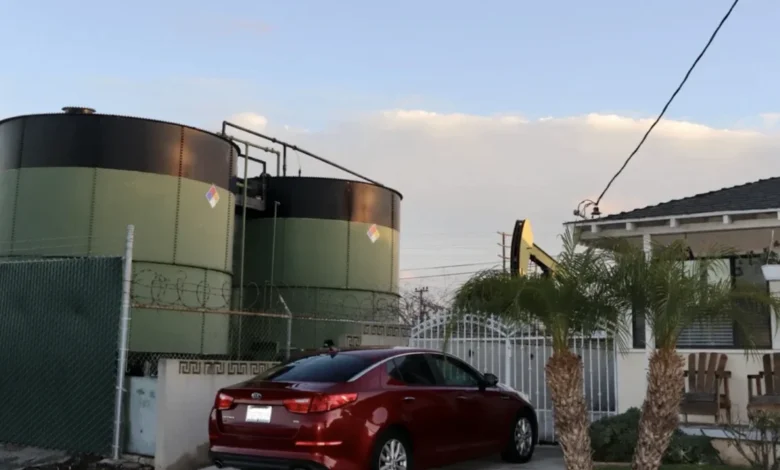
As the state of California moves toward a landmark shift in environmental policy, Governor Gavin Newsom is expected to sign legislation that fundamentally alters the relationship between industrial polluters and the communities they affect. Assembly Bill 1661, a pioneering piece of legislation, directs $5 million in penalty revenue—collected from low-producing, polluting oil wells in the Inglewood area—into a direct cash assistance program for 1,000 households that have suffered respiratory or reproductive health impacts linked to long-term exposure to the field’s emissions.
This legislation, championed by Assemblymember Isaac G. Bryan, represents a transition from traditional regulatory fines to the concept of "environmental reparations." It acknowledges that the legacy of fossil fuel extraction in urban settings like Los Angeles is not merely a matter of environmental degradation, but a systemic issue of public health and economic inequity.
A Century of Industrial Proximity
For over 100 years, the Los Angeles basin has been the site of intensive oil extraction. The Inglewood Oil Field, one of the nation’s largest urban drilling sites, sits in close proximity to neighborhoods such as Ladera Heights, Baldwin Hills, and Inglewood—areas with high concentrations of Black residents.
Historically, these neighborhoods were subjected to redlining, a discriminatory practice that restricted housing opportunities and often funneled Black families into areas near industrial zones, highways, and refineries. As a result, generations of residents have lived with the constant presence of pumpjacks and the sulfurous, toxic emissions associated with drilling. Scientific research has consistently linked these environments to higher rates of asthma, cardiovascular disease, birth complications, and various forms of cancer. For many, like Regina Martin, who grew up in the shadow of these wells during the mid-20th century, the chronic health issues prevalent in her community were not viewed as external health crises, but as an unfortunate, inescapable reality of daily life.
Chronology of Legislative Action
The journey toward AB 1661 did not occur in a vacuum. It is the culmination of years of grassroots advocacy and strategic legislative maneuvering:
- 1950s–1990s: Decades of unchecked urban drilling lead to sustained health complaints from residents regarding air quality and noise pollution.
- 2020–2022: Community groups, including Black Women for Wellness and various environmental justice coalitions, escalate pressure on state regulators to address the health disparities in South Los Angeles.
- 2024: Governor Newsom signs AB 2716, a foundational law that mandates the closure of the Inglewood Oil Field by 2030 and creates a punitive structure for low-producing wells, charging operators $10,000 per month for each underperforming well.
- September 2026: The California Legislature passes AB 1661, creating a mechanism to distribute the accumulated penalty funds directly to affected residents, rather than absorbing them into the state’s general coffers.
- October 2026 (Expected): Governor Newsom signs AB 1661 into law, setting a precedent for environmental restitution.
The Mechanism of Reparation
The core of AB 1661 is its simplicity in intent: transferring the financial burden of pollution from the household to the operator. By taxing low-producing wells—which are often the most prone to methane leaks and chemical emissions—the state creates a self-sustaining fund.
The $5 million allocation is earmarked for 1,000 households, allowing for payments of up to $5,000 per family. This funding is explicitly restricted to residents within a 2.5-mile radius of the Inglewood Oil Field. Crucially, the California state government has also passed parallel legislation to ensure that these payments are shielded from taxation, ensuring that the full amount serves the intended purpose of alleviating financial strain caused by medical bills or lost productivity.
Challenges in Implementation and Access
While the bill has received widespread support from over three dozen community organizations, the practical implementation remains a complex challenge for Los Angeles County officials. A primary concern among advocates, including Tianna Shaw-Wakeman of Black Women for Wellness, is the barrier to entry.
If the application process requires rigorous, clinical medical documentation, many low-income residents who suffer from "environmental fatigue" or lack access to consistent healthcare may be excluded. The organization is pushing for "self-attestation" models, which allow residents to report their health impacts without the prohibitive costs of specialized medical testing. Furthermore, with tens of thousands of households living within the 2.5-mile radius, the limit of 1,000 recipients creates a selection challenge that the county must navigate with transparency and equity.
Broader Economic and Environmental Implications
Beyond the immediate financial aid, AB 1661 serves as a policy trial balloon. It asks a fundamental question: Should industrial companies be legally required to compensate for the "depreciated quality of life" of their neighbors?
Economists and public policy experts are monitoring this development closely. If the program succeeds in providing meaningful relief without excessive administrative friction, it could serve as a template for other regions in the United States currently struggling with the "legacy of the fence line"—a term used to describe the communities bordering industrial sites.
However, critics and community advocates alike warn against the dangers of "reparations" being used as a substitute for systemic remediation. As noted by local stakeholders, there is a legitimate fear that as oil wells are plugged and land is remediated, the ensuing "greening" of the area could trigger gentrification, ultimately displacing the very residents who suffered the most under the oil industry’s tenure.
"We can’t replace toxic oil extraction with gentrification," says Shaw-Wakeman. The concern is that if the value of the land rises too sharply once the wells are gone, the long-term residents of Inglewood will be priced out of their own neighborhoods.
Looking Toward the Future
The state of California’s approach is part of a growing national movement to address "environmental racism." By linking specific industrial penalties to community health outcomes, the state is moving toward a model of restorative justice that recognizes the cumulative nature of environmental harm.
For the families of Inglewood, the $5,000 payment is not intended to be a cure-all, but a recognition of a debt owed. It is an acknowledgment that the economic and health burdens of the fossil fuel era have been unfairly socialized onto the most vulnerable. As the 2030 deadline for the closure of the Inglewood Oil Field approaches, the focus is expected to shift from cash aid to long-term redevelopment, ensuring that the post-oil landscape is defined by community-led investment rather than corporate abandonment.
Ultimately, AB 1661 represents the first step in a long, complex process of reconciling the state’s industrial history with its future. Whether it succeeds in providing relief or becomes bogged down in bureaucracy will depend heavily on the next year of administrative design and the continued vigilance of the grassroots organizations that made the legislation possible.
Related posts: