Mechanical engineer builds his own four-seater airplane in his backyard during the pandemic to fly his family across Europe

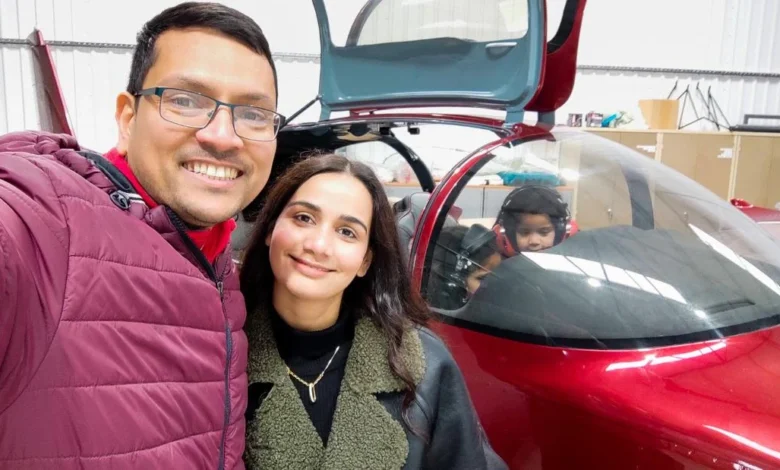
The dream of flight has long been the domain of commercial airlines or the ultra-wealthy, but for Ashok Aliseril Thamarakshan, an Essex-based mechanical engineer, the cockpit of a private aircraft became a DIY project born of necessity and curiosity. Over an intensive 18-month period, Aliseril transformed his home garden into an aviation workshop, successfully constructing a four-seater Sling TSi aircraft. His endeavor, which culminated in the aircraft being officially cleared for flight in 2022, highlights a growing trend of amateur aviation enthusiasts utilizing modern kit-build technology to bypass the high costs of traditional aircraft ownership.
The genesis of this project dates back over a decade when Aliseril first moved near an airfield in the United Kingdom. While the proximity piqued his interest, it was a birthday gift from his wife, Abhilasha—a 30-minute flight experience—that transformed a casual fascination into a lifelong pursuit. Following his first flight to the Isle of Wight, Aliseril was captivated by the autonomy that private aviation offered. He secured his private pilot’s license in 2019, but quickly discovered the limitations of the local rental market. Most available aircraft were two-seaters, which were insufficient for his growing family of four.
The Decision to Build
Faced with the prospect of either purchasing a vintage aircraft or finding a solution that accommodated his entire family, Aliseril conducted a rigorous cost-benefit analysis. He scrutinized older models from the 1960s and 1970s, but concerns regarding the mechanical reliability and maintenance overhead of aging airframes deterred him. As an engineer, Aliseril favored the idea of a project that would provide him with intimate knowledge of every component, thereby simplifying long-term maintenance and ensuring safety.
He discovered the Sling TSi, a high-performance, four-seater kit aircraft manufactured by the South African firm Sling Aircraft. After flying to Johannesburg in early 2020 to test-fly the prototype, Aliseril was convinced of its capabilities. He placed his order just before the global onset of the Covid-19 pandemic, which would soon shut down international travel and alter the course of his project entirely.
Chronology of Construction
The delivery of the kit coincided with the UK’s initial lockdown, presenting significant logistical challenges. Aliseril had initially intended to hire a professional workshop and rely on a network of experienced colleagues for assistance. However, social distancing regulations rendered in-person collaboration impossible. Undeterred, he constructed a dedicated shed in his backyard, establishing a makeshift hangar that would serve as the nerve center for the build.
The project adhered to strict regulatory oversight. In the UK, amateur-built aircraft must be inspected by the Light Aircraft Association (LAA) under the authority of the Civil Aviation Authority (CAA). Aliseril’s build was subject to approximately 12 formal inspections, ensuring that each structural stage met airworthiness standards before he could proceed.
By the end of summer 2020, the tail and wings were complete. The fuselage construction followed in October. Throughout the process, Aliseril’s wife provided essential assistance, and his eldest daughter, Tara, contributed by preparing components, turning a solitary engineering challenge into a family-oriented milestone. Upon completion of the primary structure, the aircraft was transported to a hangar near Cambridge for final assembly, engine integration, and a comprehensive final inspection.

Technical Specifications and Performance
The finished aircraft, christened "G-Diya" after his youngest daughter, is a testament to modern engineering kits. The Sling TSi is designed for efficiency and versatility, boasting a range of approximately 1,389 kilometers (roughly 863 miles). The aircraft is powered by a Rotax engine, known for its reliability in the light sport aircraft category.
One of the most striking aspects of the project is its operating cost. Aliseril reports that the aircraft consumes roughly 20 liters of unleaded fuel per hour. By forming a four-person ownership syndicate to distribute the financial burden, he has managed to keep the ongoing costs comparable to the operation of a high-end SUV. The total capital expenditure for the project, including the kit, avionics, engine, and propeller, reached approximately £180,000 ($203,000).
Regulatory and Safety Implications
Amateur-built aviation is a highly regulated sector. In the United States, the FAA governs such craft under the "experimental airworthiness" category, while the UK’s CAA issues a "Permit to Fly." The process is designed to ensure that homebuilt aircraft are as safe as their factory-produced counterparts. Aliseril’s project was meticulously documented, and the mandatory inspections ensured that the final product was not merely a hobbyist’s creation, but a certified vehicle capable of international travel.
The first flight, which took place in January 2022, was the ultimate "psychological hurdle." Under the guidance of an experienced test pilot, the aircraft performed well, confirming the integrity of Aliseril’s work. The pilot’s assessment, which involved rigorous flight testing to push the aircraft to its performance limits, validated the design and the builder’s technical execution.

Broader Impact and Future Outlook
Since its maiden flight, G-Diya has accumulated over 300 flight hours. The family has utilized the aircraft for extensive travel, including trips to Skegness, the village of Turweston, and an ambitious flight to Bergerac, France. These journeys, documented on their social media platform, have served as a source of inspiration for other aviation enthusiasts.
The broader implications of Aliseril’s success are twofold. Firstly, it demonstrates that with the advent of "Ikea-style" precision-engineered kits, complex machinery is becoming more accessible to skilled amateurs. The detailed manuals and pre-fabricated parts reduce the barrier to entry, provided the builder possesses patience and a methodical approach.
Secondly, the project underscores the importance of community in aviation. By creating a shared ownership model, Aliseril has not only mitigated the financial risks but also fostered a network of pilots who exchange knowledge and experiences. This communal approach to aviation is increasingly viewed as a viable path for the future of general aviation, which has long struggled with rising costs and an aging demographic.
As the industry faces pressure to innovate, stories like that of the Aliseril family highlight the potential for small-scale, personal engineering projects to bridge the gap between dream and reality. With a newly constructed hangar now facilitating his flying operations in Essex, Aliseril remains a vocal proponent for others to undertake similar projects, suggesting that the freedom afforded by personal flight is well worth the 18 months of intensive labor.

Ultimately, G-Diya stands as a symbol of resilience—a product of a global pandemic that forced a family to look inward, only to find the means to reach further outward into the skies above Europe. Whether for transport, recreation, or the sheer joy of engineering, the success of this project serves as a practical blueprint for the future of amateur aviation.
Related posts: