Three years ago, the United States Department of Defense spearheaded a transformative international initiative designed to systematically reduce civilian casualties during combat operations. Born from the sobering, often devastating lessons learned during decades of conflict in Afghanistan and Iraq, the Civilian Harm Mitigation and Response (CHMR) framework represented a pivotal shift in modern warfare. It was a commitment to move beyond the cold calculus of "collateral damage," aiming instead to embed rigorous data collection, ethical accountability, and strategic restraint into the heart of military planning. Today, that ambitious mission stands in ruins, dismantled by the current administration, leaving the United States conspicuously absent from the global table where the future of noncombatant protection is being forged.
On Thursday, at NATO headquarters in Brussels, an international forum co-founded by the U.S. gathered to discuss the advancement of these critical protections. Notably, the seat reserved for the United States remained empty. The absence of an American delegation from the International Contact Group on Civilian Harm Mitigation and Response summit marks a definitive retreat from a policy architecture that once positioned the U.S. as a global moral leader. Current and former defense officials, many speaking under the condition of anonymity due to concerns regarding internal retribution, have characterized this withdrawal as both a strategic miscalculation and a profound abandonment of humanitarian responsibility.
A Chronology of Retreat: From Policy Innovation to Dismantling
The rise and fall of the American CHMR initiative provides a stark illustration of how quickly institutional progress can be reversed by shifting political mandates.
- 2022: Following years of intense pressure from human rights organizations and internal critiques regarding the human cost of the post-9/11 "forever wars," the Pentagon officially adopts the CHMR Action Plan. This policy mandated the creation of a centralized hub for data collection and the integration of specialized advisors into regional combatant commands.
- 2023: Recognizing that U.S. military efficacy is tied to public trust, the Pentagon partners with the Netherlands to launch the International Contact Group on CHMR. This coalition sought to share best practices and standardize how coalition forces identify and mitigate risks to noncombatants.
- Late 2024–Early 2025: Defense Secretary Pete Hegseth initiates a systematic rollback of the program. Dismissing the rules of engagement as "woke" and unnecessary impediments to military lethality, Hegseth oversees the reduction of the CHMR specialized staff from nearly 200 personnel to approximately two dozen.
- 2026: The United States ceases meaningful participation in the International Contact Group, signaling the end of its role as a primary driver of global civilian protection standards.
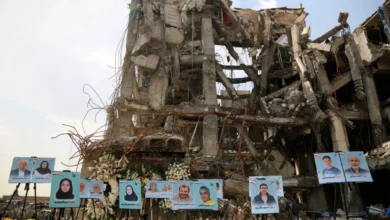
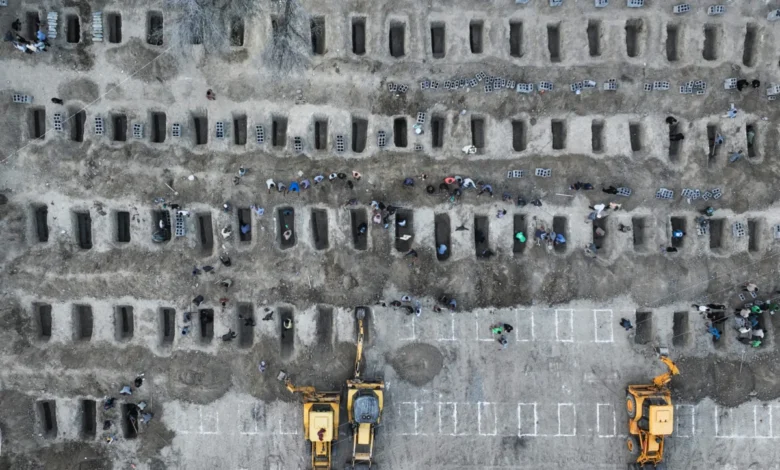
The dismantling of this apparatus has not occurred in a vacuum. As the U.S. has pulled back, reports of civilian casualties in conflict zones—particularly in Iran, following intensified air strikes against residential areas and educational facilities—have surged. For critics of the administration’s policy, the timing of the U.S. departure from Brussels is not merely a bureaucratic oversight; it is an abdication of duty at a moment when the risks to civilian life are escalating globally.
The Strategic Value of Civilian Protection
The U.S. military’s initial adoption of the CHMR framework was grounded in the realization that civilian harm is not just a humanitarian tragedy, but a strategic liability. Historically, the death of innocents has served as a potent recruitment tool for insurgent groups and a catalyst for diplomatic isolation. By establishing a framework to track, investigate, and offer amends for civilian harm, the Pentagon intended to provide commanders with the tools to operate with greater precision and legitimacy.
Jenny McAvoy, a former Defense Department official who played a key role in drafting the CHMR program, noted that the U.S. presence was essential to giving other nations the "permission" to prioritize humanitarian outcomes. "By the U.S. putting itself out there and saying, ‘We learned, we can do better,’ it gives permission and makes it OK for other governments to similarly acknowledge that they can do better, too," McAvoy explained.
The loss of this leadership is particularly acute for countries like the United Kingdom. While the British Ministry of Defense has lacked a formal, codified framework for civilian harm mitigation, advocates had long looked to the American model as the "gold standard" to emulate. Now, as the U.S. retreats, the pressure has shifted to European partners to fill the void. Recent internal reviews within the U.K. Ministry of Defense, which recommend the formalization of harm-tracking systems, suggest that while the U.S. may have abandoned its leadership role, the necessity of the work remains.

The View from Brussels: Resilience Without Washington
The ongoing summit in Brussels highlights a surprising resilience in the international community. Despite the absence of the U.S., the International Contact Group—led by the United Kingdom and the Netherlands—has continued to meet. For participants, the focus remains on standardizing how civilian protection applies in complex environments, such as maritime operations and large-scale coalition warfare.
Andrew Hyde, a senior fellow at the Stimson Center, notes that the current situation represents a fundamental pivot in the architecture of global security. "NATO has continued to push forward without U.S. support or participation," Hyde observed. "The international community is now forced to grapple with the reality that if the U.S. is not going to lead on these ethical standards, other nations must step up to insulate the work from the political whims of any single administration."
The implications of this shift are twofold. First, it threatens to create a fragmented global landscape where civilian protection standards vary wildly depending on the nationality of the forces involved. Second, it diminishes the ability of the U.S. to influence the rules of the road for the next generation of warfare. If American forces eventually return to these international forums, they may find themselves following standards established by their allies rather than shaping them.
Official Stance and the Reality on the Ground
The Pentagon has maintained a posture of bureaucratic reticence regarding its absence in Brussels. When reached for comment, a Department of Defense spokesperson emphasized that the U.S. "remains committed to fulfilling its civilian harm mitigation and response responsibilities," adding that civilian protections are factored into all phases of operational planning.
However, this statement contrasts sharply with the reality on the ground, where the gutting of the CHMR staff has left the military with significantly diminished capacity to investigate strikes, analyze casualty data, or implement lessons learned in real-time. For victims of recent strikes in Iran and beyond, the Pentagon’s official rhetoric offers little solace.
The history of the CHMR initiative is, at its core, a history of hard-won lessons. The 2015 Dutch air strike in Iraq, which killed at least 70 civilians during an operation targeting a car-bomb factory, serves as a grim reminder of why these protections are necessary. The resulting scandal and subsequent acknowledgment of responsibility by the Dutch government served as a catalyst for their later collaboration with the U.S. to prevent future tragedies.
Conclusion: A Vacuum in Global Governance
The withdrawal of the United States from the International Contact Group is more than a policy shift; it is a retreat from the global stage at a time when the rules governing the conduct of war are under unprecedented pressure. By choosing to prioritize immediate, unconstrained lethality over the systematic mitigation of harm, the current administration has effectively ceded the moral and strategic high ground.
As the international forum in Brussels concludes, the message to the global community is clear: the United States is no longer the partner it once claimed to be. While the work of civilian harm mitigation continues in the halls of NATO and among European allies, the absence of the world’s largest military power leaves a dangerous void. The long-term consequences of this abandonment—measured in the loss of lives, the erosion of international norms, and the diminished standing of the U.S. in the eyes of its partners—will likely be felt for years to come. Whether a future administration will have the political will to re-engage with these critical issues remains an open, and increasingly urgent, question.