Pennsylvania faces a public health crisis as measles-related death toll reaches four following the loss of an 18-year-old resident.

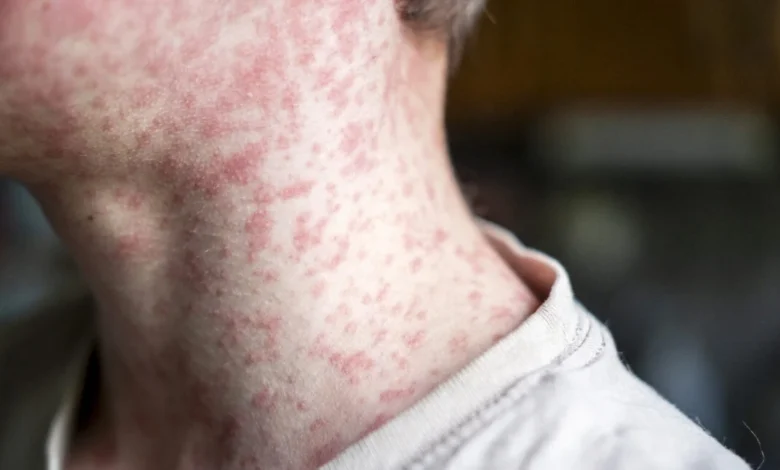
The Pennsylvania Department of Health confirmed on Tuesday that a fourth individual has succumbed to complications from measles, marking a grim milestone in what has become the state’s most severe outbreak of the highly contagious virus in over thirty years. The latest casualty, an 18-year-old resident of Mifflin County, was unvaccinated. This development follows the weekend confirmation from the Jefferson County coroner regarding the death of an unvaccinated 40-year-old woman. These two recent fatalities join a somber list that includes two infants from Lancaster County—a newborn and a six-week-old girl—both of whom were too young to have received the measles, mumps, and rubella (MMR) vaccine.
Clinical Context and the Mechanism of ADEM
The Mifflin County coroner, Andrea L. Alcalde, identified the cause of the 18-year-old’s death as acute disseminated encephalomyelitis (ADEM). ADEM is a rare but medically recognized, severe neurological complication of the measles virus. It is characterized as a rapidly progressing autoimmune disorder triggered by an aberrant inflammatory response to the infection. In patients suffering from ADEM, the body’s immune system mistakenly attacks the protective myelin sheaths that insulate nerve fibers in the brain and spinal cord.
Before the widespread adoption of the MMR vaccine in the late 20th century, ADEM was a more commonly observed consequence of measles. While other viral infections can theoretically incite this reaction, the current outbreak in Pennsylvania has brought the severe, often overlooked dangers of measles back into the spotlight. Coroner Alcalde stated that the determination was reached after a comprehensive review of medical records and diagnostic data. Out of respect for the grieving family, no further personal details regarding the individual will be disclosed.
Chronology of the 2026 Outbreak
The current outbreak has evolved rapidly, catching many health systems off guard as vaccination rates have fluctuated in various regions of the state. The situation began to escalate earlier this year, with health officials noting an unusual spike in transmission clusters across 38 counties.
- Initial Detection: The state health department identified early clusters in the spring, which rapidly ballooned throughout the summer months.
- The Infancy Tragedies: By late summer, the state confirmed the deaths of two infants in Lancaster County. The loss of a newborn and a six-week-old infant underscored the vulnerability of those who cannot yet be protected by the two-dose vaccine regimen.
- Continued Escalation: Throughout September, the number of confirmed cases climbed into the hundreds, with the health department struggling to contain transmission in areas with lower-than-average immunization coverage.
- Recent Developments: The confirmation of the 40-year-old woman’s death in Jefferson County over the weekend, followed by the Tuesday confirmation of the 18-year-old’s death in Mifflin County, has solidified this event as a major public health emergency.
Epidemiological Data and Transmission Trends
As of the latest report from the Pennsylvania Department of Health, the state has recorded 693 confirmed cases of measles across 38 counties. Perhaps most concerning to epidemiologists is the velocity of the spread: 99 of those cases were reported within the last seven days alone, suggesting that the outbreak has not yet reached its peak.
The strain on the healthcare system is substantial, with 133 individuals requiring hospitalization due to severe symptoms, such as pneumonia, respiratory distress, and neurological complications like ADEM. Public health analysts point to the "R-naught" (R0) value of measles—which is estimated to be between 12 and 18—as the primary reason for such rapid proliferation. Because measles is airborne and can remain infectious in the air for up to two hours after an infected person has left a room, it remains one of the most contagious diseases known to modern medicine.
Official Responses and Public Health Messaging
Pennsylvania Secretary of Health Debra Bogen issued a formal statement on Tuesday, expressing her condolences to the families of the deceased while doubling down on the importance of immunization. "My thoughts are with the two families who lost loved ones to this highly contagious virus, as Pennsylvania faces the worst measles outbreak in more than three decades," Bogen stated. "We remain committed to working with our partners across Pennsylvania to stem this outbreak and prevent more deaths. That means ensuring people have the facts about measles and access to the MMR vaccine—which kept measles outbreaks at bay for decades."
The department is expected to update its official outbreak dashboard on Wednesday to include the two most recent deaths. Health officials are now emphasizing the concept of "herd immunity," noting that when vaccination rates dip below the 95% threshold, the entire community becomes vulnerable, including those who are immunocompromised or too young to be vaccinated.
Broader Implications for Public Health Policy
The current Pennsylvania outbreak serves as a stark case study in the consequences of vaccine hesitancy and the erosion of public trust in medical institutions. Health experts argue that the resurgence of measles is not a failure of science, but a failure of community-level prevention efforts.
The implications are far-reaching. Beyond the immediate tragedy of lives lost, the outbreak has placed a significant financial burden on the state’s healthcare infrastructure. Hospitals in affected counties have been forced to implement strict triage protocols, isolate infected patients, and conduct extensive contact tracing to curb transmission. This diverts critical resources away from other medical needs, including elective surgeries and chronic disease management.
Furthermore, medical sociologists suggest that the "infodemic" surrounding vaccines—where misinformation circulates more rapidly than verified scientific data—has contributed to the skepticism that led to this crisis. The death of a 40-year-old and an 18-year-old in the same timeframe highlights that measles is not merely a "childhood disease," as it is often colloquially dismissed. Adults who missed their primary series as children or whose immunity has waned over time are now finding themselves at risk in a landscape where the virus is circulating freely.
Future Outlook and Mitigation Strategies
Moving forward, the Pennsylvania Department of Health is focusing on three key pillars: surveillance, education, and access. Surveillance involves the ongoing, rigorous testing and tracking of new cases to identify transmission chains. Education efforts are being ramped up to combat misinformation with evidence-based communication, particularly in counties where vaccination rates have historically lagged. Finally, access initiatives aim to remove barriers to the MMR vaccine, including hosting mobile clinics and partnering with local pharmacies to ensure that any individual who needs protection can receive it without delay.
As the state enters the final months of the year, the focus remains on preventing further mortality. Medical professionals are urging the public to verify their vaccination status, particularly those planning to travel or attend large public gatherings. The lesson of this outbreak is clear: the resurgence of a disease once considered eliminated in the United States requires a unified, science-based response. As the state continues to manage this crisis, the priority for health authorities will be to restore the community’s immunity threshold and prevent this preventable disease from claiming more lives. The data is a sobering reminder that while the virus is ancient, its threat remains contemporary and lethal in the absence of robust, universal vaccination.