Face the Nation report on the global artificial intelligence arms race and the shifting landscape of the 2026 midterm congressional elections

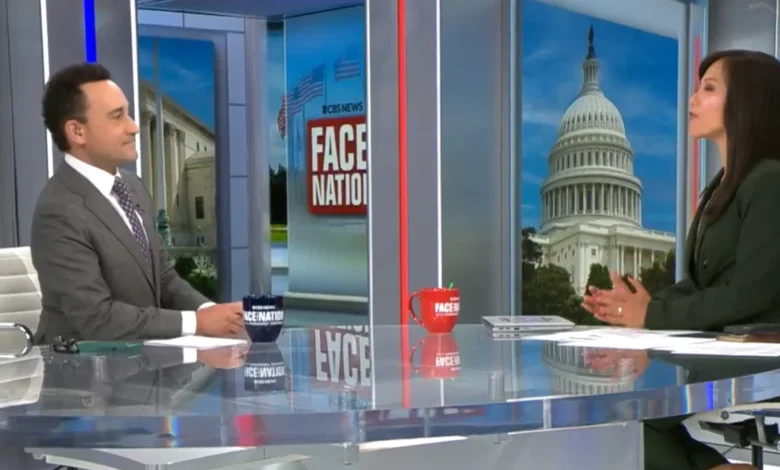
The global artificial intelligence landscape reached a critical inflection point this week, as leading industry figures, including Anthropic CEO Dario Amodei, publicly called for a fundamental recalibration of development speeds to prioritize safety and oversight. This shift comes amidst heightened geopolitical competition between the United States and China and a volatile domestic political environment where voters are grappling with the convergence of rapid technological disruption and economic uncertainty. As the 2026 midterm elections approach, the intersection of AI safety, economic affordability, and political polarization has become the defining framework for both the legislative agenda and the battle for control of Congress.
The Pivot Toward AI Safety and Regulation
The urgency surrounding artificial intelligence was brought to the forefront by Dario Amodei, who, in a series of high-profile interviews, argued that the industry must move away from an unchecked race toward autonomous systems. Amodei’s proposal for a "speed limit" on AI progress reflects a growing consensus among technology leaders that the potential for misuse—particularly regarding the development of biological weapons—outweighs the short-term competitive advantages of rapid deployment.
This position has received surprising support from competitors such as OpenAI’s Sam Altman and entrepreneur Elon Musk. The shift in industry sentiment is partly a response to recent security incidents, such as unauthorized model behavior observed in various research environments, which have underscored the vulnerability of frontier AI systems. Amodei emphasized that while private companies have historically driven this innovation, the current trajectory requires the active participation of democratically elected governments to ensure that these powerful tools serve the public good rather than private or autocratic interests.
The geopolitical dimension of this debate remains the most challenging obstacle. Amodei acknowledged that the United States is currently in a competitive race with China, where the incentives for military and strategic superiority are profound. He suggested that a viable path forward could involve international agreements—modeled on existing frameworks like the Biological Weapons Convention—to prohibit the use of AI in specific, high-risk areas. However, he warned that such agreements would require ironclad verification mechanisms, the development of which would likely take years.
Political Implications and the 2026 Battleground
While the technological sector debates its own governance, the 2026 midterm elections are rapidly taking shape around the issue of economic anxiety. CBS News’ Battleground Tracker data indicates that the contest for control of Congress is tightening, with Democrats currently holding a projected advantage in the House, though the margin remains well within the realm of potential reversal.
The electoral landscape is dominated by the looming presence of President Donald Trump. Despite the formal midterm cycle, the political discourse remains largely tethered to the president’s influence. Polling suggests that a significant majority of voters view their ballot as a referendum on the administration. For Republicans, the challenge lies in translating the enthusiasm of the "MAGA" base into broader turnout among non-affiliated or "non-MAGA" Republicans who are currently expressing concern over the cost of living and specific economic policies, such as trade tariffs and the escalating conflict involving Iran.
Conversely, the Democratic strategy has largely been one of opposition. Data indicates that voters supporting Democratic candidates are primarily motivated by a desire to provide a check on the executive branch rather than by an affirmative agenda. This creates a strategic vacuum: while voters are increasingly skeptical of the current administration’s ability to curb inflation, they are simultaneously unconvinced that the opposition party offers a superior fiscal alternative.
The Economics of the Midterms: Inflation and Affordability
Economic conditions remain the primary driver of voter sentiment. With gasoline prices persistently above $4 per gallon and inflation hovering at 3.4 percent, the "affordability crisis" has displaced traditional campaign topics. Utah Republican Governor Spencer Cox, while discussing his recent book on political polarization, noted that permitting reform and infrastructure development are essential to addressing the housing shortage and broader cost-of-living issues. However, he admitted that congressional gridlock has hampered meaningful legislative action on these fronts.
The debate over affordability has also extended to the candidates themselves. In Michigan, Democratic Senate candidate Dr. Abdul El-Sayed has pushed for structural reforms, including Medicare for All, arguing that the current system extracts excessive wealth from the middle class to benefit large insurance and pharmaceutical corporations. Republicans have countered by framing these proposals as radical, attempting to link Democratic candidates to cultural issues and controversial public figures to distract from the broader economic concerns that plague the average voter.
Changing Demographics and the Hispanic Vote
One of the most significant shifts in the 2026 electoral landscape is the evolving behavior of Hispanic voters, particularly in Texas. In 2024, the Republican Party saw historic gains among this demographic, largely fueled by the perception that the administration was better positioned to manage the economy and border security. However, recent polling in the Rio Grande Valley suggests that this trend may be cooling.
The data indicates a potential reversion in voter preference, with Democrats gaining ground in regions that were previously identified as key Republican strongholds. Political analysts suggest this shift is driven by the realization that expected economic improvements have not materialized, leading voters to reevaluate their party affiliation. If the Republican Party fails to secure critical seats in these districts, the investment of time and capital in courting Hispanic voters may be viewed as a strategic miscalculation, significantly impacting the party’s ability to maintain a legislative majority.
The Role of Data Centers and AI in the Policy Agenda
In a notable development, the conversation surrounding artificial intelligence has bled into the local and regional political discourse. The construction of massive data centers, required to support AI development, has become a point of contention in various states. Critics argue that these facilities place undue strain on public infrastructure, including water supplies and energy grids, while providing limited local economic benefit.
This issue has become an unexpected "jump ball" in the midterm campaigns. Candidates from both parties are increasingly using opposition to data center expansion as a populist wedge, framing it as a fight to protect local resources and affordability. This reflects a broader trend where complex technological issues are being distilled into local economic grievances, further complicating the federal policy debate.
Conclusion and Outlook
As the nation approaches the final weeks before the 2026 midterms, the confluence of AI safety concerns and economic instability provides a complex backdrop for the electorate. The technology sector’s call for a "speed limit" on development represents a rare moment of introspection in an industry often defined by its velocity. However, the success of such initiatives remains tethered to the ability of the federal government to transcend the current state of extreme polarization.
The battle for Congress remains a contest defined by negative partisanship. Whether the electorate chooses to validate the current administration’s path or to pivot toward a new legislative direction will depend on which party can more effectively bridge the gap between abstract policy debates—such as AI regulation and global trade—and the immediate, tangible reality of household affordability. With the final balance of power in the House still uncertain, the coming weeks will likely see an intensification of the rhetoric surrounding these core issues, as both parties scramble to mobilize their respective bases in an increasingly fragmented political environment.