American Hostage: Jon Hamm and the Evolution of Media Spectacle in a Fractured Age

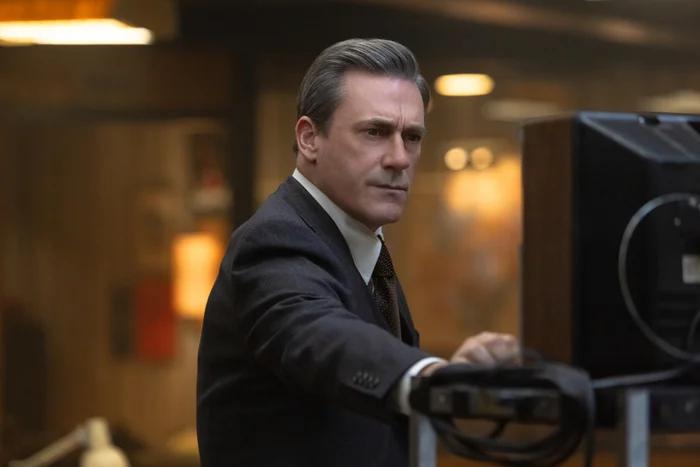
The 1977 standoff between Indianapolis mortgage broker Tony Kiritsis and his hostage, Richard Hall, serves as the chilling foundation for the upcoming psychological thriller American Hostage, starring Jon Hamm. As the series prepares for its September 20 premiere on MGM+, it arrives not merely as a retelling of a historical crime, but as a mirror held up to the contemporary landscape of media consumption, political polarization, and the erosion of public trust in institutional journalism. Co-created by Shawn Ryan and Eileen Myers, the series explores the intersection of desperate individual grievance and the burgeoning power of the 24-hour news cycle.
The Anatomy of a 1977 Crisis
The historical event, which gripped the American public in February 1977, began when Tony Kiritsis, a borrower who felt defrauded by his lender, kidnapped Richard Hall, a mortgage broker. What transpired over the next 63 hours was a precursor to the modern "media event." Kiritsis did not merely demand ransom or a getaway vehicle; he demanded a platform. He insisted that his grievances be broadcast live to the public via Fred Heckman, a highly respected local radio reporter.
Heckman, played by Hamm in the series, found himself in a position that challenged the traditional boundaries of journalism. He was expected to be both a dispassionate observer and an active participant in a life-or-death negotiation. This blurring of lines—where the reporter becomes the bridge between the criminal and the public—is a central tension in the show, highlighting a pivotal moment in American history where the media’s role shifted from reporting the news to becoming a central character in its execution.
Chronology of the Kiritsis Case
The events of 1977 unfolded with a velocity that felt unprecedented for the era:
- February 8, 1977: Tony Kiritsis kidnaps Richard Hall at gunpoint from his office in Indianapolis, wiring a shotgun to the hostage’s head.
- The Demands: Kiritsis leads police on a pursuit that ends in his apartment, where he begins a series of phone calls to Fred Heckman at WIFE-AM. He demands that his story be aired publicly, claiming he was a victim of a predatory mortgage scheme.
- The Media Circus: As the standoff progresses, the situation escalates into a national story. Local news outlets begin broadcasting live updates, setting a template for how television and radio would cover future hostage crises, from the Patty Hearst case to the O.J. Simpson car chase.
- The Resolution: After nearly three days, Kiritsis eventually surrendered, but not before he had successfully dominated the local airwaves and forced the public to listen to his manifesto. The trial that followed later that year resulted in a verdict of not guilty by reason of insanity, a decision that sparked widespread debate about the nature of justice and the influence of media-driven public sentiment.
Media Trust and the Fractured Landscape
The production of American Hostage serves as a timely commentary on the decline of media credibility. According to recent data from Gallup, trust in the American media is currently at record lows, with a significant portion of the population expressing skepticism toward the veracity and neutrality of news outlets. This contrasts sharply with the era of Fred Heckman, when local news anchors were often viewed as trusted pillars of their communities.
"We live in a very fractured journalistic world," says co-creator Shawn Ryan. "You can choose your news more than the news informs you. Back then, there was a sense that the news was something sacred."
The show juxtaposes the 1977 environment, where a single, authoritative voice could act as a mediator in a crisis, with today’s landscape, where information is atomized. The implications of this shift are profound: when the public no longer shares a common set of facts, the capacity for mediation in times of social or political crisis becomes severely diminished.
Jon Hamm on the Resonance of the "American Dream"
Speaking at the Toronto International Film Festival (TIFF), Jon Hamm reflected on why a story from nearly 50 years ago feels so relevant to modern audiences. For Hamm, the title of the series is a double entendre. While the immediate plot involves a physical hostage-taking, the subtext deals with the "hostage" state of the American Dream—the feeling of being trapped by systems that no longer serve the individual, leading to deep-seated resentment.
"I think the idea of a certain segment of the population being overlooked, or feeling under-addressed in their wants and needs and desires, is very present," Hamm noted. "Is he in fact hostage to his American Dream? There is a lot of resonance in the title."
This perspective aligns with sociological studies on populist movements and political volatility, which suggest that when individuals feel that traditional channels for addressing grievances are closed, they may turn to extreme, performative acts to force visibility. The Kiritsis case, while localized to Indianapolis in the 1970s, now appears as an early warning of the "performative grievance" that characterizes much of today’s digital and political discourse.
The Evolution of the "Salacious" News Cycle
The series also functions as a historical critique of the media’s own evolution. Hamm identifies the 1994 O.J. Simpson police chase as the moment when local, sensationalized stories truly began to dominate the national consciousness, but he posits that the seeds were sown much earlier, with incidents like the Kiritsis standoff and the Patty Hearst kidnapping.
These events demonstrated the "salacious" potential of live coverage—the realization that a dramatic, high-stakes standoff could command an audience that no standard broadcast could reach. Over the subsequent decades, this model was refined and amplified, leading to the current environment where the demand for high-intensity, emotionally charged content often outweighs the necessity for deliberate, context-heavy reporting.
Implications for Modern Journalism
The implications of the American Hostage narrative are twofold. First, it highlights the ethical quagmire of journalists being pulled into the events they cover. When a reporter is asked to negotiate for a life, the objectivity required for journalism is compromised. Second, it raises questions about the responsibility of media platforms in amplifying the voices of those who use violence to gain attention.
As Ryan points out, Hamm’s character is forced to balance his professional reputation with the immediate, visceral need to save lives. This tension is not merely a plot device; it is a fundamental challenge that journalists continue to face in the era of social media. When a platform is granted to a provocateur, the platform effectively becomes a participant in the outcome.
A Reflective Conclusion
As viewers tune into the premiere of American Hostage on MGM+ this September, the series will likely offer more than just a historical reenactment. By grounding its narrative in the 1977 Kiritsis case, the show provides a clear lens through which to view the present. The transformation of a local radio story into a national obsession serves as a cautionary tale about the power of the airwaves, the fragility of public trust, and the desperate measures individuals take when they feel abandoned by the systems that promised them success.
In an age where the distinction between news, entertainment, and propaganda is increasingly thin, the story of Fred Heckman and Tony Kiritsis remains an essential, if uncomfortable, reminder of how we arrived at the current state of American discourse. The series does not provide easy answers, but it forces an interrogation of the media’s role in shaping—and sometimes escalating—the crises that define the American experience.