Former BigLaw Attorney Gabriel Gershowitz Officially Disbarred Following Guilty Plea in High-Stakes Insider Trading Scheme

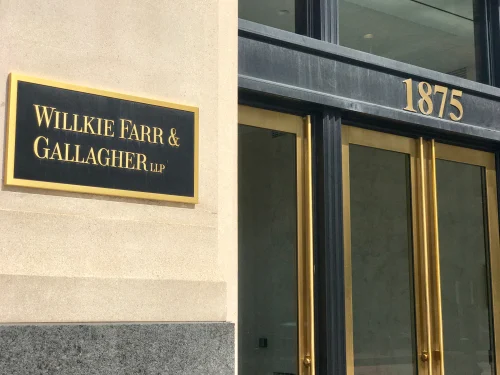
Gabriel Gershowitz, a former corporate attorney who previously practiced at prominent international law firms including Willkie Farr & Gallagher, has officially been disbarred following his involvement in a sweeping, multi-million-dollar insider trading ring. According to an order issued by the Appellate Division’s First Judicial Department of the New York Supreme Court, the court accepted Gershowitz’s application to resign from the bar, effectively striking his name from the roll of attorneys and counselors-at-law.
The disbarment order, which was handed down on Thursday, September 11, 2026, carries retroactive effect to July 13, 2026. This administrative action marks the latest professional casualty in a broader federal investigation into illicit securities trading that has deeply shaken the legal and financial sectors, casting a harsh spotlight on the ethical vulnerabilities inherent in high-stakes corporate practice.
The Mechanics of the Disbarment Order
According to public court documents and reporting by Law.com, Gershowitz formally submitted his resignation application under New York’s judicial rules governing attorney discipline. The First Judicial Department’s ruling underscored that the resignation was processed with full acknowledgement of legal consequences.
“Respondent acknowledges that his resignation is freely and voluntarily rendered, without coercion or duress, and with full awareness of the consequences, including that the court’s acceptance and approval shall result in the entry of an order of disbarment striking his name from the roll of attorneys and counselors-at-law,” the court stated in its official filing.
By choosing to resign rather than contest formal disciplinary proceedings, Gershowitz expedited an inevitable outcome. Under New York Judiciary Law, an attorney who pleads guilty to a federal felony—or an offense that would constitute a felony if committed within the state—is automatically stripped of their law license. Because insider trading constitutes a serious federal crime involving fraud and breach of fiduciary duty, disbarment is a mandatory standard procedure.
Background and Career Trajectory
Before his entanglement in the illicit trading scheme, Gershowitz built a seemingly respectable career within the upper echelons of corporate legal practice. Public records and professional profiles indicate that he spent formative years honing his skills at some of the most prestigious law firms in the United States.
Prior to his tenure at Willkie Farr & Gallagher—where he worked as a corporate counsel advising on major mergers and acquisitions (M&A)—Gershowitz held positions at other elite global institutions, including Weil, Gotshal & Manges and DLA Piper. In these environments, attorneys regularly handle highly sensitive, non-public information concerning impending corporate takeovers, mergers, leveraged buyouts, and financial restructuring. It was precisely this privileged access to confidential data that federal prosecutors allege Gershowitz weaponized for personal financial gain, breaching the core ethical obligations of attorney-client confidentiality and fiduciary duty.
Chronology of the Insider Trading Investigation
The unraveling of Gershowitz’s career is tied to a complex, multi-jurisdictional federal investigation into insider trading networks that systematically targeted upcoming corporate transactions handled by elite law firms and financial institutions.
- The Predicate Conduct: Over a sustained period, federal regulators and prosecutors uncovered a scheme wherein confidential details regarding impending M&A deals were leaked ahead of public announcements. Insiders used these confidential tips to purchase securities in target companies, reaping substantial illicit profits before stock prices surged post-announcement.
- The Criminal Plea: Gershowitz ultimately entered a guilty plea, admitting to his role in passing confidential transaction tips to co-conspirators. As part of his legal strategy, he agreed to cooperate with federal authorities in their ongoing investigation into the broader insider trading ring.
- The Interim Period: Following his guilty plea, Gershowitz’s ability to practice law was immediately compromised, leading to his eventual separation from BigLaw practice.
- The Disbarment (July – September 2026): With the criminal proceedings advancing, the New York disciplinary machinery set into motion. The retroactive disbarment date of July 13, 2026, aligned with the operational timeline of his legal disqualification, culminating in the formal First Department order released in September 2026.
The Broader Impact on the Legal Profession
The case of Gabriel Gershowitz is not an isolated incident, but rather part of a troubling series of high-profile ethics scandals involving attorneys at elite corporate law firms. In recent years, federal authorities—including the Securities and Exchange Commission (SEC) and the U.S. Department of Justice (DOJ)—have intensified their scrutiny of insider trading within the professional services sector, specifically targeting lawyers, investment bankers, and management consultants who sit at the epicenter of material non-public information (MNPI).
For decades, law firms have maintained rigorous internal compliance protocols, ethical walls, and mandatory training regarding insider trading and the handling of confidential client data. Yet, the temptation presented by multi-million-dollar market movements continues to lure occasional bad actors. When an attorney sworn to uphold the law actively participates in securities fraud, the institutional damage extends far beyond the individual. It invites heightened regulatory oversight, erodes public trust in the legal profession’s self-regulatory mechanisms, and places intense reputational pressure on the firms that inadvertently employed the wrongdoer.
Major firms like Willkie Farr & Gallagher, Weil, Gotshal & Manges, and DLA Piper invest heavily in technological monitoring and confidentiality enforcement. However, policing the clandestine communications of individual attorneys remains a formidable challenge. The swiftness with which New York courts moved to disbar Gershowitz reflects the zero-tolerance stance adopted by judicial authorities when attorneys are convicted of federal financial crimes.
Legal and Regulatory Implications Moving Forward
As Gershowitz faces the finality of his criminal sentence and the permanent loss of his professional livelihood, the legal community continues to grapple with the structural implications of such insider trading rings.
- Stricter Internal Controls: Law firms are increasingly auditing document access logs, restricting remote access to active deal rooms, and expanding surveillance of employee trading accounts.
- Enhanced Whistleblower Protections and Cooperation: With Gershowitz opting to cooperate with federal prosecutors, the case highlights the incentives structured into federal sentencing guidelines for individuals willing to untangle complex criminal networks. This dynamic often leads to cascading indictments, capturing not just the primary tipsters, but secondary traders and front-runners as well.
- Reputational Management: Elite institutions must continuously reassure clients that their confidential data remains secure, emphasizing that isolated criminal acts by rogue employees do not reflect systemic organizational failures.
Ultimately, the official disbarment of Gabriel Gershowitz closes a dark chapter in his personal professional journey while serving as a stark reminder of the severe legal and ethical boundaries governing the modern practice of corporate law.