OpenAI Unveils Micro Keypad, Marking Cautious Entry into Hardware Amidst Legal Challenges

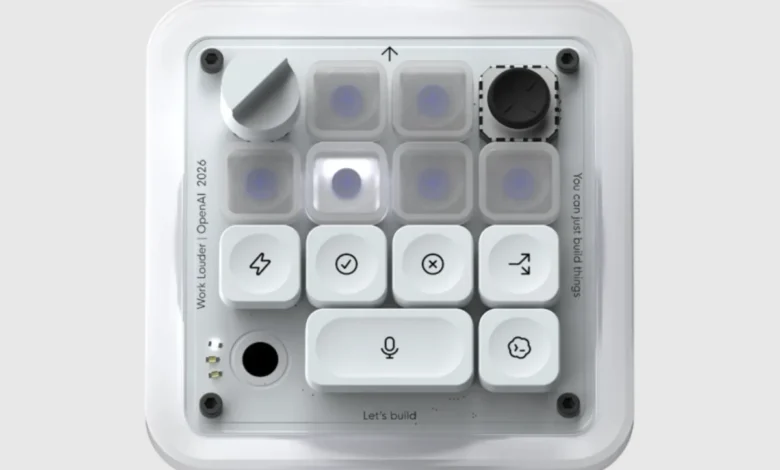
OpenAI, the pioneering force behind ChatGPT, recently introduced its inaugural hardware product, Micro, a specialized keypad designed to enhance interaction with its artificial intelligence models. Developed in collaboration with specialty keyboard designer Work Louder, Micro represents an intriguing, albeit somewhat perplexing, foray for the software-centric AI giant into the tangible world of consumer electronics. This compact device, while appealing to a niche segment of tech enthusiasts and "code monkeys," has garnered a mixed reception, underscoring the complexities and high stakes of integrating AI directly into physical interfaces. Its launch comes at a pivotal moment for OpenAI, as the company navigates escalating legal battles and rumored ambitions for a broader hardware ecosystem.
OpenAI’s strategic pivot towards hardware has been a subject of considerable speculation within the tech industry. For years, the company has focused almost exclusively on developing advanced AI models, democratizing access to powerful tools like ChatGPT. However, the increasingly competitive landscape, coupled with a growing industry trend towards integrating AI directly into user devices, appears to have prompted a re-evaluation of its market approach. The introduction of Micro is not merely a product launch; it signifies a potential shift in OpenAI’s long-term vision, hinting at a future where its AI capabilities are not just accessed through web interfaces or APIs, but are embedded into a suite of proprietary devices. This move echoes historical patterns seen with other tech giants like Apple and Google, which have successfully married software innovation with bespoke hardware experiences.
The path to hardware, however, has not been without significant turbulence. Just weeks prior to Micro’s unveiling, OpenAI found itself embroiled in a high-profile legal dispute with tech titan Apple. The iPhone maker initiated a lawsuit against the AI lab, alleging trade secret theft. This legal action, which promises to be a protracted and costly affair, casts a shadow over OpenAI’s expansion plans and highlights the intensifying intellectual property battles in the rapidly evolving AI sector. The core of Apple’s complaint reportedly revolves around proprietary information and technologies that OpenAI is alleged to have leveraged in its development, though specific details remain under wraps. Such litigation can divert significant resources, both financial and human, from product development and strategic initiatives, potentially slowing down OpenAI’s momentum in new ventures like hardware.
Adding another layer of intrigue to OpenAI’s hardware aspirations are persistent rumors of a more ambitious smart home product currently under development. Reports indicate this device, also designed to integrate seamlessly with ChatGPT, is being engineered by a team comprising several former Apple engineers. This detail has raised considerable eyebrows across the industry. The recruitment of talent from a company renowned for its hardware design and integrated ecosystem suggests a serious commitment from OpenAI to establish a strong presence in the physical device market. However, it also fuels speculation regarding the origins of the alleged trade secret theft, further entangling OpenAI in a narrative of aggressive expansion potentially at the expense of established industry norms. The presence of ex-Apple personnel on a competing hardware project creates an optics challenge and could complicate the ongoing legal skirmish.
Until these legal challenges are resolved and OpenAI’s more ambitious hardware projects materialize, Micro stands as the company’s sole tangible offering in the hardware space. Positioned as an "artisanal workplace novelty," the keypad is clearly engineered to appeal to a specific demographic: developers, coders, and advanced users who frequently interact with AI tools like ChatGPT and its agentic coding counterpart, Codex. Its collaboration with Work Louder, a company known for its niche, high-quality mechanical keyboards, emphasizes this target audience, aiming to deliver a premium, tactile experience. The strategy appears to be one of starting small, testing the waters with a specialized accessory before potentially diving into broader consumer electronics.
TechCrunch, which received a Micro test unit, provided initial impressions that paint a picture of a well-crafted, albeit somewhat enigmatic, device. The most immediate observation upon handling Micro is its robust construction. The keypad feels substantial and durable, suggesting a high level of manufacturing quality. This sturdiness led one reviewer to quip that if its AI accessory function doesn’t pan out, it could easily serve as a high-end paperweight. Beyond its physical heft, the packaging of Micro also drew significant attention. Housed in an immaculate white box with a sleek, clean aesthetic, its presentation was noted for being distinctly "Apple-coded." This stylistic choice, whether intentional or coincidental, adds to the ongoing narrative surrounding OpenAI’s relationship with the Cupertino giant and its apparent aspiration to create an integrated user experience reminiscent of Apple’s ecosystem.
Functionally, Micro is designed for streamlined interaction with OpenAI’s AI models. The keypad features a distinct layout: six frosted "agent" keys positioned at the top, which are fully customizable to execute specific tasks or activate particular functionalities within ChatGPT or Codex. Below these are six "command" keys, intended for controlling the activated programs. Connectivity options include both Bluetooth for wireless convenience and a USB cable for a more direct, stable connection, catering to different user preferences and workstation setups. This dual connectivity ensures versatility, allowing the device to be integrated into various environments, from a minimalist desk to a more complex developer workstation.

One of Micro’s most touted features is its integrated voice dictation button. This allows users to simply hold down the button, speak their commands or queries, and then tap a "send" button to submit their request to the AI. This promises a significant leap in efficiency for users who prefer verbal interaction or wish to minimize typing, transforming spoken language directly into actionable AI prompts. The customization of Micro extends beyond mere key assignments; users can fine-tune various aspects of the device through a dedicated Micro tab within the ChatGPT interface. This includes adjusting the brightness of the key backlighting, assigning specific commands to each key, and linking them to particular projects or AI sessions. This level of personalized control is intended to make the device an indispensable tool for power users, allowing them to tailor it precisely to their workflow.
Despite these advanced features and thoughtful design elements, Micro’s reception among its core target audience – hard-core coders and AI developers – has been largely lukewarm, if not overtly negative. Online forums, particularly Reddit, have been rife with critical assessments. One Reddit user dismissively labeled Micro as "a prank and not a real product," while others expressed strong doubts that serious coders would ever integrate such a device into their professional toolkit. The independent outlet Aftermath delivered an even harsher critique, specifically targeting the device’s $230 price tag. The review, tellingly titled "OpenAI’s expensive macropad feels engineered to piss me off specifically," argued that the cost is exceedingly difficult to justify when compared to numerous cheaper DIY or off-the-shelf alternatives available in the market. These alternatives often offer similar programmability and functionality at a fraction of the cost, making Micro a tough sell for value-conscious professionals.
The general consensus among many reviewers and early adopters is that Micro presents a considerable learning curve. For new users, understanding its full capabilities and effectively programming it to suit individual workflows requires a dedicated investment of time and effort. The keypad incorporates a color-coded feedback system for its buttons: white indicates an agent is idle, blue signifies active thinking or processing, green confirms a task is complete, and red alerts the user to an error. Memorizing these color codes, alongside the specific projects or commands tied to each customizable key, adds to the initial cognitive load. This complexity directly challenges the device’s purported goal of enhancing efficiency, as users must first master its intricate operation before reaping any benefits.
The fundamental question that arises from Micro’s design and reception is whether it offers a genuinely superior or more efficient interaction paradigm compared to existing methods. Many users ponder: why invest a week in learning to program and operate this specialized keypad when proficiency with a standard computer mouse and keyboard is already established? This question strikes at the heart of Micro’s value proposition. For the average user, or even a casual ChatGPT user, the effort required to integrate Micro into their workflow might outweigh the perceived benefits. The friction introduced by the learning curve and the financial outlay further diminish its appeal to a broader audience.
Ultimately, the utility and value derived from Micro appear to be directly proportional to a user’s engagement with ChatGPT and other AI tools. For individuals who infrequently use AI, the device offers little more than a novelty. The reviewer for TechCrunch acknowledged this, stating that as someone who doesn’t use AI extensively day-to-day, they are likely not the target audience. However, for a dedicated ChatGPT power user – someone who frequently switches between multiple AI-driven projects, relies heavily on AI for coding or content generation, and seeks every possible efficiency gain – Micro might indeed find its niche. For this specific demographic, willing to invest $230 and appreciative of vintage-looking hardware with satisfyingly clicky mechanical buttons, Micro could become a valuable, even delightful, addition to their toolkit. The ability to quickly toggle between various AI sessions and leverage voice dictation for complex prompts could significantly streamline their work, making the initial learning investment worthwhile.
OpenAI’s launch of Micro, despite its niche appeal and initial criticisms, represents a significant strategic move. It signals the company’s intent to move beyond pure software and explore the lucrative, albeit challenging, hardware market. This expansion could be interpreted as an attempt to create a more tightly integrated AI ecosystem, similar to what tech giants like Apple and Google have achieved with their respective product lines. By offering dedicated hardware, OpenAI aims to control more of the user experience, potentially leading to optimized performance and unique functionalities that cannot be replicated on generic devices.
The broader implications for the AI ecosystem are substantial. As AI models become more powerful and ubiquitous, the interfaces through which humans interact with them will evolve. Micro, despite its flaws, is an early indicator of this trend: dedicated AI hardware designed to optimize human-AI collaboration. This could pave the way for a new category of peripherals and devices specifically engineered for AI interaction, moving beyond general-purpose computing. The success or failure of products like Micro will inform future design choices and market strategies for other AI companies contemplating similar ventures. Furthermore, OpenAI’s entry into hardware intensifies competition not only with fellow AI developers but also with established hardware manufacturers, setting the stage for an exciting, and potentially contentious, era of innovation in AI-powered devices. The journey of Micro, therefore, is not just about a keypad; it is about the future trajectory of one of the world’s leading AI innovators and the evolving landscape of human-AI interaction.
Related posts: