American Airlines Charts Distinct Strategic Path as Capacity Management Diverges from Major Industry Rivals

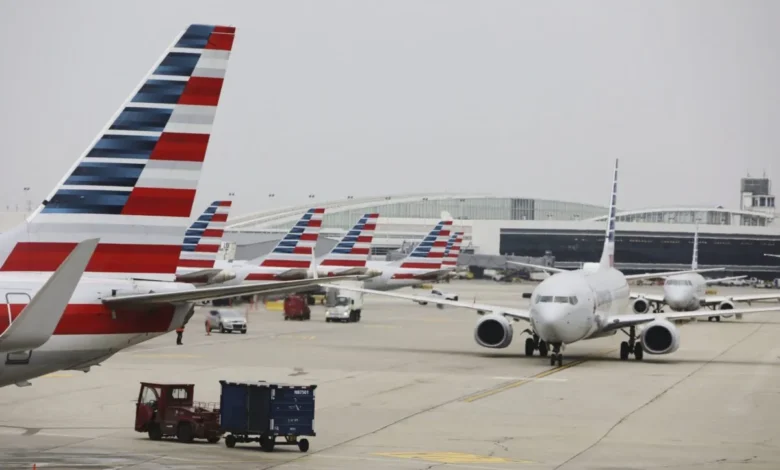
The global aviation industry is currently navigating a complex intersection of fluctuating consumer demand, geopolitical instability, and highly volatile energy markets. Within this environment, a significant strategic rift has emerged among the "Big Three" U.S. carriers. While Delta Air Lines and United Airlines have moved aggressively to trim their flight schedules to bolster pricing power, American Airlines is pursuing a more expansive capacity strategy. Despite reporting a second-quarter profit that trailed its primary competitors by a substantial margin, executives at the Fort Worth-based carrier are defending their decision to keep more seats in the sky, citing a conservative stance on fuel volatility and a long-term commitment to market share.
During the second quarter of the current fiscal year, American Airlines increased its capacity—measured in available seat miles (ASMs)—by 5.4% compared to the previous year. This growth trend is set to continue, with the carrier projecting a third-quarter capacity increase of between 3% and 5%. This stands in stark contrast to the broader industry movement, where many legacy and low-cost carriers are retreating from aggressive expansion to mitigate the impact of rising operational costs, particularly the price of jet fuel.
The Economics of Capacity and Yield Management
In the airline industry, capacity management is the primary lever for controlling "yield," or the average fare paid per passenger per mile. When an airline reduces the number of available seats on a specific route, it creates a scarcity that allows the revenue management team to raise ticket prices. This strategy, often referred to as "capacity discipline," has been the hallmark of the U.S. airline industry since the consolidation era of the late 2000s. By keeping supply slightly below demand, airlines can ensure high "load factors"—the percentage of seats filled—and maximize the revenue generated from every flight.
Delta Air Lines and United Airlines have leaned heavily into this discipline throughout the first half of the year. By cutting underperforming routes and reducing frequencies on secondary markets, these carriers have successfully offset the rising costs of labor and fuel. The financial results of this approach are evident: Delta reported a staggering $1.6 billion profit for the second quarter, while United posted a robust $805 million.
American Airlines, conversely, reported a second-quarter profit of $71 million. While this figure technically exceeded Wall Street’s consensus expectations, it highlighted a significant performance gap between American and its peers. The decision to fly more seats has resulted in lower yields, as the carrier must often offer more competitive pricing to fill the additional capacity. However, American’s leadership argues that their strategy is designed to provide a buffer against the inherent volatility of the current market, particularly regarding energy costs.
Navigating the Fuel Price Volatility
The primary driver behind American’s strategic divergence is the unpredictable nature of jet fuel prices. Fuel remains the single largest variable expense for any airline, often accounting for 20% to 30% of total operating costs. In recent months, the crack spread—the difference between the price of crude oil and the price of refined products like jet fuel—has fluctuated wildly due to refinery outages and shifting global supply chains.
American Airlines executives have characterized their approach as "conservative," suggesting that making drastic, permanent cuts to the flight schedule based on temporary fuel spikes could be counterproductive. By maintaining a higher baseline of capacity, the airline remains positioned to capture demand if fuel prices stabilize or if competitors’ cuts leave lucrative market gaps.
"We are taking a more measured approach to how we adjust our network," an American Airlines spokesperson noted during a recent briefing. "While capacity discipline is a tool we use, we also recognize the importance of maintaining our schedule integrity and ensuring our customers have the connectivity they expect from the world’s largest network."
A Chronology of Strategic Shifts
The current divergence in strategy can be traced back to the post-pandemic recovery period. In 2022 and 2023, as travel demand surged, all major carriers rushed to restore capacity. However, the operational environment shifted in early 2024.
- January – March 2024: Fuel prices began to climb amid tensions in the Middle East and Eastern Europe. Delta and United signaled they would moderate growth plans for the remainder of the year.
- April 2024: American Airlines reaffirmed its commitment to its "Sunbelt" strategy, focusing growth on hubs like Dallas/Fort Worth (DFW) and Charlotte (CLT), where it maintains a dominant market share.
- May 2024: Industry data revealed that domestic capacity was outstripping demand in several key markets, leading to a "fare war" in the discount segment. While low-cost carriers like Spirit and Frontier struggled, American chose to maintain its schedule rather than retreat.
- July 2024: Second-quarter earnings reports were released. The $1.5 billion profit gap between Delta and American sparked intense debate among analysts regarding the long-term viability of American’s high-capacity model.
Hub Dominance and the Sunbelt Advantage
A critical component of American’s capacity strategy is its geographical footprint. Unlike United, which has a heavy focus on international long-haul routes and coastal hubs, American has doubled down on its domestic strengths in the southern United States. The "Sunbelt" strategy focuses on connecting small and medium-sized communities through its massive hubs in Texas and North Carolina.
By maintaining high capacity in these regions, American creates a "moat" around its business. In many of these markets, American is the only carrier providing frequent service, allowing it to capture a high percentage of business and premium leisure travelers who value schedule frequency over the absolute lowest price. This network density requires a certain level of capacity that cannot be easily cut without degrading the value of the entire hub-and-spoke system.
Furthermore, American has invested heavily in its regional fleet, utilizing smaller aircraft to maintain frequency on routes where a larger jet might not be profitable. This flexibility allows the carrier to keep its schedule robust even as it manages the overall capacity increase of 5.4%.
Market Reactions and Analyst Perspectives
The financial community remains divided on American’s path. Some analysts argue that American is sacrificing short-term profitability for market share, a move that could be risky if the U.S. economy slows down.
"American is essentially betting that they can out-wait the volatility," said one senior aviation analyst. "By keeping their planes in the air, they are maintaining their relationship with the corporate traveler and the frequent flyer. But when you look at the $71 million profit versus Delta’s $1.6 billion, it’s clear that the ‘premium’ strategy of their rivals is currently winning the day in terms of shareholder returns."
Others point out that American’s lower profit is also tied to its debt structure and labor costs. The airline recently finalized several major labor contracts, including a landmark deal with its pilots’ union, which significantly increased fixed costs. In this context, maintaining high capacity is seen as a way to spread those increased fixed costs over a larger number of available seat miles, theoretically lowering the unit cost (CASM).
Broader Implications for the Traveling Public
For the average traveler, American’s decision to maintain capacity is generally positive news. High capacity levels typically lead to more options and more competitive pricing. In markets where American has increased its seat count, passengers may find more frequent flight times and lower fares compared to markets where Delta or United have restricted supply.
However, the industry-wide trend toward capacity discipline among other carriers suggests that the era of "cheap" airfares may be sunsetting. If American eventually aligns its strategy with its rivals to chase higher profits, the overall supply of seats in the U.S. domestic market will contract, likely leading to a sustained increase in ticket prices across the board.
Future Outlook: The Third Quarter and Beyond
As the industry moves into the third quarter, all eyes will be on the "yield" metrics. American’s projection of 3% to 5% growth suggests that the carrier is not yet ready to blink. The success of this strategy will depend on two primary factors: the stabilization of fuel prices and the continued resilience of the American consumer.
If fuel prices remain high or climb further, American may be forced to reconsider its stance. The narrow profit margin of $71 million leaves little room for error. Conversely, if fuel prices retreat, American’s high-capacity network could become a massive profit engine, allowing it to capture the lion’s share of travelers as they return to the skies in record numbers.
The divergence between American, Delta, and United represents a fundamental test of two different business philosophies. One prioritizes high-margin, premium service through restricted supply; the other prioritizes network dominance and connectivity through sustained capacity. As the fiscal year progresses, the financial results will ultimately determine which carrier has correctly read the pulse of a volatile global economy. For now, American Airlines remains committed to its course, flying more seats and betting on the long-term strength of its expansive network.