House Judiciary Chair Calls for Criminal Probe of Jack Smith Over Alleged False Statements to Congress

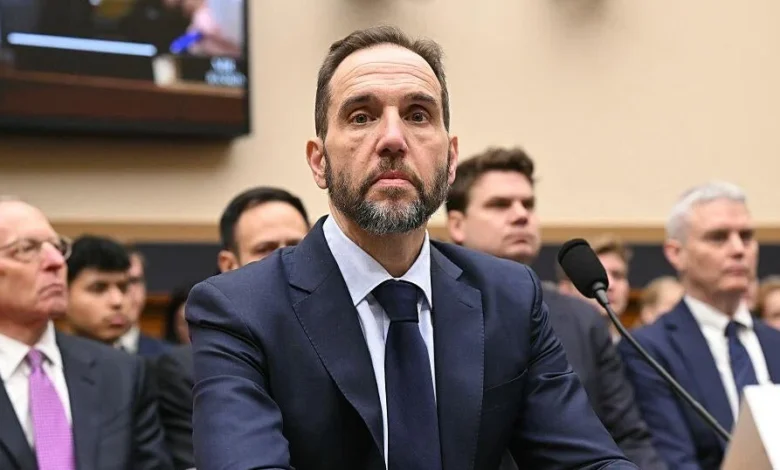
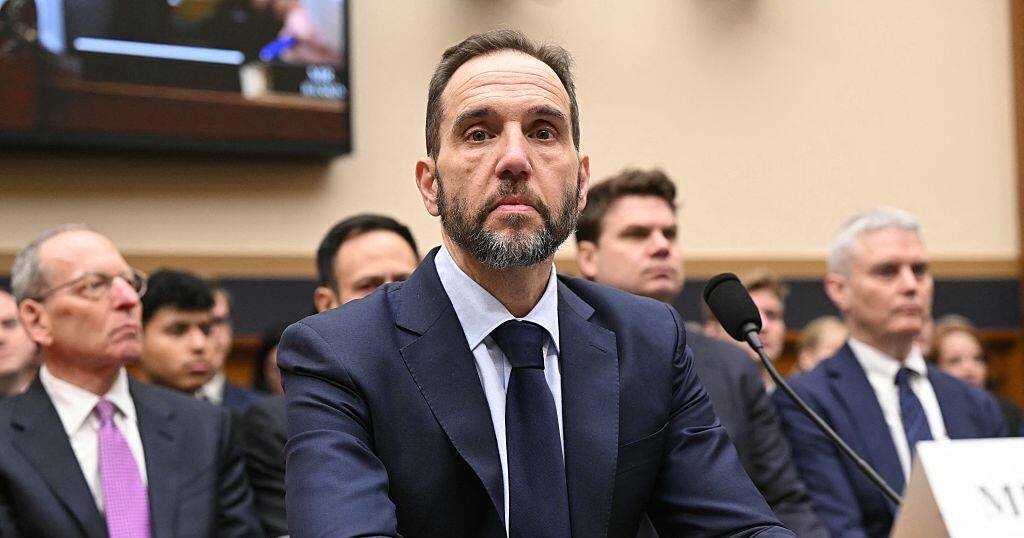
The Republican chair of the House Judiciary Committee has formally encouraged the Department of Justice to launch a criminal investigation into Jack Smith, the former special counsel who led high-profile probes against former President Donald Trump. Representative Jim Jordan of Ohio submitted a criminal referral on Wednesday, alleging that Smith made "materially false statements" and improperly withheld information from Congress during a prior deposition. These accusations, which Smith’s legal team vehemently denies as "spurious," escalate the ongoing political and legal skirmishes surrounding the investigations into the former president. The referral specifically targets Smith’s testimony regarding the acquisition of Republican lawmakers’ communication records during the course of his inquiry into Mr. Trump’s actions following the 2020 presidential election.
The Core Allegations and Discrepancies
At the heart of Jordan’s criminal referral is a perceived inconsistency between Smith’s sworn testimony last year and more recent revelations from the Justice Department. During a deposition, Smith reportedly stated that his team had not received the content of any phone calls or text messages from Republican lawmakers, clarifying that the records obtained were "tolling records." These records, he explained, primarily include metadata such as the numbers called, call durations, and times, rather than the substance of communications. This distinction was crucial, as it implied that investigators had not accessed sensitive legislative communications.
However, the situation took a new turn last week when the Justice Department informed lawmakers, including Senator Chuck Grassley of Iowa, that in a separate subpoena issued to the National Archives and Records Administration (NARA), Smith’s investigative team had obtained text messages. These messages were exchanged between Trump-era White House staffers and dozens of members of Congress, including a significant number of Republicans and a few Democrats. Jordan contends that this new information directly contradicts Smith’s earlier testimony, accusing the former special counsel of making "intentionally false statements designed to obstruct the Committee’s oversight" and failing to disclose the NARA subpoena.
The criminal referral emphasizes that "All individuals have an obligation to comply with a duly authorized congressional inquiry. Mr. Smith, a former public servant, is no different." It requests Acting Attorney General Todd Blanche to initiate a formal investigation into Smith’s conduct. The Department of Justice has confirmed receipt of Jordan’s referral letter, stating that it "will investigate all evidence of criminal conduct," a standard response to such congressional requests.
Jack Smith’s Defense and Broader Context
Attorneys representing Jack Smith swiftly issued a robust defense, branding Jordan’s referral as "baseless" and "spurious." In a letter addressed to both Jordan and Blanche, Smith’s lawyers asserted that their client’s answers to the committee’s questions were "unimpeachably truthful." They underscored a critical point: Smith was specifically questioned about subpoenas for GOP lawmakers’ tolling records, not about the broader request for records from the National Archives, which encompassed communications between White House staff and members of Congress. This distinction, they argue, demonstrates that Smith did not provide false testimony but rather answered the questions posed to him precisely.
Furthermore, Smith’s legal team noted that the text messages obtained via the NARA subpoena had already been disclosed to Mr. Trump’s defense lawyers. At no point during that process, they contend, did Trump’s legal counsel suggest that anything "unlawful or improper" had occurred regarding the acquisition or review of these communications.
"This referral reflects a chilling eagerness to weaponize the justice system by attacking a career, nonpartisan public servant who faithfully and fearlessly performed his duties by following the facts and the law," Smith’s lawyers wrote, framing the referral as a politically motivated attack rather than a legitimate legal concern. This statement aligns with a broader narrative from Smith’s supporters and Democrats, who view the ongoing scrutiny of the former special counsel as an attempt to undermine independent investigations and retaliate against those who pursued cases against Mr. Trump.
Congressional Divisions and Reactions
The criminal referral immediately exposed deep partisan fissures within Congress. Representative Jamie Raskin of Maryland, the top Democrat on the House Judiciary Committee, dismissed Jordan’s action as "baseless and vindictive." In a statement, Raskin ridiculed the premise of the referral, arguing that it "will get laughed out of court" if ever heard by a judge. "The Republicans fault Mr. Smith for not reading the minds of congressional investigators and for not volunteering information they didn’t ask for," Raskin wrote, adding sarcastically, "This is absurd. Mr. Smith may be telegenic but he is not telepathic."
This sentiment reflects the long-standing Democratic defense of Smith’s professionalism and the integrity of his investigations, often portraying Republican attacks as attempts to obstruct justice or to discredit legitimate oversight.
Conversely, Senator Chuck Grassley, a prominent Republican and chair of the Senate Judiciary Committee, has been a vocal critic of the handling of these records. Last week, when the Justice Department disclosed the acquisition of text messages from 44 lawmakers via the NARA subpoena, Grassley expressed outrage. He previously characterized the FBI’s analysis of phone tolling records of eight Republican senators and one GOP House member in October as "disturbing and outrageous," alleging that the FBI had "spied" on members of Congress. Grassley has consistently championed the narrative of "weaponization" of law enforcement and government agencies against political opponents, a theme frequently echoed by former President Trump.
In his latest statement regarding the NARA texts, Grassley accused investigators of running "roughshod over the Constitution" and expressed hope that "Democrat colleagues, several of whom had their own texts swept up, finally put partisanship aside and recognize the severity of these actions." He specifically raised concerns about the potential violation of the Speech or Debate Clause, which offers significant protections to members of Congress from criminal prosecution related to their legislative duties.
Timeline and Background of the Special Counsel Investigations
Jack Smith was appointed Special Counsel by then-Attorney General Merrick Garland in late 2022, shortly after Donald Trump announced his 2024 presidential campaign. His mandate was to oversee two highly sensitive and politically charged Justice Department investigations: one focusing on Mr. Trump’s alleged attempts to overturn the results of the 2020 election, and the other examining his handling of classified government documents after leaving the White House.
These investigations culminated in historic federal indictments against a former president. Smith brought charges in both cases, marking the first time a former U.S. president faced federal prosecution. These actions drew intense condemnation from Mr. Trump, who consistently denied any wrongdoing and labeled the investigations as politically motivated "witch hunts" designed to interfere with his presidential campaign.
However, both of Smith’s cases against Mr. Trump ultimately concluded without convictions in 2024. The classified documents indictment was dismissed by a federal judge who ruled that Smith was "invalidly appointed" under Department of Justice regulations. Separately, the Supreme Court delivered a significant blow to the 2020 election interference indictment by ruling that Mr. Trump was entitled to broad immunity for official acts performed while in office. Following this ruling and Mr. Trump’s subsequent victory in the 2024 presidential race, Smith’s office officially dropped the election case. Despite the dismissal, Smith submitted a final report arguing that Mr. Trump would have been convicted had the case proceeded, reaffirming his belief in the strength of the evidence.
The Complexities of Congressional Communications and the Speech or Debate Clause
The controversy surrounding the acquisition of congressional communications touches upon fundamental constitutional principles, particularly the Speech or Debate Clause (Article I, Section 6, Clause 1) of the U.S. Constitution. This clause provides legal immunity to members of Congress for "any Speech or Debate in either House," designed to protect the legislative process from executive or judicial interference. Critics of Smith’s actions, like Senator Grassley, argue that the collection of text messages between lawmakers and the White House could infringe upon these protections, especially if they relate to legislative duties.
The Justice Department’s letter to Grassley also highlighted another procedural concern: the text messages obtained via the NARA subpoena were "almost immediately sent over to Smith’s staff, preventing them from being reviewed by a ‘filter team.’" A filter team, also known as a "taint team," is typically a separate group of prosecutors or agents responsible for screening evidence that might be privileged (e.g., attorney-client privilege, spousal privilege, or potentially legislative privilege) before it reaches the main investigative team. The absence of such a review in this instance has been a point of contention for those alleging improper conduct.
Smith’s attorneys, however, counter this argument. They contend that the Speech or Debate Clause "does not prevent prosecutors from using or reviewing text messages between Members of Congress and members of the Executive Branch in an investigation and prosecution of an Executive Branch official, which is precisely what happened here." They further argued that a filter team review was not strictly necessary for these White House records, as the primary purpose of such teams is to sort out evidence covered by protections like attorney-client privilege, which they suggest was not the central issue with these particular communications. They maintain that Smith approached the investigation "following the facts and the law while adhering to Department of Justice protocol and regulations."
Implications and Future Outlook
The criminal referral against Jack Smith represents a significant escalation in the ongoing political battle over accountability and the integrity of government investigations. While criminal referrals from Congress to the Justice Department are not uncommon, actual prosecutions resulting from them are rare and often face high legal hurdles. To successfully prosecute Smith for false statements under 18 U.S.C. § 1001, the Justice Department would need to prove beyond a reasonable doubt that he knowingly and willfully made a materially false statement or omission in a matter within the jurisdiction of the executive branch or Congress. Smith’s lawyers have already laid out a robust defense centered on the specificity of the questions asked during his deposition.
The Department of Justice, now under an acting Attorney General, faces a politically charged decision. Investigating a former Special Counsel, especially one who investigated a former president, would be an extraordinary step, likely intensifying accusations of political weaponization from both sides of the aisle, regardless of the outcome. Declining to investigate, however, could draw accusations from Republicans of protecting their own or ignoring congressional oversight.
This episode also highlights the delicate balance between congressional oversight, executive branch investigations, and constitutional protections. The debate over what constitutes "privileged" information for members of Congress, the proper procedures for obtaining and reviewing such information, and the scope of a Special Counsel’s authority will likely continue to be points of contention in the political and legal landscape for years to come. For now, the referral stands as a testament to the enduring divisions and intense scrutiny surrounding the investigations into former President Trump, casting a long shadow over the future of independent prosecutorial authority and congressional oversight.