UK Culture Secretary Lisa Nandy Poised to Make Consequential Decisions Impacting US Media and Tech Giants

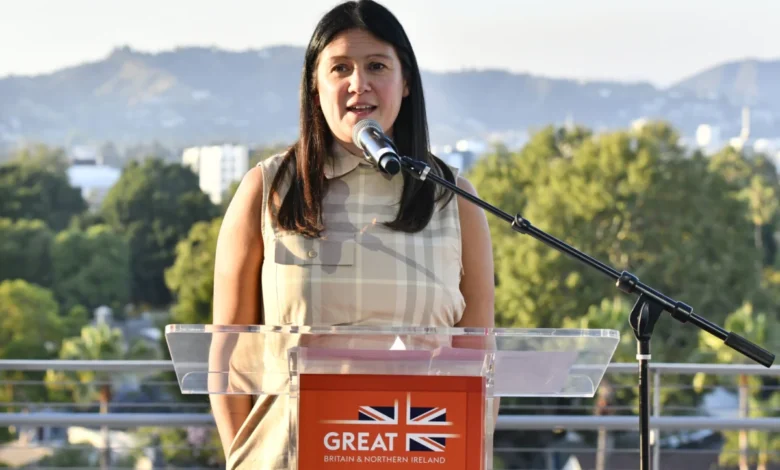
The recent political reshuffling in the United Kingdom, which saw Andy Burnham ascend to the Prime Minister’s office, had widely anticipated a change in leadership within the Department for Digital, Culture, Media and Sport. However, Lisa Nandy has retained her portfolio, now holding the distinction of being the longest-serving Culture Secretary in over a decade. This longevity, coupled with a slate of significant decisions on the horizon, positions Nandy to become one of the most influential figures in the department’s recent history, with profound implications for major American entertainment conglomerates and technology titans.
These impending decisions, expected over the coming months, carry the potential to either significantly disrupt or strategically align with the interests of virtually all dominant U.S. studios, streaming services, and tech giants. This comes at a critical juncture for Prime Minister Burnham, who is navigating the delicate diplomatic landscape of maintaining positive relations with former President Donald Trump, building upon the groundwork laid by his predecessor, Keir Starmer.
Paramount-Warner Bros. Discovery Merger: A Lingering Uncertainty
One of the most immediate and significant challenges facing Nandy involves the proposed $110 billion merger between Paramount and Warner Bros. Discovery (WBD). Prior to the UK Parliament’s summer recess and Burnham’s elevation to Prime Minister, Nandy had left the regulatory review of this monumental deal in a state of suspense.
Initially, Nandy had publicly stated her inclination to "intervene" in the merger, citing concerns over media plurality. However, an update on her stance failed to materialize before the parliamentary break. Consequently, stakeholders, including David Ellison’s team, must now await the earliest possible resolution on September 1st to ascertain whether the deal will face a deeper probe by British regulators or receive the green light.
The financial ramifications of a delayed or blocked merger are substantial. The agreement reportedly includes a "ticking fee" provision, obligating WBD shareholders to receive 25 cents per share, approximating $650 million, for every quarter the takeover remains incomplete beyond the third quarter. This clause represents a considerable financial burden that escalates with each passing quarter of unresolved status.
David Ellison, a key figure in the merger discussions, reportedly engaged in efforts to influence Nandy during a high-profile visit to Europe in January. However, any positive sentiment generated by these charm offensives could evaporate if Nandy’s decision triggers the accrual of the "ticking fee." In the United States, the merger has already encountered significant headwinds, currently paused in response to an antitrust lawsuit filed by a coalition of a dozen states. This ongoing legal battle in the U.S. adds another layer of complexity to the already intricate regulatory landscape Nandy must consider.
Reimagining the BBC Licence Fee: A Potential Boon or Burden for Streamers
As the Paramount-WBD deal remains under intense scrutiny, another proposed policy from Nandy could provoke significant opposition from Netflix, a former suitor of Paramount. This controversial plan involves expanding the reach of the BBC licence fee to encompass subscribers of major streaming platforms such as Netflix, Disney+, and Amazon Prime Video.
The BBC has reportedly floated this initiative as a strategic measure to bolster revenue. The public broadcaster has highlighted a persistent challenge: while approximately 94% of the UK population engages with BBC services monthly, fewer than 80% currently remit the £180 annual licence fee. This shortfall results in an estimated annual loss of hundreds of millions of pounds.
While details regarding the practical implementation of such a policy remain scarce, Nandy has recently indicated her support for the proposal. Her stance suggests a willingness to explore mechanisms that would require individuals accessing non-live content on streaming services to contribute to the licence fee, potentially even tasking the streamers themselves with the collection of these charges.
The Motion Picture Association (MPA), which represents a significant portion of major streaming services and studios, has already voiced strong objections. The organization has argued that such a plan would have a "downstream impact on viewers and their viewing experience." Despite these concerns, Nandy appears undeterred, noting that discussions with streaming services regarding various proposals are ongoing. She has, however, consistently ruled out the introduction of a streamer levy, a policy adopted by several other nations that mandates a small percentage of subscription revenue be contributed to a cultural fund supporting British content.
Netflix, in particular, has been a vocal critic of European regulatory trends that impose local content quotas and funding obligations. The streaming giant has frequently praised the UK for its relatively hands-off approach, which has allowed it considerable latitude in producing content such as the critically acclaimed series "Heartstopper" and "Baby Reindeer." Forcing its subscribers to indirectly subsidize a public broadcaster could represent a significant departure from this established dynamic and a potential affront to its operational freedom in a key market.
Tech Giants Under Scrutiny: Social Media Restrictions and Algorithmic Mandates
Beyond the realm of traditional media and streaming, Nandy’s department is also poised to implement significant regulatory measures impacting major technology companies. The UK is proceeding with a complete ban on social media use for individuals under the age of 16. Concurrently, legislation is being drafted to compel platforms like YouTube and TikTok to prominently feature public service content.
This latter proposal, initially articulated by Nandy at the RTS Convention, is framed as a crucial measure in the "fierce battle against mis and disinformation." For tech behemoths like Google (owner of YouTube) and ByteDance (owner of TikTok), these directives present substantial algorithmic and operational challenges. Mandating the prioritization of specific content could necessitate significant adjustments to their existing recommendation engines and content moderation strategies, potentially impacting user engagement and advertising revenue models.
Broader Implications and Future Trajectories
The absence of Nandy from her post earlier this week leaves an indelible mark on the potential outcomes of these critical decisions. Had her successor been appointed, the direction of travel on these complex issues could have been altered. However, as it stands, Nandy appears committed to advancing these policies, which will undoubtedly resonate across the Atlantic, affecting a broad spectrum of American entertainment and technology enterprises.
Many of these companies have cultivated closer ties with former President Donald Trump during his administration, often leveraging his influence or that of his allies to facilitate various business deals. The ongoing political landscape in the U.S., particularly concerning potential future administrations, adds another layer of strategic consideration for these global corporations.
In a symbolic gesture, Prime Minister Andy Burnham extended an invitation to Donald Trump to visit his hometown of Manchester during their initial phone call shortly after assuming office. Notably, Manchester is also Nandy’s place of origin. Should Trump accept this invitation, the Culture Secretary might find herself in a position to strategically observe these unfolding developments from a distance, a silent testament to the intricate interplay of international relations, domestic policy, and the global reach of the digital and entertainment economies. The decisions Nandy is set to make will not only shape the future of the UK’s media and technology landscape but also send ripples through the boardrooms of some of the world’s most powerful corporations.
Related posts: