NASA’s Psyche Spacecraft Captures Stunning Mars Flyby Images and Data During Gravitational Assist

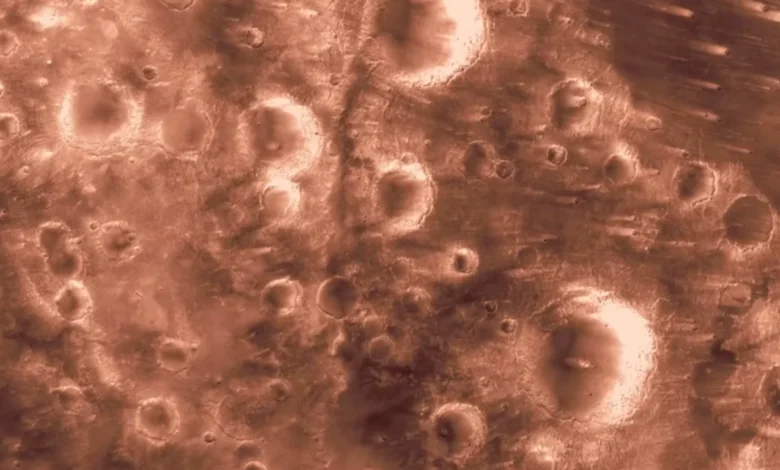
NASA’s Psyche spacecraft, on its ambitious journey to the metal-rich asteroid 16 Psyche, recently performed a critical gravitational assist maneuver using Mars. During this encounter in May, the spacecraft not only gained speed but also captured a remarkable collection of images and scientific data, offering unprecedented views of the Red Planet and providing valuable insights for its ongoing mission. The data gathered during this flyby is now being meticulously analyzed by scientists, offering a detailed look at Mars and further validating the functionality of Psyche’s sophisticated scientific instruments.
A Cosmic Dance: The Mars Flyby
The Psyche mission, launched in October 2023, is a groundbreaking endeavor by NASA to explore a unique asteroid composed primarily of metals, believed to be the exposed core of an early planetesimal. To reach its destination, located in the main asteroid belt between Mars and Jupiter, Psyche is undertaking a complex trajectory that includes several gravity assists. The recent flyby of Mars, a meticulously planned maneuver, was crucial for adjusting the spacecraft’s velocity and trajectory, enabling it to efficiently continue its 2.2-billion-mile voyage.
On May 27, 2024, Psyche made its closest approach to Mars, passing within approximately 2,864 miles (4,600 kilometers) of the Martian surface. This close encounter allowed the spacecraft’s suite of scientific instruments, designed to analyze the asteroid 16 Psyche, to be tested in a real-world interplanetary environment. The month-long period around the closest approach was dedicated to these instrument calibrations and data collection activities.
A Photographer’s Dream: Unveiling Mars’s Surface
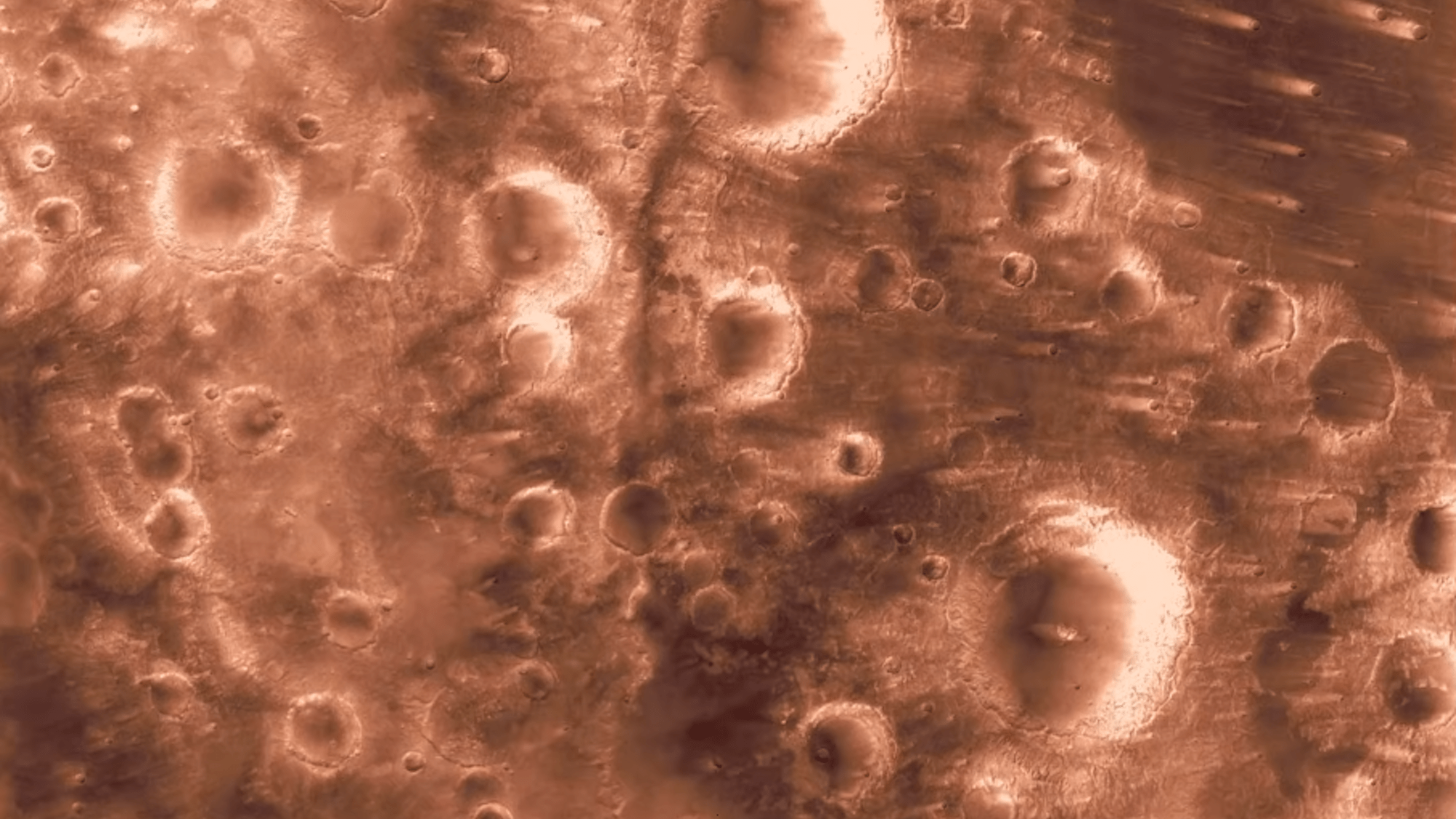
The most visually striking outcome of the Mars flyby is the series of high-resolution images captured by Psyche’s two identical cameras. These images, compiled into a captivating time-lapse video, showcase Mars in stunning detail, revealing its windswept surface, vast impact craters, and the ethereal polar ice caps. Unlike previous distant views, these close-ups provide a level of detail rarely seen, offering scientists a new perspective on the Red Planet’s geological history and atmospheric processes.
Jim Bell, the imager instrument lead for the Psyche mission at Arizona State University, expressed his enthusiasm about the captured imagery. "The imager performed brilliantly, delivering some rarely seen views of the Red Planet," Bell stated in a NASA press release. The images are not merely aesthetically pleasing; they serve as a vital part of the instrument calibration process. Scientists are analyzing factors such as camera performance, exposure settings, and image quality under various lighting conditions. This rigorous testing ensures that the cameras will be fully prepared to capture detailed imagery of asteroid 16 Psyche upon arrival.
Beyond the Lens: Scientific Instrument Validation
While the photographic evidence is compelling, the Mars flyby was equally significant for testing Psyche’s other advanced scientific instruments. The mission’s objective is to determine if asteroid 16 Psyche is indeed the core of an early planet, and its instruments are specifically designed for this purpose.
1. Magnetometer: Psyche is equipped with a magnetometer designed to measure magnetic fields. This instrument has been operational since the spacecraft’s launch, collecting data on solar winds. During the Mars flyby, the magnetometer detected a significant increase in its magnetic field reading as Psyche approached Mars. This surge correlated with the planet’s bow shock region, an area where the solar wind is deflected by the planet’s magnetic field. While the primary goal is to analyze the magnetic field of asteroid 16 Psyche, this observation provided valuable data on interplanetary magnetic field interactions with a planetary body, complementing existing knowledge of Mars’s magnetosphere.

2. Neutron Spectrometer: This instrument is designed to detect neutrons and gamma rays emitted by planetary bodies and asteroids. These emissions are a result of cosmic rays interacting with the object’s material. By analyzing the energy and flux of these emissions, scientists can infer the elemental composition of the target. Although Psyche was too distant during its closest approach to detect significant gamma rays from Mars, the neutron spectrometer did register a count-rate enhancement close to anticipated levels. "Around the time of Mars’s closest approach, the neutron spectrometer detected a count-rate enhancement close to what we anticipated. It was very gratifying to see," commented David Lawrence, the spectrometer science lead. This successful detection, even at a low level, provides confidence in the instrument’s sensitivity and its ability to perform its primary function at asteroid 16 Psyche.
3. Gamma-Ray and Neutron Spectrometer: This instrument suite is crucial for determining the elemental makeup of asteroid 16 Psyche. The principle behind its operation involves analyzing the unique signatures of gamma rays and neutrons that are emitted when cosmic rays bombard a celestial body. By matching these signatures to known elements, scientists can create a detailed chemical map of the asteroid. The Mars flyby provided an opportunity to test the spectrometer’s ability to detect these emissions from a planetary body, even at a distance.
4. Camera Calibration and Scattered Light Sensitivity: Beyond capturing images, the camera team utilized the Mars encounter to fine-tune calibrations. This included assessing the cameras’ performance in different lighting conditions and their sensitivity to scattered light, which can interfere with image clarity. The testing also involved observing Mars’s two small moons, Phobos and Deimos. This observation technique, known as "star tagging," will be replicated at asteroid 16 Psyche to potentially detect any small, orbiting moonlets around the asteroid.
Expert Insights and Mission Objectives
Lindy Elkins-Tanton, the principal investigator for the Psyche mission at the University of California, Berkeley, emphasized the value of the Mars flyby data. "We didn’t anticipate big discoveries, given how extensively the planet has been studied, but we did complement Mars science with the data we collected through Psyche’s unique perspective," she stated. This highlights the dual benefit of the mission: advancing our understanding of asteroid 16 Psyche while also contributing to the broader scientific knowledge base of our solar system.

The primary objective of the Psyche mission remains the exploration of asteroid 16 Psyche, a celestial body that offers a rare glimpse into the internal structure of planetesimals – the building blocks of rocky planets. Scientists theorize that 16 Psyche may be the remnant core of a protoplanet that failed to fully form. By studying its composition, magnetic field, and geology, researchers hope to gain unprecedented insights into the processes that shaped the terrestrial planets, including our own Earth.
The Road Ahead: Journey to Asteroid 16 Psyche
With the Mars flyby successfully completed, the Psyche spacecraft is now continuing its long voyage. The next critical step in its journey involves restarting its solar-electric propulsion system. This system will provide the sustained thrust necessary for Psyche to navigate the remaining billions of miles to its target. Mission specialists anticipate this restart to occur later in 2024.
The spacecraft is projected to reach asteroid 16 Psyche in 2029. Upon arrival, it will spend approximately 26 months in orbit, meticulously mapping the asteroid’s surface, studying its magnetic field, and analyzing its elemental and mineralogical composition. The data gathered from these observations will be instrumental in answering fundamental questions about planetary formation and the early history of our solar system.
The success of the Mars flyby is a testament to the meticulous planning and engineering prowess of NASA and its partners. It not only demonstrates the robust capabilities of the Psyche spacecraft and its scientific instruments but also underscores the importance of gravity assists as a vital tool for deep-space exploration. As Psyche continues its journey, the scientific community eagerly awaits the discoveries that this unique mission promises to unveil from the enigmatic metallic world of asteroid 16 Psyche. The data collected from Mars serves as a crucial stepping stone, building confidence and refining techniques for the groundbreaking science that lies ahead.