China Emerges as Dominant Economic Power Amid Middle East Energy Crisis and Strait of Hormuz Closure

A comprehensive report released on Tuesday by the geopolitical consulting firm Asia Group identifies China as the primary beneficiary of the ongoing Middle Eastern conflict and the subsequent closure of the Strait of Hormuz. While regional peers across Asia grapple with unprecedented energy shortages and economic instability, Beijing has successfully leveraged years of strategic stockpiling and a massive investment in renewable energy to insulate its economy from the shocks that have paralyzed global commodity markets.
The report, titled "Asia’s New Energy Map," concludes that China not only weathered the initial volatility better than any other regional power but is also positioned to gain significant long-term geopolitical influence. The crisis, which began in early 2026, has fundamentally altered the economic landscape of the Indo-Pacific, forcing a reckoning for nations traditionally dependent on the stability of Middle Eastern maritime corridors.
Chronology of a Global Crisis
The current instability traces back to February 28, 2026, when the United States and Israel launched a series of coordinated joint strikes against military and government installations within Iran. The operation, which targeted high-level command centers, resulted in the death of Iran’s Supreme Leader, Ali Khamenei. In immediate retaliation, Tehran moved to effectively close the Strait of Hormuz, the world’s most critical maritime chokepoint for energy exports.
By early March 2026, oil and gas transit through the waterway had slowed to a trickle. The impact was instantaneous: global Brent crude prices spiked, and the supply of liquefied natural gas (LNG) to Asian markets was severely disrupted. Prior to the closure, roughly 80 percent of the oil and nearly 90 percent of the LNG passing through the Strait was destined for Asian ports, primarily in China, Japan, South Korea, and India.
Throughout April and May, as diplomatic efforts to reopen the waterway stalled, the crisis evolved from a regional military conflict into a global economic emergency. While nations like Japan and South Korea implemented emergency rationing and saw their manufacturing sectors contract, China maintained a surprising degree of industrial continuity. By June 30, 2026, the date of the Asia Group’s report, it became clear that China’s resilience was the result of a multi-year strategy designed to mitigate exactly this type of external shock.
Strategic Energy Reserves: The 104-Day Buffer
A critical factor in China’s resilience has been its aggressive pursuit of energy security through stockpiling. Throughout 2025, Beijing took advantage of fluctuating but relatively low global oil prices to bolster its Strategic Petroleum Reserves (SPR). According to analysis by Erica Downs, a senior research scholar at the Center on Global Energy Policy, China’s crude imports rose from 11.1 million barrels per day to 11.6 million in 2025. Crucially, more than 80 percent of that increase was diverted directly into storage facilities rather than immediate consumption.
By January 2026, just weeks before the conflict erupted, China had accumulated enough crude oil to cover 104 days of imports at 2025 levels. This buffer allowed the Chinese government to stabilize domestic prices and ensure that its massive manufacturing base remained operational while competitors were forced to pay exorbitant spot-market prices or halt production.
"China’s foresight in 2025 has paid dividends in 2026," the Asia Group report notes. "With 90 to 110 days of crude import cover in reserve, China weathered the initial shock better than any regional peer." This stands in stark contrast to other major Asian economies that maintain thinner margins of error and were more exposed to the immediate cessation of Middle Eastern shipments.
The Renewable Revolution as a Shield
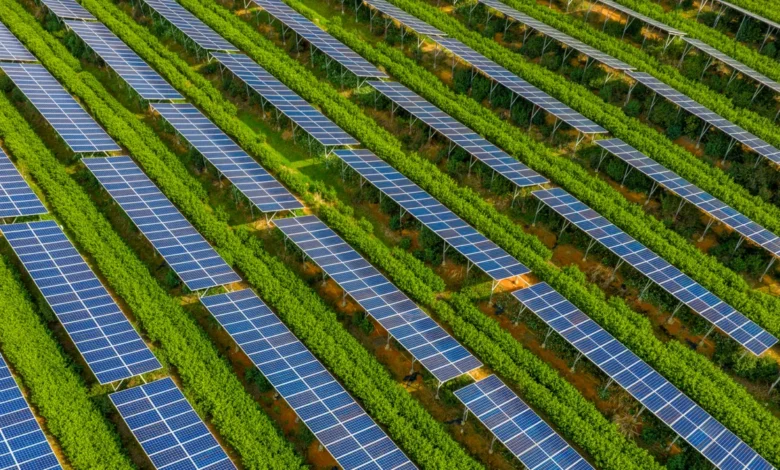
Beyond fossil fuel stockpiles, China’s long-term commitment to a "green transition" has provided a structural defense against the volatility of the Strait of Hormuz. The country has been installing renewable energy infrastructure at a scale and pace that dwarfs the rest of the world combined.
In 2024, China added 277GW of solar capacity. In 2025, that figure rose to 315GW—representing more than half of all new solar installations globally for that year. Currently, China boasts 1.4 terawatts of operating renewable capacity. This massive domestic energy source has reduced the country’s marginal reliance on imported gas for electricity generation.
Beijing’s stated goal is for non-fossil sources to account for 50 percent of its energy mix by 2030, with wind and solar specifically reaching a 30 percent share. While coal still accounts for over half of China’s energy consumption, the rapid integration of renewables has allowed the grid to absorb the shock of reduced LNG imports. This domestic energy independence has become a cornerstone of China’s national security, proving that "climate policy" and "energy security" are, for Beijing, two sides of the same coin.
Capturing the Global Pivot to Clean Tech
The crisis has also created a surge in demand for the very technologies that China now dominates. As other nations—particularly in Southeast Asia and Europe—scramble to reduce their dependence on Middle Eastern oil and gas, they are turning to Chinese manufacturers for solar panels, wind turbines, and electric vehicles (EVs).
In May 2026, Chinese EV exports soared by more than 110 percent compared to the previous year. Similarly, solar shipments in April increased by 60 percent. By flooding global markets with affordable clean energy technology, China is effectively locking in its role as the indispensable partner for the world’s energy transition.
Western leaders have expressed concern over this market dominance, often citing "overcapacity" and state subsidies that allow Chinese firms to undercut domestic industries in the U.S. and E.U. However, in the context of the current energy crisis, many nations find they have little choice but to rely on Chinese supply chains to keep their own economies functioning and to accelerate their transition away from fossil fuels.
Geopolitical Implications and the "Destabilizer" Narrative
The political fallout of the crisis has been equally significant. The Asia Group report highlights how Beijing has used the conflict to reshape global perceptions of U.S. foreign policy. By positioning itself as a proponent of a ceasefire and a steadying hand in global trade, China has sought to contrast its approach with what it describes as "destabilizing" American interventions.
During a visit by Donald Trump to Beijing in May 2026, President Xi Jinping emphasized the need for a settlement, claiming both nations shared a desire for regional stability. However, behind the diplomatic veneer, Beijing has capitalized on the narrative that U.S. entanglements in the Middle East impose heavy costs on the rest of the world.
"The crisis allows Beijing to cast the United States as the destabilizing actor whose Middle East entanglements impose costs on the world," the report states. This narrative resonates particularly well in emerging markets that have seen their fuel and food prices skyrocket due to a conflict they had no part in.
However, analysts warn that China’s "win" is not without risk. Drew Thompson, a senior fellow at the S. Rajaratnam School of International Studies in Singapore, notes that while the U.S. may be losing credibility, Beijing is not necessarily eager to step into the role of a Middle East hegemon. "Beijing does not want to supplant Washington as a provider of security for the region," Thompson said, pointing out that the responsibilities of a regional peacekeeper are both costly and politically fraught.
The Taiwan Factor and Strategic Caution
The Strait of Hormuz crisis has also provided a somber lesson for Beijing regarding its own regional ambitions, specifically concerning Taiwan. Wen-Ti Sung, a non-resident fellow with the Atlantic Council’s Global China Hub, suggests that the difficulty of navigating ships through hostile territory during the Iran crisis might make Beijing think twice about a military assault on Taiwan.
The closure of a major waterway and the resulting global economic backlash have demonstrated the sheer complexity of maintaining maritime control and the catastrophic consequences of a blockade. This "reality check" may serve as a deterrent, as China’s own economy remains deeply integrated into global trade networks that require open seas.
Conclusion: Challenges as Opportunities
The Asia Group’s analysis paints a picture of a nation that has successfully turned a global catastrophe into a strategic advantage. While the closure of the Strait of Hormuz has brought many economies to the brink of recession, China’s combination of foresight, massive state investment, and aggressive export strategies has allowed it to emerge as the "sole winner" in Asia.
The report concludes that Beijing does not view the current "pain points" of the global economy as existential threats. Instead, it views them as "challenges to be managed and even opportunities to be exploited." As the world looks toward a post-crisis future, the new energy and geopolitical maps being drawn in 2026 suggest that China’s influence will only continue to expand, anchored by its dominance in the technologies of the future and its resilience in the face of the volatility of the past.
Related posts: