The latter half of 2025 proved to be a period of intense political flux, marked by significant intra-party tensions, high-stakes elections, and a protracted government shutdown. Through its acclaimed "CNN Political Briefing" podcast, hosted by CNN Political Director David Chalian, the network offered listeners an unparalleled deep dive into these evolving narratives, featuring expert analysis and direct insights from key political figures. The podcast, a staple for those seeking to understand the intricate workings of Washington and beyond, consistently delivered timely discussions on the most pressing issues facing the nation, from the delicate balance of power within the Republican Party to the strategic maneuvers of Democrats eyeing the 2026 midterms.
I. The Shifting Sands of Republican Leadership and the Post-Trump Era
Speaker Johnson Under Fire: A Crisis of Leadership
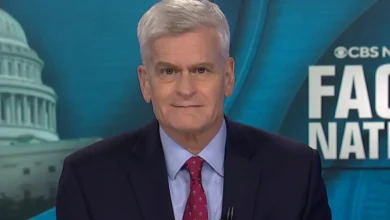
As 2025 drew to a close, the Republican Party found itself grappling with a profound leadership crisis, epitomized by the growing discontent directed at House Speaker Mike Johnson. On December 5, 2025, the "CNN Political Briefing" delved into this escalating tension with California Republican Congressman Kevin Kiley. Kiley, a vocal critic within the conference, explicitly stated that Speaker Johnson had "failed to lead," echoing sentiments increasingly heard from various factions within the GOP. This criticism came amidst a backdrop of legislative stagnation and internal feuds that had plagued the House Republican majority since the beginning of the 119th Congress.
The challenges for Speaker Johnson were multifaceted. Having ascended to the Speakership following a tumultuous period of internal upheaval within the Republican conference, he inherited a deeply fractured caucus with a razor-thin majority. His tenure was characterized by a delicate balancing act between the demands of conservative hardliners and the need to govern in a divided Congress. Key legislative priorities, including appropriations bills and significant policy reforms, frequently stalled due to a lack of unified support, leading to accusations of an inability to corral his diverse membership. Kiley’s remarks highlighted not just specific policy disagreements but a broader perception of a lack of strategic direction and an inability to project a cohesive Republican agenda. This internal strife was further complicated by the ongoing redistricting efforts in states like California, where new district lines, championed by figures like Governor Gavin Newsom, threatened the political futures of several Republican incumbents, including Kiley himself. Such changes added an existential layer to the intra-party squabbles, as members fought not only for policy influence but for their very seats. The podcast episode, a concise 17-minute discussion, offered a candid look into the "vibe shift" underway within the Republican conference, signaling a crucial period of introspection and strategic recalibration as the party began to orient itself towards the 2026 midterm elections and contemplated a future potentially "beyond President Trump." The discussions underscored the profound questions facing the GOP regarding its identity, leadership, and electability in the evolving American political landscape.
The Enigmatic Future of the MAGA Movement
Just weeks prior, on November 21, 2025, the "CNN Political Briefing" explored another critical dimension of the Republican Party’s future: the potential erosion of former President Donald Trump’s seemingly unshakeable control over his MAGA base. Titled "Is President Trump Losing Control of MAGA?", this 25-minute episode featured Jonathan Martin of POLITICO, who offered an astute assessment of the cracks appearing in Trump’s once-indomitable bond with his most ardent supporters. The discussion centered on several key instances that suggested a shift in dynamics. One notable point of contention was Trump’s reversal of course on the highly sensitive Epstein files, a move perceived by some within his base as a strategic concession aimed at aligning with the broader Republican establishment rather than catering to the fervent anti-establishment sentiment often found within the MAGA movement. This perceived pivot, though perhaps minor in the grand scheme, hinted at a tactical compromise that ruffled feathers among those who expected unwavering adherence to his populist platform.
Furthermore, Martin highlighted growing criticism from Trump’s supporters regarding his messaging, particularly his perceived lack of focus on critical domestic issues like prices and affordability. In an economic climate characterized by persistent inflationary pressures, many MAGA voters expressed frustration that the former president was increasingly prioritizing foreign affairs, a domain traditionally less central to the movement’s core grievances. This shift in focus created a disconnect with a base that often felt unheard on kitchen-table issues. Martin’s analysis questioned whether these developments signaled the beginning of Trump’s "lame duck period," even if he were still a formidable force, and pondered who or what might emerge as the next torchbearer for the populist right. The implications were significant, suggesting that while Trump remained a pivotal figure, the unquestioning loyalty of his base might be evolving, opening avenues for new leaders or ideological currents to gain traction within the conservative movement. The segment underscored the ongoing redefinition of the Republican Party in a post-presidency (or post-second-term) Trump era, marking a crucial inflection point for American conservatism.
II. Democratic Strategy and the Aftermath of a Government Shutdown
Navigating Legislative Stalemate: Democratic Perspectives on the Shutdown
The autumn of 2025 was dominated by a debilitating government shutdown, a stark illustration of the deep partisan chasm in Washington. The "CNN Political Briefing" dedicated several episodes to dissecting this crisis, offering insights from both sides of the aisle. On October 17, 2025, amidst the third week of the shutdown, the podcast featured Congressman Ro Khanna, a prominent Democrat from California’s progressive wing, in an episode titled "How Does This Shutdown End?". In a 24-minute conversation with David Chalian, Rep. Khanna outlined the Democratic position, delineating what was negotiable and what remained "off the table" for his party. He emphasized the Democrats’ commitment to protecting essential services and avoiding cuts that would disproportionately affect vulnerable populations, likely framing their stance as a defense of the social safety net against Republican-led austerity measures.
Khanna’s perspective offered a glimpse into the internal deliberations of the Democratic caucus, particularly the progressive faction, which often pushes for robust government funding and public services. He likely articulated a strategy that aimed to place the blame squarely on Republicans for the impasse, while simultaneously seeking a path to resolution that did not compromise core Democratic values. The discussion illuminated the political calculations involved in such a standoff: the desire to appear reasonable and willing to negotiate, balanced against the imperative to stand firm on ideological principles and avoid setting unfavorable precedents. The shutdown itself was a consequence of a failure to pass appropriations bills by the fiscal year deadline, often fueled by disagreements over spending levels, specific policy riders, or broader ideological battles over the role and size of government. Such impasses historically lead to disruptions in federal services, furloughing of non-essential workers, and significant economic uncertainty, all of which contribute to public frustration and intense political finger-pointing.
The preceding episodes had already set the stage for this blame game. On October 3, 2025, Republican Congressman Mike Lawler, representing a battleground district, presented "The Republicans’ Plan to Win the Shutdown." Lawler, one of three Republicans in the House representing a district won by Kamala Harris in 2024, argued that Democrats had committed a "critical error" in their shutdown calculus. His perspective likely centered on the belief that public opinion would ultimately turn against Democrats, who he might have portrayed as intransigent or as overreaching in their demands. Conversely, on September 26, 2025, Representative Suzan DelBene (D-WA), Chair of the Democratic Congressional Campaign Committee, articulated "The Democrats’ Plan to Win the Shutdown." DelBene, laser-focused on recapturing the House in 2026, outlined how Democrats aimed to position themselves to win the majority by effectively framing the shutdown narrative. Her strategy likely involved highlighting the negative impacts of the shutdown on everyday Americans and portraying Republicans as extreme or obstructionist. These contrasting viewpoints from Lawler and DelBene showcased the highly politicized nature of the shutdown, where the immediate goal was not just to end the impasse but to gain a strategic advantage for future elections.
Terry McAuliffe’s Strategic Counsel: Leveraging Political Divides
In the wake of both the government shutdown’s resolution and a series of significant electoral victories for Democrats, the party found itself in a paradoxical state: celebrating success while simultaneously at odds over the precise reasons and methods behind their triumphs. On November 14, 2025, the "CNN Political Briefing" invited Terry McAuliffe, the 72nd Governor of Virginia and a seasoned Democratic operative, to shed light on these internal tensions in an episode titled "Terry McAuliffe: Donald Trump is the Democrats’ Best Weapon." McAuliffe, who had previously chaired the Democratic National Committee (2001-2005) and Hillary Clinton’s 2008 presidential campaign, brought decades of experience navigating intra-party dynamics.
His assessment likely centered on the belief that despite their internal squabbles, Democrats could find unity and electoral success by consistently contrasting their platform with that of Donald Trump and the Republican Party he continued to influence. McAuliffe’s argument, articulated in the 27-minute discussion, implied that Trump’s divisive rhetoric and policies served as a powerful motivator for Democratic voters and a deterrent for moderate swing voters against the GOP. He offered a prescription for winning the 2026 midterms, likely emphasizing strategic messaging that highlighted Democratic achievements, protected key social programs, and underscored the perceived dangers of Republican governance. His counsel would have focused on maintaining a cohesive narrative, even amidst internal policy debates, to present a unified front against a common political adversary. This strategy acknowledged the inherent challenges of leading a broad coalition like the Democratic Party but offered a pragmatic path forward by leveraging external political realities.

III. The Battleground of Local Elections: New York City’s Political Seismic Shift
Zohran Mamdani’s Ascendancy: A New Blueprint for Urban Politics
The 2025 municipal elections across the United States provided crucial insights into evolving political trends, none more striking than the mayoral race in New York City. On November 7, 2025, the "CNN Political Briefing" featured Errol Louis, Political Anchor of Spectrum News NY1, in an episode titled "How Zohran Mamdani Changed the Game in NYC." The 22-minute discussion focused on the remarkable victory of Zohran Mamdani, a once "little-known state assemblyman" who catapulted himself to the mayoralty, earning a prominent place in the national political conversation. Mamdani’s win represented a significant triumph for the progressive wing of the Democratic Party and a potential "rewriting of the political playbook in Gotham."
His campaign likely galvanized a diverse coalition of voters, particularly younger progressives, working-class communities, and communities of color, through a platform that addressed issues such as housing affordability, climate justice, and police reform. Mamdani’s victory in America’s largest city, a Democratic stronghold, signaled a potential shift in the ideological center of gravity within the party, demonstrating the growing power of grassroots organizing and a clear progressive agenda. This electoral earthquake resonated far beyond New York City, offering a template for how progressive candidates could successfully challenge established political machines and capture executive power in major urban centers. Louis’s analysis would have dissected the unique blend of grassroots activism, compelling policy proposals, and strategic coalition-building that propelled Mamdani to victory, providing valuable lessons for future campaigns nationwide.
Curtis Sliwa’s Uphill Battle and the NYC Mayoral Contest
The path to Mamdani’s victory was paved with intense competition, particularly from Republican candidate Curtis Sliwa. On October 24, 2025, a mere two weeks before the election, the "CNN Political Briefing" explored Sliwa’s perspective in an episode titled "Curtis Sliwa Sees a Path to Becoming NYC’s Mayor." Running for mayor of New York City as a Republican is historically an "exceptionally tall order," given the city’s overwhelming Democratic voter registration advantage (six to one). Sliwa, the founder of the Guardian Angels, was once again the GOP’s standard-bearer, having previously lost to Eric Adams four years prior. This time, his challenge was even more formidable, facing not only the surging progressive star Zohran Mamdani but also the former governor, Andrew Cuomo, who had left office "in disgrace four years ago" but seemingly mounted a comeback attempt.
The 20-minute episode, featuring insights from Sliwa himself, highlighted the immense pressure he faced to drop out of the race, a testament to the perceived futility of a Republican mayoral bid in New York. However, Sliwa, known for his tenacious and often unconventional political style, likely articulated a strategy centered on appealing to disaffected voters, emphasizing public safety, and critiquing the city’s progressive direction. His campaign aimed to capitalize on any perceived failures of the incumbent administration or the perceived excesses of the progressive agenda. Sliwa’s lifelong experience in New York and his previous mayoral run undoubtedly informed his approach, even as he faced a challenging political landscape. The segment offered a crucial pre-election snapshot, illustrating the monumental hurdles faced by a Republican candidate attempting to break the Democratic stranglehold on NYC politics and providing context for Mamdani’s eventual groundbreaking win.
Broader Implications: The 2025 Elections in NYC, NJ, and VA
Beyond New York City, the 2025 election season saw crucial contests in New Jersey and Virginia, serving as bellwethers for national sentiment. On October 31, 2025, the "CNN Political Briefing" offered a comprehensive overview in "The Home Stretch: Elections in NYC, NJ, and VA." CNN Correspondents Jeff Zeleny and Eva McKend, both having extensively covered these campaigns, joined David Chalian for a 25-minute discussion to share their observations and insights. Their reporting likely provided a granular look at the issues resonating with voters in these key states, the effectiveness of various campaign strategies, and the potential implications for the upcoming 2026 midterm elections.
In New Jersey, a state with a complex political landscape often balancing urban Democratic strongholds with suburban swing districts, races for gubernatorial or state legislative seats would have been closely watched for shifts in voter allegiance or the emergence of new political dynamics. Similarly, Virginia, a perennial swing state that has seen significant political evolution in recent decades, would have provided valuable data points on issues such as education, economic policy, and cultural debates. The correspondents’ "notebooks" would have contained anecdotes from the campaign trail, voter sentiment, and analyses of candidate performance, offering a rich tapestry of the American political mood leading into a critical federal election cycle. The aggregation of these state and local outcomes provided a broader context for understanding the national political currents, highlighting regional variations and common themes that would shape the electoral battles of 2026.
IV. Unprecedented Legal Scrutiny: The James Comey Prosecution
The autumn of 2025 also witnessed an "extraordinary chapter in the history of American justice" with the prosecution of former FBI director James Comey. On October 10, 2025, the "CNN Political Briefing" addressed this landmark event in an episode titled "An Extraordinary Moment in American Justice." Former federal and state prosecutor Elie Honig joined David Chalian for a 25-minute discussion, drawing from his new book, "When You Come at the King: Inside DOJ’s Pursuit of the President, From Nixon to Trump," to place Comey’s case in its proper historical context.
The prosecution of a former FBI director is an exceptionally rare and politically charged event, underscoring the delicate balance between accountability and the weaponization of the justice system. Honig’s insights would have illuminated the legal precedents, ethical considerations, and potential political motivations behind such a high-profile case. He would have likely discussed the specific charges against Comey, which could range from mishandling classified information to alleged abuses of power during his tenure. By referencing historical cases, such as the investigations and prosecutions related to former Presidents Nixon and Trump, Honig would have provided a framework for understanding the unique challenges and profound implications of holding high-ranking former officials accountable. The discussion would have explored how such prosecutions can either reinforce the rule of law or, conversely, be perceived as politically motivated retribution, thereby eroding public trust in institutions. The episode undoubtedly served as a critical examination of the ongoing tensions between political power, legal process, and public perception in a nation increasingly polarized.
V. The Producers and the Vision Behind the Briefing
Behind the scenes of these insightful discussions was a dedicated production team that consistently delivered high-quality journalistic content. Dan Bloom served as the Producer for all listed episodes, ensuring the timely and thematic coherence of each segment. Technical Director Dan Dzula was responsible for the audio fidelity and seamless execution of the broadcasts, a crucial element for a podcast-first platform. Executive Producer Steve Lickteig provided the overarching vision and editorial guidance for the "CNN Political Briefing," maintaining its reputation as a leading source for nuanced political analysis. This consistent team ensured that, week after week, listeners received well-researched, expertly presented, and thought-provoking content, navigating the complexities of the American political landscape.
Conclusion: Looking Ahead to 2026
The diverse array of topics covered by the "CNN Political Briefing" in late 2025 painted a vivid picture of a political environment teetering on the precipice of significant change. From the internal strife threatening the Republican House majority and the evolving dynamics of the MAGA movement, to the strategic calculations of Democrats in the aftermath of a government shutdown and the groundbreaking shifts in local governance, the narratives were rich with implications for the nation’s future. The Comey prosecution further underscored the extraordinary pressures on American institutions. As the calendar turned towards 2026, the discussions presented in the podcast served as a vital guide, highlighting the key players, ideological battles, and electoral strategies that would undoubtedly shape the upcoming midterm elections and beyond, underscoring a continuous struggle for power, influence, and the very direction of the United States.