
Category Lunar New Year Celebrations
Lunar New Year Celebrations: A Deep Dive into Tradition and Modernity
Lunar New Year, also known as Spring Festival or Tết Nguyên Đán, marks the beginning of a new year according to the lunisolar calendar. Unlike the Gregorian calendar’s fixed January 1st, the date of Lunar New Year shifts annually, typically falling between late January and mid-February. This vibrant and deeply significant holiday is celebrated by over 1.5 billion people worldwide, predominantly in East Asian and Southeast Asian cultures, including China, Vietnam, Korea, Singapore, Malaysia, and among diaspora communities globally. Its essence lies in a complex tapestry of ancestral reverence, family reunion, agricultural renewal, and the warding off of ill fortune to welcome prosperity and good luck for the year ahead. The celebrations are characterized by a distinct duality, blending ancient rituals steeped in mythology and spiritual beliefs with contemporary adaptations that reflect the evolving societies in which they are observed. Understanding Lunar New Year requires exploring its historical roots, the diverse traditions that define it across different cultures, and its enduring relevance in the modern world.
The origins of Lunar New Year are inextricably linked to agricultural cycles and ancient astronomical observations. For agrarian societies, the Lunar New Year traditionally coincided with the end of the winter harvest and the anticipation of spring planting. This period was a time of rest and replenishment before the arduous agricultural work began anew. Mythological tales, particularly in Chinese culture, play a significant role in shaping the early customs. The legend of "Nian," a fearsome beast that emerged at the end of each year to terrorize villages, is often cited as the origin of many festive practices. It was believed that Nian feared loud noises, fire, and the color red. Consequently, communities would hang red decorations, ignite firecrackers, and beat drums to scare the creature away, laying the groundwork for the vibrant displays seen today. These ancient beliefs imbued the festival with a sense of both peril and hope, reinforcing the desire to usher in a period of peace and abundance. The lunisolar calendar itself, a sophisticated system that tracks both the moon’s phases and the sun’s position, reflects a deep understanding of celestial mechanics that has guided human activity for millennia.
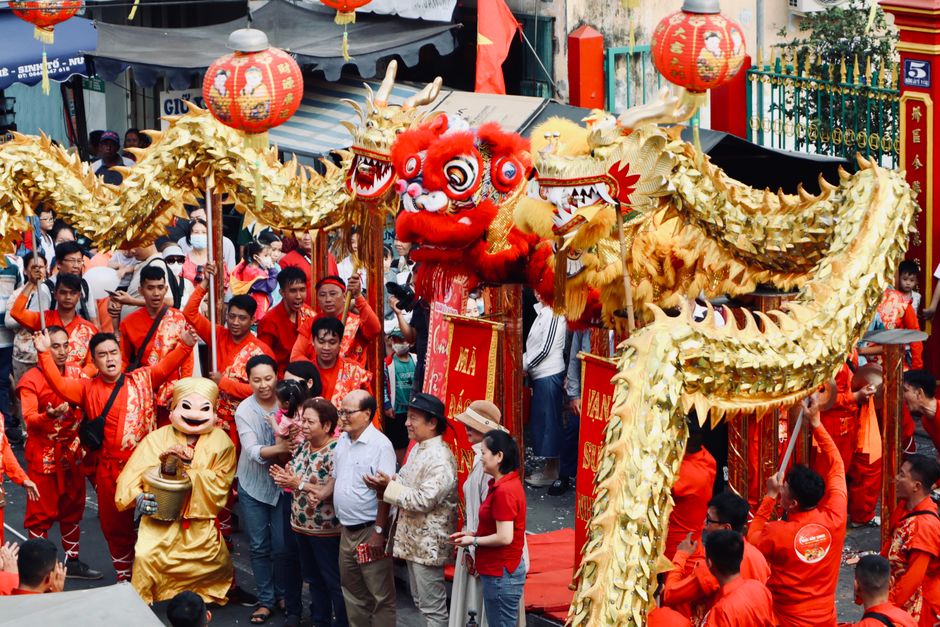
Across different cultural spheres, Lunar New Year manifests with unique customs and symbolism. In China, the celebrations are often the most extensive, lasting for 15 days, culminating in the Lantern Festival. Key traditions include thorough house cleaning to sweep away bad luck, decorating with red couplets and paper cuttings bearing auspicious symbols like dragons and phoenixes, and the reunion dinner (年夜饭, nián yè fàn) on New Year’s Eve. This meal is paramount, bringing families together to share dishes that symbolize wealth, longevity, and good fortune, such as dumplings (饺子, jiǎozi) shaped like ancient Chinese money and fish (鱼, yú) which sounds like "surplus." Red envelopes containing money (红包, hóngbāo) are exchanged, traditionally given by elders to younger generations and unmarried individuals, signifying blessings and good wishes. The Dragon Dance and Lion Dance are iconic performances, believed to bring good luck and ward off evil spirits with their vibrant costumes, percussive music, and energetic movements.
In Vietnam, Tết Nguyên Đán, or simply Tết, is the most important holiday of the year, a time for family reunions and paying respects to ancestors. Similar to China, families meticulously clean their homes and adorn them with peach blossoms (hoa đào) and apricot blossoms (hoa mai), symbolizing prosperity and vitality. The "Kitchen God" (Ông Táo) is believed to ascend to heaven on the 23rd day of the twelfth lunar month to report on the family’s deeds, and families offer him sacrifices to ensure good tidings. The reunion dinner on New Year’s Eve is a central event, featuring dishes like Bánh Chưng (sticky rice cakes) and Bánh Tét (cylindrical sticky rice cakes), which represent the earth and sky. Flowers, especially chrysanthemums, are a significant part of Tết decorations, symbolizing purity and longevity. Visiting pagodas and offering incense are common practices for seeking blessings.
Korean Lunar New Year, known as Seollal (설날), is also a time for family gatherings and ancestral rites. Families engage in charye (차례), a memorial service for ancestors, offering food and performing bows. Younger generations wear traditional Korean clothing, hanbok (한복), and perform sebae (세배), a deep bow to elders, receiving blessings and sebaetdon (세뱃돈), New Year’s money, in return. The special dish for Seollal is tteokguk (떡국), a soup made with sliced rice cakes, believed to signify aging by one year and bringing good luck. Many Koreans play traditional folk games like yutnori (윷놀이) and jegichagi (제기차기), fostering a sense of community and shared celebration.
The preparations for Lunar New Year are as crucial as the celebrations themselves. Weeks in advance, households begin a ritualistic cleaning, symbolizing the sweeping away of accumulated misfortunes from the past year and making space for good fortune. This deep clean extends to furniture, walls, and even personal belongings. Shopping for new clothes is a common practice, as wearing something new is believed to bring a fresh start. Families also engage in extensive food preparation, creating auspicious dishes that are consumed throughout the festival. The symbolic nature of these dishes is paramount; for instance, in Chinese culture, certain foods are chosen for their pronunciation or shape, which mimics words associated with prosperity, longevity, and happiness. The decorating of homes with red banners bearing calligraphy of good wishes (known as couplets or 春联, chūnlián in Chinese), paper cuttings, and lanterns creates a festive and auspicious atmosphere. The color red, revered for its ability to ward off evil spirits and bring good luck, is ubiquitous, adorning everything from clothing to decorations.
The social and familial aspects of Lunar New Year are arguably its most significant pillars. The holiday is a powerful catalyst for family reunion. For many, especially those who have migrated for work or education, Lunar New Year represents the sole opportunity to return to their hometowns and reconnect with loved ones. The journey home, often undertaken by millions, is a testament to the holiday’s importance. The reunion dinner on New Year’s Eve is the pinnacle of this familial gathering, a multi-generational feast where stories are shared, bonds are strengthened, and the continuity of family traditions is emphasized. Beyond immediate family, visiting relatives and friends is an integral part of the celebration, reinforcing social networks and community ties. These interactions often involve the exchange of gifts and well wishes, further solidifying relationships and fostering a sense of collective well-being.
The spiritual and symbolic dimensions of Lunar New Year are deeply embedded in its practices. Ancestor worship is a core component, with many families performing rituals to honor their forebears, offer them food, and seek their blessings for the coming year. This practice underscores the belief in the continued presence and influence of ancestors in the lives of the living. The warding off of evil spirits and the welcoming of good fortune are also central themes, manifesting in practices like firecrackers, lion dances, and the strategic placement of auspicious symbols. The belief that the new year brings a fresh start and an opportunity to rectify past mistakes and embrace a more prosperous future is a powerful motivator for the elaborate rituals and customs associated with the holiday.
In the contemporary era, Lunar New Year celebrations have undergone significant transformations while retaining their core essence. Globalization and increased migration have led to the spread of these traditions across the globe. Major cities in North America, Europe, and Australia now host vibrant Lunar New Year parades, festivals, and cultural events, often drawing diverse crowds eager to experience the festivity. This internationalization has also led to a greater awareness and appreciation of these traditions outside of their origin cultures. Furthermore, technology has played a role in bridging geographical distances. Video calls allow families to connect virtually for reunion dinners, and e-red envelopes have become a popular alternative to physical ones, especially for younger generations. The commercialization of Lunar New Year has also become a prominent feature, with businesses worldwide launching themed products and promotions, reflecting the growing economic significance of the holiday. While some lament the commercial aspects, others see it as a sign of the holiday’s increasing global influence and cultural importance.
Despite modernization, the underlying values of Lunar New Year remain steadfast. The emphasis on family, respect for elders, gratitude for the past, and hope for the future continues to resonate deeply with celebrants. The cyclical nature of the holiday, marking an end and a beginning, provides a natural point for reflection and renewal. It’s a time when individuals and communities pause from the daily grind to reconnect with their heritage, strengthen their social fabric, and collectively usher in a period of optimism and prosperity. The enduring appeal of Lunar New Year lies in its ability to adapt to changing times without sacrificing its profound cultural and familial significance, making it a truly timeless and universally cherished celebration. The integration of modern communication tools alongside time-honored rituals exemplifies this dynamic. For instance, while traditional family gatherings remain paramount, younger generations might also share their experiences online, using hashtags to connect with a broader virtual community. This blend of the tangible and the digital allows traditions to persist and evolve, ensuring their relevance for future generations. Moreover, the educational aspect of Lunar New Year is increasingly recognized. Schools and cultural institutions often organize events to teach younger children about the history, customs, and symbolism of the holiday, fostering intergenerational understanding and preserving cultural knowledge. This active transmission of traditions is vital for their longevity. The economic impact of Lunar New Year is also substantial, with significant spending on gifts, food, travel, and decorations. This economic activity not only fuels local economies but also highlights the holiday’s position as a major global consumer event. As the world becomes increasingly interconnected, the celebrations of Lunar New Year serve as a powerful reminder of the richness and diversity of human culture, offering a unique window into the values and aspirations of billions of people worldwide. The inherent flexibility of these traditions, allowing for local interpretations and adaptations, is a key factor in their continued vitality. From the boisterous street festivals in bustling Chinatowns to the intimate family gatherings in suburban homes, Lunar New Year embraces a spectrum of expressions, all united by a shared spirit of renewal and connection. The ongoing dialogue between preserving ancient customs and embracing modern innovations ensures that Lunar New Year will continue to be a vibrant and meaningful celebration for generations to come, a testament to the enduring power of tradition in a rapidly changing world.
