The Global Cost of Conflict How the War on Iran is Decimating American Agriculture and Global Food Security

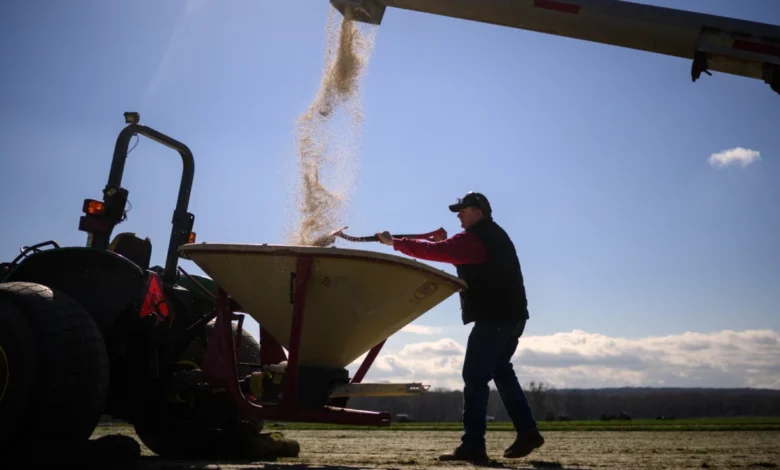
The onset of the spring planting season in the United States, typically a period of renewal and economic activity, has instead become a symbol of a deepening international crisis as American farmers grapple with the catastrophic fallout of the war on Iran. Across the nation’s agricultural heartland, the intersection of geopolitical conflict, supply chain paralysis, and market consolidation has created a "slow-moving food crisis" that threatens not only the livelihoods of domestic producers but also the stability of the global food supply. With the Strait of Hormuz—a vital artery for the global trade of nitrogen fertilizer—effectively shuttered to most commercial traffic, the United cent of American farmers report they can no longer afford the inputs necessary to plant their full acreage.
The human face of this crisis is found in places like Rocky Hill, Connecticut, where Bill Collins, a fourth-generation farmer at Fairweather Growers, is making the difficult decision to scale back. For over a century, the Collins family has farmed this land, but the current economic climate has forced a 20 percent reduction in production. Running the farm’s machinery requires between 1,500 and 2,000 gallons of fuel per week, a cost that has become unsustainable alongside the skyrocketing price of fertilizer. For Collins and thousands of others, the math no longer adds up, and the slim profit margins that once sustained family farms have evaporated into a deficit.
The Geopolitical Bottleneck: The Strait of Hormuz and Nitrogen Supply
The current agricultural emergency is rooted in the strategic geography of the Persian Gulf. Approximately one-third of the world’s nitrogen fertilizer, the most widely utilized nutrient in global industrial agriculture, relies on feedstocks or finished products that must pass through the Strait of Hormuz. Nitrogen fertilizer production is energy-intensive, requiring vast amounts of natural gas. The region surrounding the Strait is not only a primary source of this natural gas but also a central hub for the manufacturing and export of urea and anhydrous ammonia.
Since the escalation of hostilities involving the United States, Israel, and Iran in early 2026, the Strait has become a "no-go zone" for many international shipping insurance providers. The resulting blockade has effectively removed a massive portion of the global nitrogen supply from the market. This scarcity has sent shockwaves through the global economy, with the United Nations warning that as many as 45 million people worldwide could face acute hunger as a direct result of the fertilizer shortage. While the U.S. produces a portion of its own fertilizer, the globalized nature of the market means that domestic prices are inextricably linked to international supply levels. When the global supply dips, American farmers pay the price at the local co-op.
A Timeline of Escalation and Economic Impact
The current crisis did not emerge in a vacuum but is the result of a rapid succession of geopolitical and economic shocks that began in the first quarter of 2026.
- February 2026: Full-scale hostilities commence in the Iran conflict. Initial sanctions and the subsequent closure of the Strait of Hormuz lead to an immediate 15 percent spike in global fertilizer prices within the first 48 hours.
- March 2026: Domestic diesel prices in the United States rise by more than $2 per gallon compared to the previous year. Soybean farmers, already struggling with residual trade tensions, face renewed export tariffs that complicate their ability to pivot to international markets.
- April 2026: As the North American planting season begins, University of Illinois data reveals that nitrogen fertilizer prices have increased by 28 percent since the start of the war. Real-time price volatility makes it nearly impossible for farmers to budget for the season.
- May 2026: The Senate Committee on Agriculture, Nutrition, and Forestry holds emergency hearings. Data released during these hearings confirms that 86 American farms filed for Chapter 12 bankruptcy in the first three months of the year, a staggering indicator of the financial distress in rural communities.
The Burden on the American Heartland
The South Dakota Corn Growers Association, represented by its president Trent Kubik, has voiced the frustrations of producers who feel caught in a pincer movement between rising costs and stagnant commodity prices. Kubik testified before Congress that while farmers expected higher-than-normal costs due to peak demand, the war has caused those expenses to nearly double. "During the last 75 days, a lot of money was being made—but it wasn’t by farmers," Kubik remarked, highlighting a growing resentment toward the perceived profiteering within the input supply chain.
The agricultural shift is already visible on the landscape. To mitigate the high cost of nitrogen, many farmers are abandoning corn—a "heavy feeder" that requires significant fertilization—in favor of soybeans, which fix their own nitrogen from the atmosphere. Estimates suggest that approximately 4 million acres of corn have been switched to soybeans this spring. While this move saves on fertilizer costs, it creates a secondary problem: a projected shortfall in the corn harvest, which is essential for livestock feed, ethanol production, and thousands of consumer food products.
The wheat crop is also in jeopardy. Unlike corn and soy, which are often used for industrial purposes or animal feed, the majority of U.S.-grown wheat is destined for direct human consumption. The combination of high fertilizer costs, a lack of available nutrients during the critical spring growth phase, and persistent drought in the Great Plains has led experts to predict the worst wheat yields in decades. This suggests that the "price shock" currently felt by farmers will inevitably reach the grocery store bread aisles by the end of the year.
Market Consolidation and Record Profits
While farmers face bankruptcy, the companies that produce and distribute fertilizer are seeing record revenues. The U.S. fertilizer market is one of the most highly consolidated sectors in the global economy, with just four major manufacturers controlling nearly the entire domestic supply.
Omanjana Goswami, a scientist with the Union of Concerned Scientists, notes that this consolidation leaves farmers vulnerable. "At the same time that these companies are making billions of dollars in profits, farmers have seen profit margins go down drastically because of the higher cost of fertilizer," Goswami explained. Critics argue that the "Big Four" manufacturers have used the cover of the Iran war to hike prices beyond what is necessitated by supply chain disruptions, a practice often referred to as "greedflation."
This lack of competition means that even if the war were to end tomorrow, the structural issues within the industry would likely keep prices elevated. Some agricultural economists suggest that relief for U.S. farmers may not arrive until 2027, as the global supply chain requires years to recalibrate after a shock of this magnitude.
Legislative Response and the National Security Argument
In Washington, the rhetoric surrounding the crisis has been sharp, though concrete solutions remain elusive. During recent Senate hearings, Senator John Boozman (R-AR) emphasized that "food security is national security," a sentiment echoed by members on both sides of the aisle. However, the committee has struggled to find a path forward that provides immediate relief to producers without addressing the underlying foreign policy decisions that led to the conflict.
Senator Raphael Warnock (D-GA) has been particularly vocal about the plight of Southern farmers. He pointed out that the current crisis is a self-inflicted wound, noting that the Strait of Hormuz was open and stable before the shift in diplomatic strategy and the subsequent move toward war. "Between the war in Iran, spiking fuel and fertilizer prices, and illegal trade wars… it’s no wonder that farmers in Georgia say they can’t take much more," Warnock said. He advocated for greater price transparency from fertilizer manufacturers and a swifter return to diplomatic efforts to reopen global shipping lanes.
Analysis: The Vulnerability of the Industrial Model
The Iran war fertilizer shock has exposed the profound vulnerabilities of the modern industrial agricultural model. This model, which relies on the "just-in-time" delivery of synthetic inputs derived from fossil fuels and shipped across oceans, is inherently fragile. As Omanjana Goswami observed, farmers are thrown into a crisis every time global supply chains are hit—whether by a pandemic, a conflict in Eastern Europe, or the current war in the Middle East.
The repetitive nature of these crises—in 2020, 2022, and now 2026—has led some experts to call for a fundamental restructuring of how the world feeds itself. Suggestions include a shift toward regenerative practices that reduce reliance on synthetic nitrogen, the development of localized fertilizer production using renewable energy (green ammonia), and more aggressive antitrust enforcement to break the stranglehold of the major fertilizer conglomerates.
Broader Implications for Global Stability
The implications of this crisis extend far beyond the borders of Connecticut or South Dakota. The "slow-moving food crisis" is a global phenomenon. In developing nations, where food costs represent a much larger percentage of household income, the shortage of fertilizer is a matter of life and death. The UN’s warning of 45 million people facing hunger is a reminder that the costs of modern warfare are rarely confined to the battlefield.
As the 2026 planting season concludes with millions of acres left fallow or under-fertilized, the world now waits for the harvest. The scarcity that begins in the soil of American farms today will manifest as higher prices, social unrest, and increased poverty across the globe tomorrow. For farmers like Bill Collins, the immediate goal is survival, but for the rest of the world, the crisis serves as a stark warning about the interconnectedness of energy, war, and the most basic of human needs: food.
Related posts: