
Trump Supreme Court Colorado
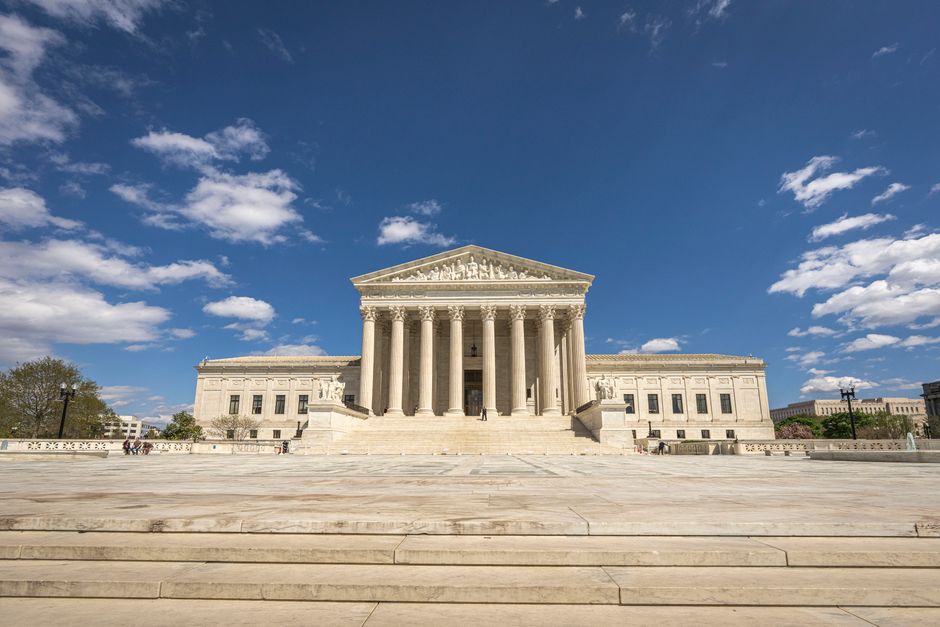
Trump Supreme Court Colorado: The Unprecedented Legal Battle for Presidential Eligibility
The legal landscape surrounding former President Donald Trump and his eligibility for the 2024 presidential race reached a critical juncture with the Colorado Supreme Court’s landmark ruling. This decision, issued on December 19, 2023, declared Trump ineligible to appear on the state’s primary ballot under Section 3 of the Fourteenth Amendment. The ruling, a seismic event in American legal and political history, hinged on the interpretation of the "insurrectionist ban" and its application to a former president. The Colorado court found that Trump’s actions leading up to and during the January 6th Capitol riot constituted engaging in an insurrection, thereby disqualifying him from holding future office. This article will delve into the intricate legal arguments, the historical context of the Fourteenth Amendment, the immediate implications of the Colorado ruling, and the broader ramifications for the upcoming election and the nation’s democratic processes, with a specific focus on how this case intersects with the Supreme Court’s eventual involvement.
The crux of the Colorado Supreme Court’s decision lies in its interpretation of Section 3 of the Fourteenth Amendment, ratified in the aftermath of the Civil War. This section states: "No person shall be a Senator or Representative in Congress, or elector of President and Vice-President, or hold any office, civil or military, under the United States, or under any State, who, having previously taken an oath, as a member of Congress, or as an officer of the United States, or as a member of any State legislature, or as an executive or judicial officer of any State, to support the Constitution of the United States, shall have engaged in insurrection or rebellion against the same, or given aid or comfort to the enemies thereof." The plaintiffs in the Colorado case, a group of Republican and independent voters, argued that Trump’s oath of office, coupled with his actions on January 6th, directly triggered this disqualification clause. The Colorado Supreme Court, in a 4-3 decision, agreed. The majority opinion detailed a lengthy factual account of Trump’s efforts to overturn the 2020 election results, his rhetoric leading up to the Capitol attack, and his delayed response during the riot, concluding that these actions amounted to engaging in an insurrection. This interpretation marked the first time Section 3 had been applied to disqualify a presidential candidate, let alone a former president. The court’s analysis did not stop at simply finding Trump engaged in insurrection; it also grappled with whether the amendment applied to the office of the presidency and whether the disqualification was self-executing or required legislative action. The Colorado court concluded that the presidency was indeed an "office… under the United States" and that the provision was self-executing, meaning it could be enforced by the courts without specific enabling legislation.
The historical context of Section 3 is crucial to understanding its significance. Enacted to prevent former Confederates from returning to power after the Civil War, it was a punitive measure aimed at ensuring loyalty to the Union. While its application has been limited and often debated throughout history, the Colorado ruling resurrected it as a potent tool for challenging candidates deemed disloyal to the Constitution. The court meticulously reviewed historical precedents, including the disqualification of various state and federal officials following the Civil War, to bolster its argument for the amendment’s applicability and enforceability in the modern era. The dissenting justices, however, raised significant counterarguments. They questioned the court’s authority to make such a determination, arguing that it was a political question best left to Congress or the voters. They also challenged the court’s factual findings regarding Trump’s engagement in insurrection and the interpretation of the Fourteenth Amendment’s applicability to the presidency. The dissenters emphasized the potential for partisan manipulation of the amendment and the disruption it could cause to the democratic process.
The immediate aftermath of the Colorado Supreme Court’s ruling was a torrent of legal and political reactions. Trump’s campaign immediately vowed to appeal to the U.S. Supreme Court, framing the decision as a politically motivated attack on democracy. The Colorado Secretary of State, Jena Griswold, stated that the ruling would be enforced pending appeal. Several other states, influenced by the Colorado decision and facing similar lawsuits, began to review Trump’s ballot eligibility. This created a patchwork of legal challenges across the nation, with varying outcomes and the potential for widespread confusion and legal battles as the election approached. The specter of a fractured election, where a candidate could be barred from ballots in some states but not others, loomed large. The legal precedent set by the Colorado court, if upheld, could have profound and lasting implications for future elections and the interpretation of constitutional provisions related to presidential conduct and eligibility.
The pivotal moment, however, arrived with the U.S. Supreme Court’s decision to hear Trump’s appeal. The nation’s highest court agreed to review the Colorado ruling, granting a stay of its enforcement until its own decision. This move by the Supreme Court signaled its recognition of the monumental nature of the case and the urgent need for a definitive national resolution. The Supreme Court’s deliberation on Trump v. Anderson (the case name consolidated from the Colorado and other state challenges) became the focal point of the legal fight. The arguments presented to the Supreme Court encompassed a wide range of complex constitutional questions. Trump’s legal team argued, among other things, that Section 3 of the Fourteenth Amendment does not apply to the office of the President, that the President is not an "officer of the United States" within the meaning of the amendment, that Trump did not engage in "insurrection," and that even if he did, the amendment requires congressional action to be enforced. They also emphasized the potential for chaos and voter disenfranchisement if states were allowed to unilaterally remove candidates from their ballots. Conversely, the respondents, including the Colorado voters who brought the initial suit, argued that the Fourteenth Amendment clearly applies to all federal officers, including the President, and that the historical intent of the amendment was to bar individuals who engaged in insurrection from holding office. They contended that the Colorado Supreme Court’s factual findings were sound and that the judicial branch has a role in upholding constitutional principles.
The U.S. Supreme Court’s ultimate decision in Trump v. Anderson, issued on March 4, 2024, unanimously overturned the Colorado Supreme Court’s ruling. The Supreme Court held that states cannot unilaterally remove a presidential candidate from the ballot under Section 3 of the Fourteenth Amendment. The Court’s reasoning centered on the fact that Section 3 disqualifies individuals from holding office, but it does not grant states the power to enforce this disqualification on their own for federal officeholders. Instead, the Court stated that such enforcement must be undertaken by Congress. This decision effectively shielded Trump from being removed from state ballots based on the Fourteenth Amendment’s insurrection clause, at least by state action. The ruling, while a significant victory for Trump, did not delve into the factual question of whether Trump actually engaged in an insurrection. Instead, it focused on the procedural and structural question of who has the authority to enforce Section 3 for presidential candidates. The Supreme Court’s decision averted a chaotic scenario where different states might have made conflicting rulings, potentially undermining the integrity of the presidential election. It also restored a degree of predictability to the electoral process, though it left the broader debate about Trump’s actions and the application of Section 3 unresolved in a substantive sense.
The implications of this entire legal saga, from the Colorado ruling to the Supreme Court’s intervention, extend far beyond the immediate 2024 election cycle. It has ignited a national conversation about the interpretation of constitutional provisions, the role of the judiciary in political disputes, and the boundaries of presidential power and accountability. The Supreme Court’s emphasis on congressional authority for enforcement of Section 3 for presidential candidates means that if any future challenges are to succeed, they would likely require legislative action, a politically challenging hurdle. The case has also highlighted the enduring relevance and potential potency of the Fourteenth Amendment in addressing conduct that challenges the foundational principles of American democracy. For SEO purposes, the keywords "Trump Supreme Court Colorado," "Fourteenth Amendment insurrection," "presidential eligibility," "January 6th," "election 2024," and "U.S. Supreme Court ruling" are critical. This article, by dissecting the legal intricacies, historical context, and national impact, aims to be a comprehensive resource for those seeking to understand this pivotal moment in American law and politics. The "Trump Supreme Court Colorado" narrative is not merely about a single election; it is about the enduring tension between constitutional principles, political ambition, and the very definition of democratic accountability. The Supreme Court’s decision, while resolving the immediate ballot access question, leaves a lasting imprint on how such constitutional challenges will be approached in the future, emphasizing the separation of powers and the established mechanisms for constitutional enforcement.
