The Global Underground Trade of Giant African Harvester Ants and the Ecological Risks of Insect Smuggling in Kenya

The sentencing of a Chinese national in a Nairobi court has cast a sharp light on a burgeoning and highly lucrative black market for East African invertebrates, specifically the giant African harvester ant. Zhang Kequn was sentenced on April 15 to one year in prison or a fine of 1 million Kenyan shillings (approximately $7,600) following his arrest at Jomo Kenyatta International Airport (JKIA) in March. Authorities discovered more than 2,200 live ants meticulously packed into specialized glass tubes within his luggage, destined for the Chinese exotic pet market. Among the seized insects were 1,948 specimens of Messor cephalotes, a species renowned among entomologists and hobbyists for its striking appearance and complex social structures. This case is not an isolated incident but rather the latest in a series of high-profile smuggling attempts that have prompted Kenyan authorities and global conservationists to demand stricter international protections for insect biodiversity.
The Rising Demand for Exotic Formicariums
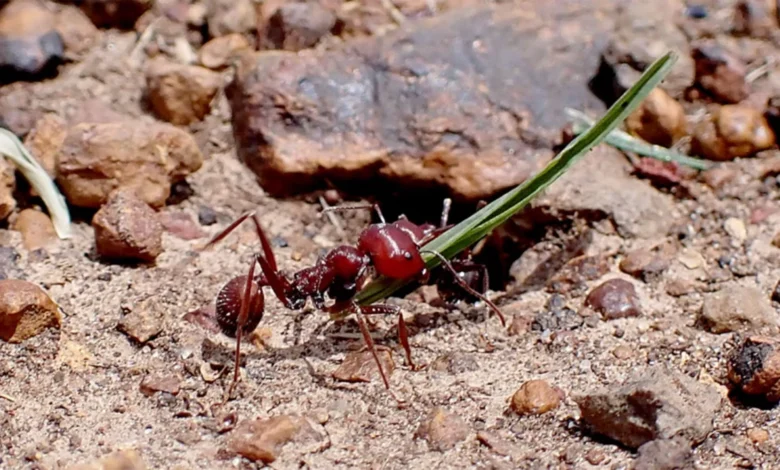
The illicit trade of Messor cephalotes is driven by a global surge in the popularity of ant-keeping, a hobby where enthusiasts maintain colonies in artificial nests known as formicariums. Unlike traditional pets, ants offer a window into highly organized social behaviors, including intricate foraging trails, nest architecture, and caste systems. Within this niche market, the giant African harvester ant is considered a "trophy species." Known as the "tigers of the ant world," they are prized for their vibrant red and black coloration and their impressive size. Workers can reach up to 19 millimeters in length, while queens—the essential component for starting a new colony—can grow to 25 millimeters.
The economic incentives for smuggling these insects are profound. In Kenya, a single ant might be purchased from local collectors for as little as 100 Kenyan shillings ($0.76). However, once these insects reach the international markets of Europe, Asia, or North America, a single queen can command prices exceeding $300. This 400-fold increase in value creates a powerful vacuum, drawing in both local opportunists and international traffickers. Online marketplaces and social media groups have further facilitated this trade, allowing buyers in distant countries to connect with suppliers in biodiversity hotspots like Kenya.
A Chronology of Recent Smuggling Incidents
The conviction of Zhang Kequn follows a pattern of increased enforcement and discovery at Kenya’s primary international gateways. Over the past year, the Kenyan judicial system has seen a spike in cases involving the illegal export of invertebrates, signaling that the country has become a primary source for the global ant trade.
In April 2025, a landmark case involved two Belgian teenagers who were apprehended at JKIA with a massive haul of approximately 5,000 live giant African harvester queen ants. The insects were packed into hundreds of tubes, hidden within their personal effects. The court sentenced the pair to one year in prison, providing the option of a 1 million shilling fine. This case was particularly alarming to authorities due to the sheer volume of queens, which represented the potential for 5,000 new colonies to be established outside of Africa.
Shortly thereafter, another case emerged involving a Vietnamese national and a Kenyan accomplice. They were found in possession of roughly 400 ants stored in syringes and small plastic containers. These cases, occurring in rapid succession, suggest an organized pipeline rather than random acts of individual collection. Magistrate Irene Gichobi, while presiding over Kequn’s case, emphasized that the court must issue "deterrent sentences" to curb the rising tide of wildlife piracy that threatens Kenya’s unique ecological heritage.
The Biological Profile of Messor Cephalotes
To understand why Messor cephalotes is so highly valued, one must look at its unique biological traits. As a harvester ant, this species plays a specialized role in its environment by gathering seeds and storing them in underground granaries. This behavior is not merely for immediate consumption; the ants process the seeds into "ant bread," which sustains the colony through dry seasons.
The species is polymorphic, meaning workers come in various sizes with specialized roles, including "soldiers" with massive heads and powerful mandibles used for crushing large seeds and defending the nest. A colony begins with a single queen who, after a nuptial flight, sheds her wings and digs a founding chamber. She can live for decades, producing hundreds of thousands of offspring. This longevity and the visible "busyness" of the colony make them ideal subjects for study and observation in home ant farms.
Dino Martins, a prominent entomologist, describes the species as a keystone of the East African savannah. Their foraging habits influence the composition of plant life across the grasslands. By selectively harvesting and occasionally losing seeds, they act as unintentional gardeners, ensuring the dispersal and germination of various grass species.

Ecological and Economic Implications of Over-Harvesting
The removal of thousands of queen ants from the Kenyan ecosystem has far-reaching consequences that extend beyond the loss of the insects themselves. Entomologists warn that as a keystone species, the disappearance of harvester ants could trigger a trophic cascade. If the ant populations decline, the natural cycle of seed dispersal is disrupted, leading to a potential decrease in the quality and diversity of grasslands.
This ecological degradation has a direct economic impact on Kenya’s vital sectors. Healthy grasslands are the foundation of the livestock industry, which supports millions of pastoralists. Furthermore, the savannah ecosystems are the primary draw for Kenya’s multi-billion-dollar tourism industry. "We lose the ants, we lose our cattle, and we lose our milk and our butter and our cheese, and we lose our wildlife and our tourism," Martins warned. The intricate web of life in the savannah means that the smallest inhabitants often hold the entire structure together.
Moreover, the destination countries face their own set of risks. A 2023 study on the biological invasion risks of online ant sales in China identified Messor cephalotes as one of the most popular non-native species being traded. If these ants were to escape or be intentionally released into non-native environments—such as the agricultural heartlands of Asia or North America—they could become a devastating invasive species. As efficient grain collectors, they could severely impact crop yields, outcompete local insect populations, and alter the soil chemistry of their new habitats.
Official Responses and Global Conservation Calls
The Kenya Wildlife Service (KWS) has expressed deep concern over the trend, noting that while charismatic megafauna like elephants and rhinos often receive the most attention and funding, the illegal trade in invertebrates is growing under the radar. The KWS has increased surveillance at airports and is working more closely with the judiciary to ensure that wildlife crimes involving insects are prosecuted with the same gravity as those involving larger animals.
The recent surge in smuggling has also prompted a call for international action. Conservationists are urging the parties to the Convention on International Trade in Endangered Species of Wild Fauna and Flora (CITES) to recognize the ant trade as a significant biosecurity and conservation threat. Currently, many ant species lack the legal protections afforded to more famous endangered species, making it difficult to regulate their movement across borders.
In the UK, some legitimate sellers, such as Pat Stanchev of Best Ants UK, have distanced themselves from the illegal trade. Stanchev emphasizes that reputable stores prioritize captive-bred specimens or those sourced through strictly regulated and ethical channels. However, the high price point for "wild-caught" African queens continues to fuel the black market, as captive breeding of Messor cephalotes remains a difficult and slow process.
Analysis of the Biosecurity Threat
The movement of species across continents is described by conservation biologist Zhengyang Wang as "almost always a bad idea." The historical record is full of examples where the introduction of a seemingly harmless insect led to billions of dollars in damage and the extinction of local species. The giant African harvester ant, with its high reproductive rate and adaptable nature, poses a significant biosecurity risk.
Unlike larger animals, ants are exceptionally difficult to detect once they have established a foothold. A single escaped queen can hide deep underground, producing thousands of workers before her presence is even noticed. By then, eradication is often impossible. The global community’s failure to regulate the "small things that run the world" could lead to an environmental crisis that mirrors the damage caused by more visible invasive species like the fire ant or the emerald ash borer.
Conclusion and Future Outlook
The case of Zhang Kequn and the thousands of ants seized in Nairobi serves as a wake-up call for environmental regulators worldwide. As the exotic pet trade continues to expand into the realm of "micro-wildlife," the legal frameworks designed to protect biodiversity must evolve. Kenya’s proactive stance in the courtroom is a necessary first step, but without international cooperation and a reduction in global demand, the "tigers of the ant world" will continue to be spirited away from their native savannahs in glass tubes, leaving behind an ecosystem at risk of collapse. The wisdom of the harvester ant, as noted in ancient texts, lies in its industry and its connection to the earth—a connection that humans now threaten through greed and a lack of ecological foresight.
Related posts: