Watchdog Groups Demand Senate Investigation into Justice Samuel Alito Over Alleged Conflicts of Interest in Big Oil Climate Litigation

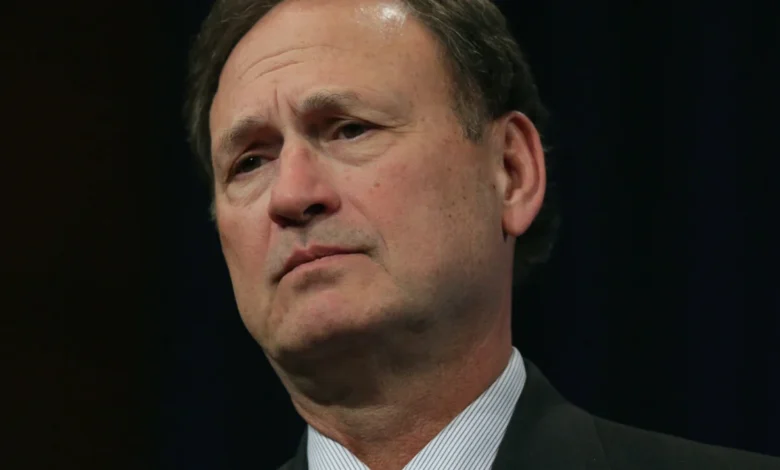
A coalition of legal watchdog organizations and environmental advocacy groups has formally requested that the Senate Judiciary Committee launch an investigation into Supreme Court Justice Samuel Alito. The request follows allegations that Alito’s personal financial interests in the energy sector, specifically his holdings in major oil and gas corporations, may constitute a breach of judicial ethics. The controversy centers on Alito’s participation in a high-stakes case involving Suncor Energy and ExxonMobil, where the outcome could significantly influence the legal liability of the fossil fuel industry regarding climate change.
The formal complaint, delivered in a letter on Thursday, highlights what critics describe as an "irregular recusal practice." The coalition, which includes the League of Conservation Voters, the Center for Biological Diversity, the Revolving Door Project, and True North Research, argues that Alito’s continued involvement in cases where he maintains a direct financial stake undermines the perceived impartiality of the nation’s highest court. This development adds to a growing wave of scrutiny regarding the ethical standards and disclosure requirements of Supreme Court justices, which has become a focal point of congressional debate over the past year.
The Financial Stakes: Alito’s Energy Portfolio
At the heart of the investigation request are Justice Alito’s financial disclosures, which indicate a substantial investment in the very industry currently seeking relief from the Supreme Court. According to his most recent financial disclosure filed in August 2024—which covers his holdings through the previous year—Alito owns individual stocks in several prominent energy firms. These holdings include ConocoPhillips and Phillips 66, with a total estimated value between $60,007 and $245,000 across seven different oil and energy companies.
Beyond direct stock ownership, the watchdog groups pointed to Alito’s investments in diversified funds that are heavily weighted toward the petroleum industry. Specifically, the letter notes that Alito holds up to $100,000 in a Vanguard fund where ExxonMobil serves as the third-largest holding. The groups argue that because the Supreme Court is currently weighing a petition that could shield ExxonMobil and other majors from multi-billion dollar state-level lawsuits, Alito’s financial interest is direct and material.
"No judge on any court, including the high court, should be allowed to hear cases where he or she has a financial stake in those cases," stated Lisa Graves, a former senior Justice Department official and current director of True North Research. The groups maintain that the mere appearance of a conflict is enough to mandate recusal under federal law and the Supreme Court’s own recently adopted ethics guidelines.
Chronology of Recusal and Participation
The calls for an investigation are intensified by what the coalition describes as an inconsistent application of recusal standards by Justice Alito in virtually identical legal contexts. The timeline of his participation in climate-related litigation reveals a shift that has troubled legal observers:
- 2023: Suncor Energy and ExxonMobil filed a petition with the Supreme Court seeking to move a climate-related lawsuit from state to federal court. In this instance, Justice Alito recused himself from the proceedings. The court ultimately denied the petition, a move that allowed the lawsuits to proceed in state courts, which are generally viewed as more favorable to plaintiffs.
- February 2024: The same companies returned to the Supreme Court with a new challenge. This time, they asked the justices to rule that federal law preempts subnational governments (states and municipalities) from filing lawsuits against oil companies for the climate-warming effects of their products. This "preemption" argument is a cornerstone of the industry’s defense strategy.
- February 2024 (Present Case): Unlike in 2023, Justice Alito did not recuse himself when the court agreed to consider this new petition. The court has not disclosed which justices voted to hear the case, but Alito’s participation in the deliberations has become the primary point of contention.
Watchdog groups argue that there is no substantive difference in the underlying conflict between the 2023 and 2024 petitions. They contend that if Alito’s holdings necessitated a recusal in 2023, those same holdings—which he still possessed as of his last filing—should have triggered a recusal in the current Suncor case.
The Paul Singer Connection and the 2008 Alaska Trip
The investigation request also revisits Alito’s relationship with billionaire Republican donor Paul Singer, a connection that first drew national attention following a 2023 ProPublica report. Singer is the founder of Elliott Investment Management, a hedge fund with a massive footprint in the energy sector. According to market data, Elliott Investment Management owns more than 52 million shares of Suncor Energy, a stake valued at approximately $2.3 billion.
The 2023 report revealed that in 2008, Alito accepted a luxury fishing trip to Alaska, traveling on a private jet provided by Singer. Alito did not disclose this trip on his annual financial reports at the time. When the story broke, Alito preemptively defended his actions in an op-ed for the Wall Street Journal, arguing that he was not required to disclose the travel and that he had no obligation to recuse himself from cases involving Singer’s interests because he was unaware of the billionaire’s specific involvement in those cases at the time.
However, the watchdog coalition argues that the current Suncor case creates an "indefensible breach of ethical boundaries." They suggest that a ruling in favor of Suncor would not only benefit Alito’s personal portfolio but would also provide a significant windfall for one of his most prominent benefactors. The letter to the Senate Judiciary Committee describes this as a "parallel conflict" that compounds the necessity for a formal probe.
The Supreme Court’s Ethics Code and Enforcement Gap
The controversy arrives as the Supreme Court continues to grapple with its public image following several ethics scandals involving various justices. In late 2023, under significant public and congressional pressure, the Court adopted its first-ever formal Code of Conduct. The code stipulates that a justice should disqualify themselves in proceedings in which their "impartiality might reasonably be questioned."
Despite the adoption of the code, critics argue it remains "toothless" because it lacks an independent enforcement mechanism. Currently, the decision to recuse rests entirely with the individual justice. There is no formal process for an outside body to review a justice’s refusal to recuse or to penalize violations of the code.
Furthermore, the code includes a provision known as the "Rule of Necessity," which suggests that a justice’s duty to sit on a case may override the need for recusal if their absence would prevent the court from reaching a quorum or resolving a matter of national importance. Some legal analysts suggest Alito may be relying on this rationale, though watchdog groups dismiss this as a secondary excuse to avoid transparency.
"The highest court in the country should have the highest standards, not the lowest," Graves noted, highlighting that lower-court federal judges are subject to much stricter, enforceable recusal requirements regarding financial conflicts.
Technical Efforts and Industry Impact
In an effort to modernize its conflict-of-interest checks, the Supreme Court recently implemented software designed to scan legal filings for corporate entities that might trigger a recusal. Parties appearing before the court are now required to provide stock-ticker symbols for all companies involved in a case. While this system helps identify direct conflicts with specific litigants, it does not necessarily capture broader industry-wide impacts.
Hannah Story Brown, deputy research director at the Revolving Door Project, argues that in the context of climate change litigation, a narrow focus on specific companies is insufficient. "The outcome of each climate accountability lawsuit targeting Big Oil could affect the entire industry," Brown stated. She contends that because Alito holds a portfolio of multiple oil majors, any ruling that sets a precedent for the industry—such as the Suncor preemption case—directly affects his financial interests, regardless of whether every company in his portfolio is a named party in the specific suit.
Broader Implications for Climate Accountability
The legal battle over climate change accountability involves more than 70 lawsuits brought by state and local governments across the United States. These jurisdictions, including the City and County of Boulder, Hawaii, and California, allege that fossil fuel companies engaged in decades-long "deception campaigns" to mislead the public about the risks of global warming. They are seeking billions of dollars in damages to cover the costs of infrastructure protection, disaster relief, and climate adaptation.
If the Supreme Court rules in favor of Suncor and ExxonMobil in the current case, it could effectively shut down these state-level efforts nationwide. The companies argue that climate change is a global issue that must be addressed through federal regulation and international treaties, rather than a "patchwork" of state-level tort litigation.
The outcome of the Senate Judiciary Committee’s response to the watchdog letter remains uncertain. While the committee, led by Senator Dick Durbin (D-IL), has held hearings on Supreme Court ethics, its power to compel the justices to change their practices is limited by the separation of powers. However, the push for an investigation signals that the pressure on the Court to adopt enforceable ethical standards is unlikely to dissipate as long as high-profile cases involving the justices’ financial interests remain on the docket.
As of this report, the Supreme Court has not issued a formal response to the letter, and Justice Alito has not commented further on his recusal decisions for the 2024 term. The next round of financial disclosures is expected in mid-2025, which may provide more clarity on whether the Justice has divested from his energy holdings in response to the mounting criticism.
Related posts: