Single-Payer Healthcare: A Shifting Political Battleground in California’s Gubernatorial Race

The concept of a state-run, single-payer healthcare system, once a bold and somewhat risky proposition for California politicians, has transformed into a central, almost obligatory, talking point in the current race for governor. As leading Democrats vie to succeed Governor Gavin Newsom, the idea of a government-funded healthcare model for all 40 million Californians has moved from the fringes of progressive ideology to the heart of mainstream political discourse. However, despite widespread acknowledgment of the public’s frustration with escalating healthcare costs, a clear path forward remains elusive, with candidates largely offering aspirational goals rather than concrete funding mechanisms.
This shift reflects a broader national sentiment. A recent KFF poll indicated that over half of American adults believe healthcare costs will significantly influence their voting decisions in the upcoming November elections. In California, where Democrats hold a substantial registration advantage over Republicans (nearly 2 to 1), candidates are leveraging this concern to connect with voters grappling with rising premiums, exorbitant prescription drug prices, and lengthy waits for medical services. Conversely, the leading Republican candidates have squarely dismissed government-run healthcare, labeling it a "disaster" and "socialism."
The Evolution of Single-Payer in California Politics
When Gavin Newsom ran for governor in 2018, his explicit support for a state-run single-payer healthcare system was considered a significant political gamble. This stance, however, resonated with key labor groups, notably the California Nurses Association, which offered him substantial endorsements. At the time, single-payer was largely viewed as a progressive ideal, a lofty aspiration rather than an immediate policy objective.
A decade later, the landscape has dramatically changed. The term "single-payer" has become a potent symbol, a "progressive litmus test" as described by Larry Levitt, a former White House policy advisor and a healthcare expert at KFF. While many voters may not fully grasp the intricate details of a single-payer system, the term now serves as a clear indicator of a candidate’s philosophical approach to healthcare reform.
Candidates Navigate the Single-Payer Landscape
The current gubernatorial contest is characterized by a wide-open race with no definitive front-runner, leading to intense debates and political advertising focused on candidates’ commitment to a government-run healthcare model.
Xavier Becerra, the former U.S. Health and Human Services secretary, who has a long history of backing single-payer healthcare during his tenure in Congress, has faced scrutiny for what critics perceive as a subtle but discernible shift away from his previous staunch advocacy. This adjustment coincided with his securing an endorsement from the California Medical Association, a powerful physicians’ organization that has historically opposed single-payer legislation in the state.
During a CNN debate on May 5th, Becerra reiterated his support for "Medicare for All," a federally administered system that has stalled in Congress for years. However, he demurred when pressed about pursuing a California-led single-payer initiative. His immediate priority, he stated, would be to address potential federal cuts impacting Medi-Cal, California’s Medicaid program, which provides coverage to over a third of the state’s residents. Becerra appears to be banking on voters not making sharp distinctions between "single-payer," "Medicare for All," and "universal coverage," noting during the debate that "Californians don’t care what you call it, so long as they have affordable healthcare."
This strategic approach is recognized by political strategists. Celinda Lake, a Democratic strategist and a lead pollster for the Biden 2020 campaign, commented that "a lot of people aren’t clear what single-payer is, and they need a metaphor to understand it."
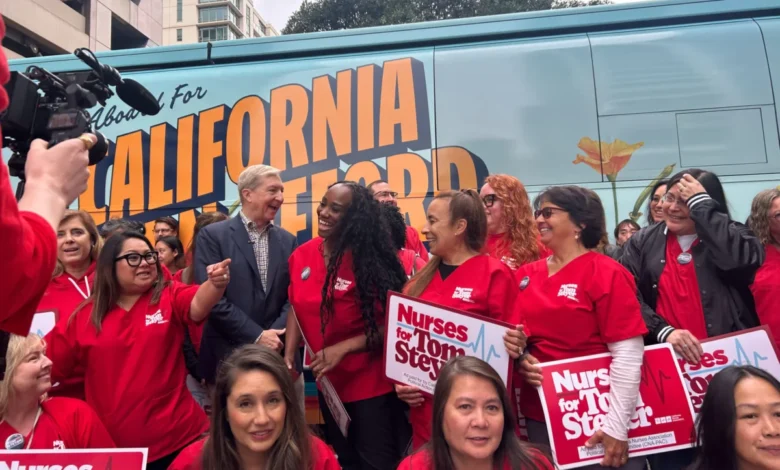
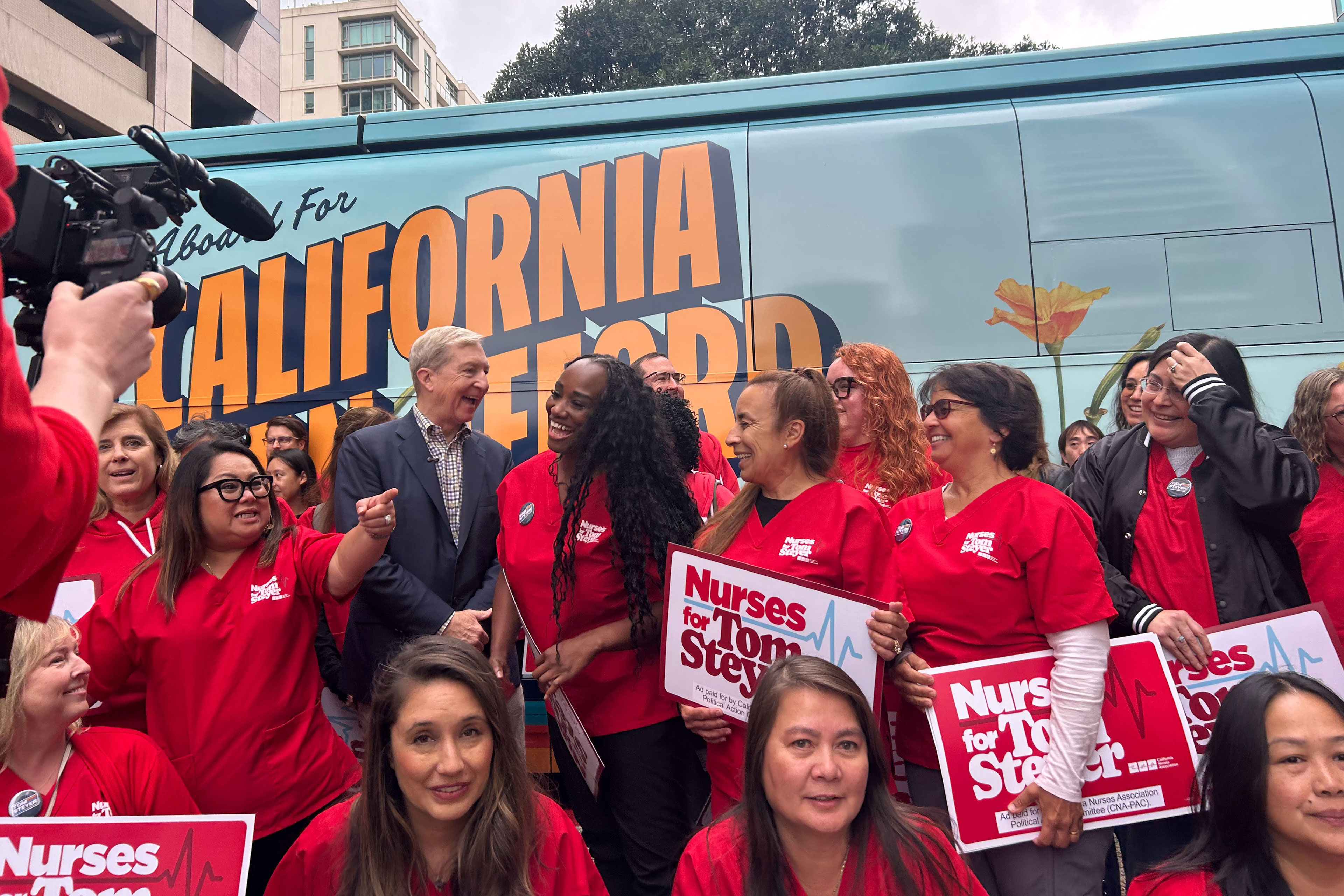
Tom Steyer, the billionaire activist, has emerged as one of the most vocal proponents of single-payer healthcare in the current race. He has prominently featured his self-funded campaign as a testament to his independence, asserting, "I can’t be bought." This position marks a notable departure from his 2020 presidential bid, during which he initially opposed single-payer. Steyer has pledged to champion legislation backed by the California Nurses Association, which has faced legislative roadblocks under Governor Newsom’s administration. When questioned about financing the estimated $731.4 billion annual cost of such a system, Steyer told KFF Health News that "God is going to be in the details."
Katie Porter, a former U.S. Representative, initially expressed skepticism about the feasibility of achieving a single-payer system in the short term. However, she later declared to party delegates her commitment to "deliver single-payer." Her approach, like that of other candidates, is being closely watched for the practicalities of implementation.
Trailing in the polls are former Los Angeles Mayor Antonio Villaraigosa and San Jose Mayor Matt Mahan, both Democrats who do not support single-payer healthcare. The primary election rules dictate that the top two vote-getters, regardless of party affiliation, will advance to the general election in November.
The Challenge of Implementation: Funding and Federal Hurdles
The central challenge for any single-payer proposal in California remains the formidable question of funding. Experts estimate the cost of a comprehensive, state-run system for 40 million residents to be in the hundreds of billions of dollars annually.
A look at past efforts highlights the difficulties. Vermont became the only state to pass a single-payer healthcare law, but its leaders ultimately reversed course due to an inability to identify a viable funding source. To implement a single-payer system, California would require federal government approval to redirect substantial funds from existing programs like Medicare and Medicaid. Such approval is considered unlikely, particularly given the current federal political climate.
Furthermore, the transition to a single-payer system could involve significant disruptions for many Californians. While polls may show general support for the concept, focus groups often reveal a drop in approval when voters consider the potential loss of their current doctors or insurance plans. Republican candidate Steve Hilton, endorsed by President Donald Trump, has voiced concerns that a single-payer system would lead to "subpar patient care" and "taxes sky high to pay for it," drawing parallels to the healthcare system in his native United Kingdom. Hilton has also proposed prioritizing state resources by ceasing "free healthcare for illegal immigrants."
Governor Newsom’s Approach: Universal Access Over Single-Payer
Even Governor Gavin Newsom, who campaigned on being a "healthcare governor" and championed single-payer in 2018, ultimately scaled back his ambitions upon taking office. Instead of pursuing a full single-payer model, his administration has focused on expanding "universal access" to healthcare. This has involved a series of Medi-Cal expansions and initiatives aimed at containing healthcare spending through measures like the proposed "One Big Beautiful Bill" designed to cap costs for certain medical services. This pragmatic, incremental approach prioritizes immediate relief and expanded coverage within the existing multi-payer framework.
Broader Impact and Voter Priorities
The debate over single-payer healthcare in California is not occurring in a vacuum. It reflects a broader national anxiety about the affordability and accessibility of healthcare. For many voters, the immediate concern is not the theoretical perfection of a single-payer system, but rather tangible relief from current financial burdens.
Danielle Cendejas, a Democratic consultant based in Los Angeles, observes that candidates are increasingly being asked about single-payer on questionnaires from various groups, including small-business advocates and local Democratic clubs. However, she emphasizes that "what most California voters want to hear is how candidates plan to give them more immediate relief from higher premiums, expensive drug costs, and long waits to access care."
Jennifer Easton, a 63-year-old Democrat from Oakland, represents a segment of the electorate that supports the principle of single-payer, believing it can lower costs and improve outcomes, citing examples from other developed nations. However, she expresses skepticism about any candidate’s ability to enact such a system within a single gubernatorial term, viewing it as a "20-year, 25-year plan." For her, a candidate’s enthusiastic support for the concept is a strong indicator of their underlying philosophy, even if immediate implementation is unlikely.
The political maneuvering around single-payer healthcare in California highlights a complex interplay between deeply held progressive ideals, the practical realities of governance, and the immediate concerns of voters facing escalating healthcare costs. As the election season progresses, candidates will continue to be pressed to articulate not just their vision for healthcare, but also credible strategies for achieving it. The ultimate outcome of this debate will undoubtedly shape the future of healthcare access and affordability for millions of Californians.
Related posts: