Green Economic Populism and the Strategy to Link Climate Action with the American Cost of Living Crisis

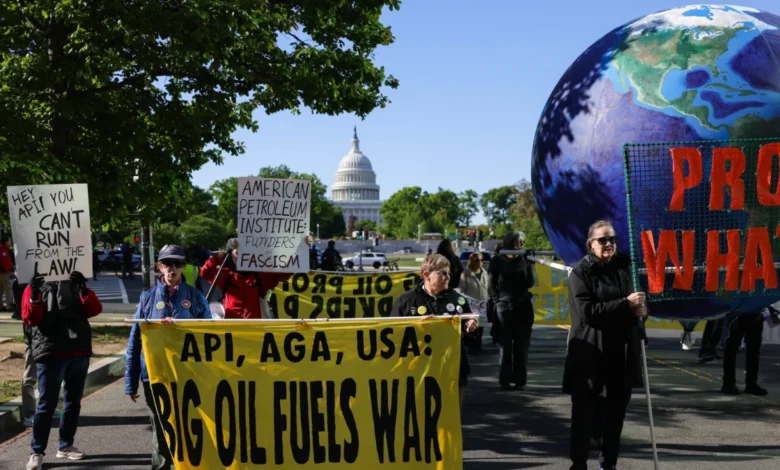
As the United States grapples with a complex intersection of environmental degradation and economic instability, a significant shift is occurring within the progressive policy landscape. For years, political strategists and centrist pundits have argued that the American electorate remains largely indifferent to the climate crisis when compared to immediate economic concerns such as inflation, housing, and the cost of basic goods. However, a new and influential platform from the Climate and Community Institute (CCI) is challenging this dichotomy, arguing that the climate crisis is not a separate issue but a primary driver of the cost-of-living crisis currently squeezing working-class families across the nation.
The proposal, titled "Stop Greed, Build Green," introduces a framework for what its authors call "green economic populism." This strategy suggests that decarbonization should be reframed not as a sacrifice or a secondary goal, but as a central tool for achieving economic affordability and stability. By targeting corporate power and emphasizing tangible, everyday benefits, the CCI aims to build a majoritarian coalition that can withstand the political volatility of the current era.
The Shift from the Green New Deal to Economic Populism
The "Stop Greed, Build Green" platform represents an evolution of the Green New Deal (GND) framework that first gained national prominence in 2018. The original GND, championed by Representative Alexandria Ocasio-Cortez and the Sunrise Movement, sought to link radical carbon reduction with a massive expansion of the social safety net, promising millions of high-paying jobs in the renewable energy sector. While the GND was successful in shifting the national conversation, many of its most ambitious federal components stalled in a divided Congress.
In the years following, the Biden administration’s Inflation Reduction Act (IRA) of 2022 managed to codify significant portions of the climate agenda, delivering record-breaking investments in clean energy. However, critics within the progressive movement argue that the IRA’s benefits were often "invisible" to the average voter. Much of the funding flowed through tax credits and corporate incentives, which, while effective at stimulating industry, did not always translate into lower monthly bills for families or a visible change in local infrastructure.
The CCI, which served as a primary policy incubator for both the Green New Deal and subsequent legislation like the 2019 public housing bill and the 2021 schools bill, is now pivoting to address these perceived shortcomings. Daniel Aldana Cohen, the CCI’s founding co-director, suggests that the new framework focuses on "climate policy you can touch." Instead of focusing on abstract carbon targets or long-term job projections, the new platform prioritizes immediate, observable wins: lower utility bills, expanded access to public transit, and the protection of tenants from rising insurance and energy costs.
A Chronology of Policy Evolution and Political Friction
To understand the emergence of green economic populism, one must look at the timeline of American climate policy over the last decade.
- 2018–2019: The Green New Deal is introduced, framing climate change as an existential threat that requires a total economic mobilization. Legislation such as the Green New Deal for Public Housing is introduced by Senator Bernie Sanders and Rep. Ocasio-Cortez.
- 2021–2022: The transition from rhetoric to policy occurs with the introduction of the Build Back Better Act, which eventually evolves into the Inflation Reduction Act. The IRA becomes the largest climate investment in U.S. history, yet faces criticism for its reliance on market-based mechanisms.
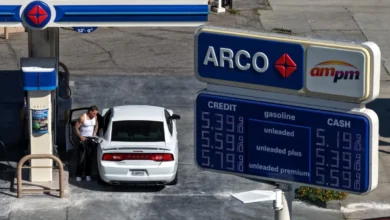
- 2024–2025: As the Trump administration returns to power and begins dismantling environmental regulations, progressives face a "political toxicity" narrative regarding climate policy. High fuel prices, exacerbated by geopolitical conflicts such as the Iran war, lead to a resurgence of "drill, baby, drill" rhetoric.
- 2026: The CCI launches "Stop Greed, Build Green" in New York City and Washington, D.C., seeking to reclaim the narrative by positioning climate action as the solution to, rather than the cause of, high prices.
This chronology highlights a movement that is learning from its past. Naomi Klein, a prominent author and CCI advisory board member, notes that earlier "neoliberal" climate policies, such as carbon pricing, were often perceived as regressive taxes that burdened the poor. Green economic populism seeks to invert this by placing the financial burden of the transition on "polluters and oligarchs" while providing direct subsidies and services to the working class.
Data-Driven Strategy: Public Sentiment and Economic Reality
The push for a populist climate agenda is backed by new data suggesting that the American public is more receptive to this message than previously thought. A recent survey conducted by the CCI in collaboration with the progressive polling firm Data for Progress revealed a surprising consensus. According to the findings, 70 percent of all voters—including a notable 65 percent of Republicans—believe that strategic climate action has the potential to lower the cost of living.
This data suggests a significant opening for climate advocates. For decades, right-wing populists have successfully framed environmentalism as an elite preoccupation that threatens blue-collar jobs and raises energy prices. The "Stop Greed, Build Green" platform attempts to dismantle this narrative by highlighting how fossil fuel dependence creates volatility. Patrick Bigger, the research director at CCI, argues that underinvestment in public infrastructure and an over-reliance on global oil markets are the true sources of the "real pain" felt by Americans.
The platform’s economic analysis focuses on several key areas:
- Energy Costs: Promoting the rapid deployment of heat pumps and home weatherization to insulate families from fluctuating heating and cooling costs.
- Transportation: Advocating for free public transit and the production of union-built, affordable electric vehicles (EVs) to reduce the "gas pump anxiety" that dominates political cycles.
- Housing: Implementing rent caps and insurance regulations to ensure that green upgrades do not lead to gentrification or the displacement of low-income residents.
Official Responses and Divergent Perspectives
The unveiling of the platform has sparked a robust debate among policy experts, former administration officials, and labor leaders. At a recent convening in Washington, D.C., the CCI solicited feedback from various stakeholders, revealing both enthusiasm and skepticism.
Sameera Fazili, who served as a deputy director of the National Economic Council under the Biden administration, expressed optimism that green economic populism could help move climate change out of the "culture war" sphere. By "tucking climate aims into other policy," Fazili suggests that advocates can achieve environmental goals through the lens of kitchen-table issues that resonate across the political spectrum.
However, the platform also faced critical questions. Jigar Shah, the former director of the Department of Energy’s Loan Programs Office, questioned whether the plan relies too heavily on price controls and heavy-handed regulation. Shah suggested that technological innovation and market scaling might be more effective drivers of affordability than the "economic democracy" models proposed by the CCI.
Labor advocates also raised concerns regarding the potential trade-offs between job quality and cost suppression. While the CCI platform emphasizes union labor, some worry that an aggressive focus on lowering costs for consumers could put downward pressure on the wages of the workers building the new green economy. These tensions highlight the difficulty of balancing the interests of the "working class" as both consumers and producers.
Local Implementation: From NYC to Seattle
While federal action remains a challenge, the principles of green economic populism are already being tested at the municipal level. In New York City, local leaders have integrated climate resilience into broader affordability campaigns. Zohran Mamdani, a prominent democratic socialist in the state assembly, has made "public power" a cornerstone of his platform, arguing that utility companies should be publicly owned to ensure that rates remain low while the grid transitions to renewables.
Similarly, in Seattle, Mayor Katie Wilson has championed "green social housing." This model uses public funds to build energy-efficient apartment complexes that are owned by the city or non-profit entities, ensuring that the benefits of green technology are available to those who cannot afford private-market upgrades. Wilson noted during a CCI press call that there is "perfect alignment" between her administration’s priorities and the national populist platform.
These local successes serve as a "proof of concept" for the CCI. By demonstrating that climate policy can lead to lower rents and more reliable services, advocates hope to build the "buy-in" necessary for a broader structural transformation of the national economy.
Implications for the Future of Climate Politics
The emergence of green economic populism marks a definitive end to the era of "climate isolationism," where environmental policy was treated as a boutique issue for affluent voters. The CCI’s framework acknowledges that in a high-inflation, high-debt environment, any policy that does not address the immediate material needs of the electorate is likely to fail.
The broader impact of this shift could be profound. If progressives successfully link the "Big Oil" narrative to the "cost-of-living" narrative, they may be able to peel away working-class voters who have traditionally been skeptical of the Democratic Party’s environmental wing. Furthermore, by focusing on "economic democracy" and the redistribution of corporate profits, the movement seeks to address the underlying power structures that CCI scholars believe are responsible for both environmental destruction and economic inequality.
As Patrick Bigger concluded at the New York launch event, the goal is not just to cut emissions, but to win a "long-term structural transformation." To achieve that, the climate movement must prove that its vision of a green future is one that everyone can afford to live in. Whether this strategy can overcome the entrenched influence of the fossil fuel lobby and the skepticism of a divided Congress remains to be seen, but the "Stop Greed, Build Green" platform has provided a new and provocative roadmap for the struggle ahead.
Related posts: