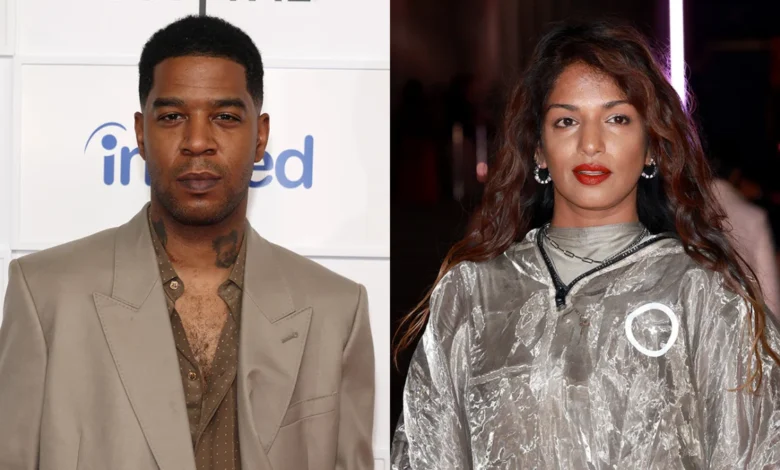
Los Angeles, CA – [Insert Date] – Rapper and artist Kid Cudi has officially removed M.I.A. as the opening act for his ongoing tour, citing controversial comments made by the British artist during recent performances. The decision was announced by Cudi on Monday, just days after M.I.A. reportedly made remarks about conservatism and immigration that generated significant backlash from fans.
The hip-hop artist, whose real name is Scott Mescudi, stated via an Instagram story that M.I.A. would no longer be performing on his tour. This move comes in the wake of fan-reported incidents during M.I.A.’s sets, which have since gone viral on social media platforms like Reddit and X (formerly Twitter).
Controversial Comments Spark Backlash
According to accounts from concertgoers at the Dos Equis Pavilion in Dallas, M.I.A. allegedly stated, "I never thought I would be cancelled for being a brown republican voter." This remark, shared by fans online, quickly ignited a debate regarding political affiliations within the music industry and the potential consequences for artists expressing conservative viewpoints.
Further fueling the controversy, a fan-captured video purportedly shows M.I.A. addressing her song "Paper Planes," stating, "I can’t do ‘illegal,’ though some of you could be in the audience." This comment was widely interpreted as a pointed reference to undocumented immigrants, drawing criticism for its perceived insensitivity and potentially alienating segment of the audience.
Kid Cudi’s Stance and Decision
Kid Cudi, known for his outspoken advocacy for mental health awareness and his generally inclusive fan base, was quick to address the situation. In his Instagram story, he explicitly stated his prior directives to his management. "I told my management to send a notice to her team before we started tour that I didn’t want anything offensive at my shows, cuz I already knew what time it was," Cudi wrote. He added that he had been assured that M.I.A. understood these expectations.
The artist elaborated on his disappointment, stating, "After the last couple shows, I’ve been flooded with messages from fans that were upset by her rants. This, to me, is very disappointing and I won’t have someone on my tour making offensive remarks that upsets my fanbase. Thank you for understanding." This statement underscores Cudi’s commitment to maintaining a positive and welcoming environment for his concert attendees.
Representatives for M.I.A. did not immediately respond to requests for comment regarding the tour removal or the controversial statements.
A History of Provocative Statements
M.I.A., born Mathangi Arulpragasam, has a well-documented history of making provocative and often controversial statements throughout her career. This latest incident is not the first time her public commentary has drawn significant attention and criticism.
During the COVID-19 pandemic in 2020, M.I.A. engaged in rhetoric that was critical of vaccines. At the time, she reportedly stated that she would "choose" death over receiving a vaccine, a stance that was met with concern and debate given the global health crisis.
More recently, in early 2024, M.I.A. publicly endorsed Donald Trump for president. She posted on X, stating, "Trump is going to ride America through the most challenging 4 years." This endorsement further solidified her position within a segment of the political spectrum that often diverges from mainstream celebrity discourse.
These past instances suggest a pattern of M.I.A. expressing views that can be polarizing, a characteristic that has often been intertwined with her artistic persona but has also led to significant public scrutiny.
Broader Implications and Industry Context
The decision by Kid Cudi to remove M.I.A. from his tour highlights the ongoing tension between artistic freedom of expression and the responsibility artists have to their audiences, particularly in the context of large-scale public performances. In an era where social media amplifies every statement and reaction, artists are increasingly under pressure to navigate their public personas carefully.
The incident also touches upon the complex relationship between artists and their fan bases, especially when those fan bases encompass diverse political viewpoints. While artists are often celebrated for their individuality, controversial remarks can alienate significant portions of their audience, forcing difficult decisions for both the artist and their collaborators.
The music industry, in general, has seen numerous instances where artists’ public statements have led to boycotts, cancellations, or public outcry. This case adds to a growing body of evidence suggesting that in the current climate, artists’ political and social commentary can have tangible repercussions on their professional careers and touring opportunities.
Timeline of Events
- [Date of M.I.A.’s Dallas Performance]: M.I.A. reportedly makes controversial comments regarding conservatism and immigration during her set in Dallas.
- [Days following Dallas performance]: Fan reactions and discussions about M.I.A.’s comments begin to circulate widely on platforms like Reddit and X.
- Monday, [Insert Date]: Kid Cudi announces via Instagram story that M.I.A. is no longer part of his tour. Cudi explains his reasoning, citing fan complaints and his desire to avoid offensive remarks at his shows.
- [Current Date]: M.I.A.’s representatives have not yet issued a public statement regarding the tour removal.
Supporting Data and Context
While specific data on fan attendance and demographics for Kid Cudi’s tour is not publicly available, the artist has cultivated a dedicated following over his career, known for its engagement with his music and personal advocacy. His previous tours have often been characterized by an emphasis on positive energy and fan connection. M.I.A.’s career, spanning over two decades, has been marked by critical acclaim for her innovative sound and her willingness to push boundaries, both musically and lyrically. However, her outspoken nature has also led to a pattern of controversy, as evidenced by her past statements on vaccines and her endorsement of political figures. The cumulative effect of these public stances can influence how fans and collaborators perceive her engagement in a live performance setting.
The incident also occurs within a broader cultural conversation about cancel culture and the boundaries of free speech in public forums. While some argue for an artist’s unfettered right to express any viewpoint, others emphasize the impact such expressions can have on marginalized communities or on the broader societal discourse. Kid Cudi’s decision appears to be rooted in the latter perspective, prioritizing the comfort and inclusivity of his own audience.
The financial implications for M.I.A. of being removed from a major tour are not immediately quantifiable but could be significant, impacting her income from performances and potential promotional opportunities associated with the tour. For Kid Cudi, the decision, while potentially disruptive to his tour programming, likely aims to preserve the integrity of his artistic brand and maintain positive relationships with his core fan base.
Related posts: