Representative Eric Swalwell Resigns from House Amid Sexual Misconduct Allegations, Pre-empting Expulsion Vote and Ending Political Career

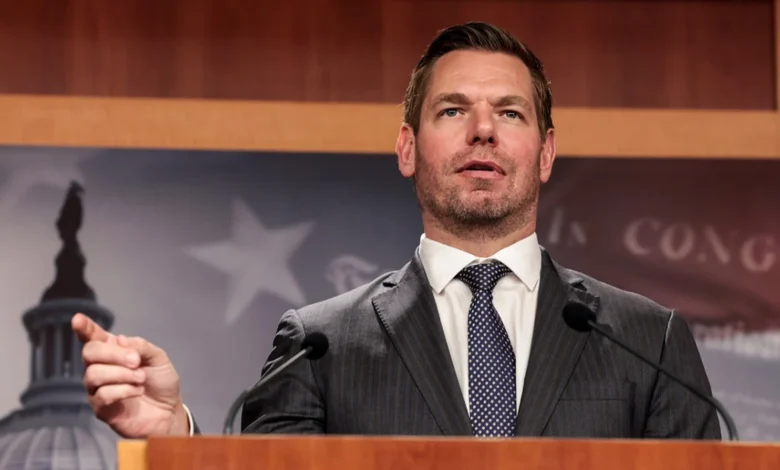
Washington D.C. – In a dramatic turn of events, Representative Eric Swalwell (D-Calif.) formally tendered his resignation from the U.S. House of Representatives on Tuesday, stepping down from his seat amidst a cascade of sexual misconduct allegations. The resignation, made official in a letter read aloud on the House floor, effectively concludes Swalwell’s congressional tenure and signals the likely end of a once-promising political career, which had seen him rise to national prominence as a vocal critic of the previous administration and a former presidential candidate. His departure came just hours before a threatened vote to expel him from Congress, a move that would have marked a far more ignominious end to his time in public service.
The Swift Fall from Grace
Swalwell’s resignation brought a swift resolution to a burgeoning scandal that had consumed his political life for weeks. The controversy began to escalate with multiple women coming forward, accusing the congressman of various forms of sexual misconduct, including one allegation of sexual assault. Despite his insistence that the allegations were "false, fabricated, and deeply offensive," the political pressure mounted relentlessly, culminating in his decision to step aside.
In his resignation letter, Swalwell acknowledged the gravity of the situation, stating, "I will fight the serious false allegations made against me. However, I must take responsibility and ownership for the mistakes I did make." This nuanced statement, while maintaining his innocence regarding criminal wrongdoing, hinted at an acknowledgment of unspecified errors in judgment that contributed to the crisis. His attorney, Sara Azari, vehemently echoed the denial of criminal behavior, characterizing the accusations as "a calculated and transparent political hit job designed to destroy the reputation of a man who has spent twenty years in public service." Azari further asserted that "The timing, nature and coordinated rollout of these vile and heinous allegations speak for themselves. This is neither about justice, nor the truth. This is a ruthless and shameless attempt to smear Congressman Swalwell."
The formal resignation occurred at 2 p.m. on Tuesday, fulfilling a pledge Swalwell had made the previous day without specifying a precise timeline. This pre-emptive action allowed him to exit on his own terms, avoiding the public spectacle and potential humiliation of a forced removal from office.
A Chronology of Mounting Pressure
The sequence of events leading to Swalwell’s resignation unfolded rapidly. The initial reports of sexual misconduct allegations began to surface several weeks prior, gaining significant traction in the media and on social media platforms. As the number of accusers grew to five women, including a former staffer, the political landscape shifted dramatically for the California Democrat.
A critical turning point came with the revelation that the Manhattan District Attorney’s office had launched a criminal investigation into one specific incident, allegedly occurring in a New York City hotel room. This development elevated the accusations from political controversy to a serious legal matter, intensifying calls for accountability. Further adding to the pressure, FBI Director Kash Patel extended an invitation to Swalwell for a conversation with the bureau regarding the allegations, signaling potential federal interest in the matter.
Politically, the impact was immediate and severe. Swalwell, who had been actively campaigning for the California governorship, saw his aspirations crumble. Over the weekend preceding his resignation, nearly every prominent Democrat who had previously endorsed his gubernatorial bid retracted their support. This widespread abandonment signaled an undeniable loss of confidence from within his own party, rendering his campaign untenable. Consequently, he announced the suspension of his gubernatorial campaign, apologizing for "past judgment" while still denying the claims against him.
The Threat of Expulsion and Congressional Dynamics
Swalwell’s resignation also effectively thwarted an imminent threat of expulsion from the House. Representative Anna Paulina Luna (R-Fla.) had been a vocal proponent of Swalwell’s removal, vowing to force a vote on a measure to forcibly eject him if he did not voluntarily step aside. Following the announcement of his official resignation, Luna took to X (formerly Twitter) to confirm the development, stating, "I have just been notified that Eric Swalwell has officially submitted his resignation to the House Clerk. Effective immediately."
The prospect of an expulsion vote highlights the severe consequences members of Congress face when confronted with allegations of serious misconduct. While expulsion is a rare and extreme measure, it is enshrined in the Constitution, requiring a two-thirds majority vote of the chamber. Swalwell, in his resignation letter, directly referenced these efforts, writing, "I am aware of efforts to bring an immediate expulsion vote against me and other members. Expelling anyone in Congress without due process within days of an allegation being made is wrong. But it’s also wrong for my constituents to have me distracted from my duties." This statement reflects a delicate balance: while asserting a right to due process, he also acknowledged the practical impediment his ongoing scandal posed to his ability to effectively represent his constituents.
The House Ethics Committee typically handles investigations into member conduct, but the political urgency and the nature of the allegations often lead to broader calls for action. The explicit threat of an expulsion vote, bypassing the potentially lengthy Ethics Committee process, underscores the political sensitivity and the intense pressure exerted by both internal and external forces.
Broader Context: A Wave of Accountability in Congress
Swalwell’s resignation did not occur in isolation. His letter, in fact, referenced "efforts to bring an immediate expulsion vote against me and other members," specifically naming Representatives Tony Gonzales (R-Texas), Cory Mills (R-Fla.), and Sheila Cherfilus-McCormick (D-Fla.). This indicates a broader, bipartisan push for accountability within the legislative body, though for a "variety of scandals."
Notably, Representative Tony Gonzales’s resignation letter was read on the House floor immediately before Swalwell’s. Gonzales’s departure, though also prompted by allegations of sexual misconduct, involved a different set of circumstances. Gonzales, who is married with six children, had admitted to an affair with a former staffer, Regina Santos-Aviles, who later died by setting herself on fire. The San Antonio-Express News also reported a second, unacknowledged accusation of sexual misconduct involving another former aide. Gonzales’s resignation, effective just before midnight on Tuesday, also pre-empted potential expulsion efforts. In his letter, Gonzales stated, "It has been my privilege to serve the residents of Texas’s 23rd congressional district."
These concurrent resignations underscore a growing trend of increased scrutiny and demands for accountability for personal conduct within Congress, particularly in the wake of the #MeToo movement. The political climate has shifted, making it increasingly difficult for members to weather serious allegations of misconduct without significant repercussions, even when denying criminal wrongdoing.
Implications for the Democratic Party and California’s 14th District
Swalwell’s resignation creates an immediate vacancy in California’s 14th Congressional District, encompassing parts of the East Bay region. This will trigger a special election, which will likely draw a crowded field of Democratic hopefuls in this reliably blue district. The Democratic Party will now face the task of quickly coalescing around a new candidate to represent the district and maintain its hold on the seat.
For the Democratic Party nationally, Swalwell’s departure is a loss of a visible and often aggressive voice, particularly on issues of national security and as a critic of the Republican opposition. His role on key committees, such as the House Permanent Select Committee on Intelligence, will need to be filled, impacting the party’s legislative and oversight capabilities. The scandal itself, while damaging to Swalwell personally, also poses a broader challenge to the party’s image, as it grapples with allegations of misconduct within its own ranks. The swift distancing of prominent Democrats, including Speaker Emerita Nancy Pelosi, from Swalwell as the allegations mounted, illustrates the party’s effort to mitigate broader reputational damage.
The case also sets a precedent for how Congress might handle similar situations in the future. The willingness of some members to push for immediate expulsion, rather than relying solely on the Ethics Committee, reflects a growing impatience with drawn-out processes and a demand for faster accountability. This could influence how future allegations are addressed, potentially leading to quicker resolutions, whether through resignation or an expedited expulsion process.
The Road Ahead: Legal Battles and Public Scrutiny
While Eric Swalwell’s political career in Congress has ended, his legal challenges are just beginning. The criminal investigation by the Manhattan District Attorney’s office will proceed, and Swalwell has pledged to "fight the serious false allegations." His attorney’s strong denial and characterization of the accusations as a "political hit job" suggest an aggressive legal defense. The outcome of these investigations and any potential legal proceedings will not only determine Swalwell’s personal fate but could also continue to fuel public discourse on accountability for public figures.
The resignations of both Swalwell and Gonzales, driven by allegations of sexual misconduct, serve as a stark reminder of the intense scrutiny faced by elected officials and the profound impact such accusations can have on careers, regardless of the ultimate legal outcome. They underscore a political landscape where public trust is increasingly fragile and the demands for ethical conduct are paramount. The twin departures mark a significant moment in the ongoing national conversation about power, accountability, and the standards expected of those who serve in public office.