Physicists Declare the Proton Radius Puzzle Solved, Affirming the Standard Model’s Precision

The scientific community can finally close the book on one of the most persistent and intriguing mysteries in modern physics: the proton radius puzzle. For over 15 years, physicists grappled with conflicting measurements of the proton’s charge radius, a fundamental property of matter. While some experiments yielded a larger value consistent with established theoretical models, others, particularly those involving exotic muonic hydrogen, suggested a significantly smaller proton. This perplexing discrepancy sparked intense debate, hinting at the tantalizing possibility of entirely new physics beyond the Standard Model. However, recent groundbreaking experiments, detailed in two papers published in the prestigious journals Nature and Physical Review Letters in 2026, have delivered a definitive resolution. The new evidence overwhelmingly supports the smaller proton radius, thereby affirming the robustness of current theoretical frameworks and effectively laying to rest hopes for a straightforward discovery of new fundamental forces or particles in this particular domain.
"We believe this is the final nail in the coffin of the proton radius puzzle," stated Lothar Maisenbacher, a co-author of the Nature paper from the University of California, Berkeley, encapsulating the sentiment of many researchers who have dedicated years to this enigma. The consensus now firmly aligns around a proton charge radius of approximately 0.84 femtometers – an unimaginably small distance, less than one million-billionth of a meter (0.00000000000003 millimeters). This resolution underscores the extraordinary precision achievable in modern quantum measurements and marks a significant milestone in our understanding of the most basic building blocks of the universe.
The Proton Radius Puzzle: A Decade-Long Enigma
The journey to resolving the proton radius puzzle began in earnest over a decade ago, but its roots lie in the very definition and measurement of fundamental particles. The proton, a cornerstone of atomic nuclei, is not a simple, hard sphere. Instead, it is a complex, quantum entity composed of three quarks (two ‘up’ and one ‘down’) held together by the strong nuclear force, mediated by gluons. This internal structure means the proton possesses a fuzzy, cloud-like distribution of electric charge. Its "radius" is therefore not a sharp boundary but rather a measure of the spatial extent of this charge distribution – specifically, the distance at which the charge density drops below a certain energy threshold.
For many years leading up to 2010, the accepted value for the proton’s charge radius was approximately 0.876 femtometers (fm). This "world average" was derived from numerous experiments, primarily involving electron scattering off hydrogen nuclei and spectroscopic measurements of energy levels in ordinary hydrogen atoms. These values, while having their own margins of error, generally agreed with each other and with predictions from quantum electrodynamics (QED), the highly successful theory describing how light and matter interact. The consistency among these results painted a picture of a well-understood proton within the framework of the Standard Model of particle physics. This established value provided a reliable benchmark against which new measurements were compared, forming the basis of the initial scientific consensus.
Unveiling the Quantum Realm: Defining a Proton’s Dimensions
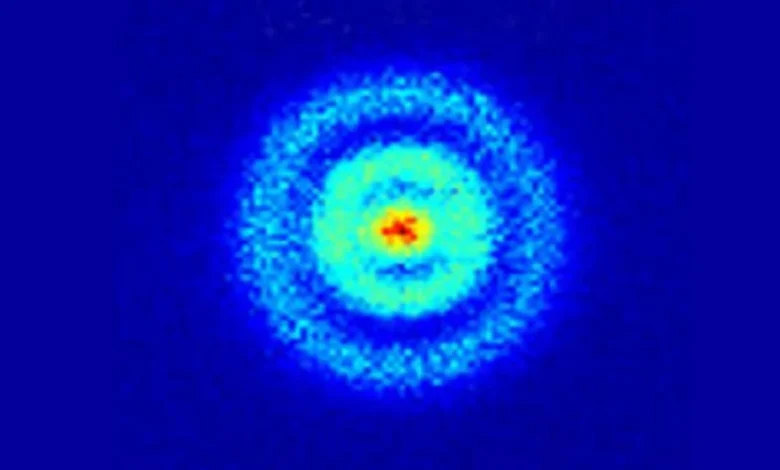
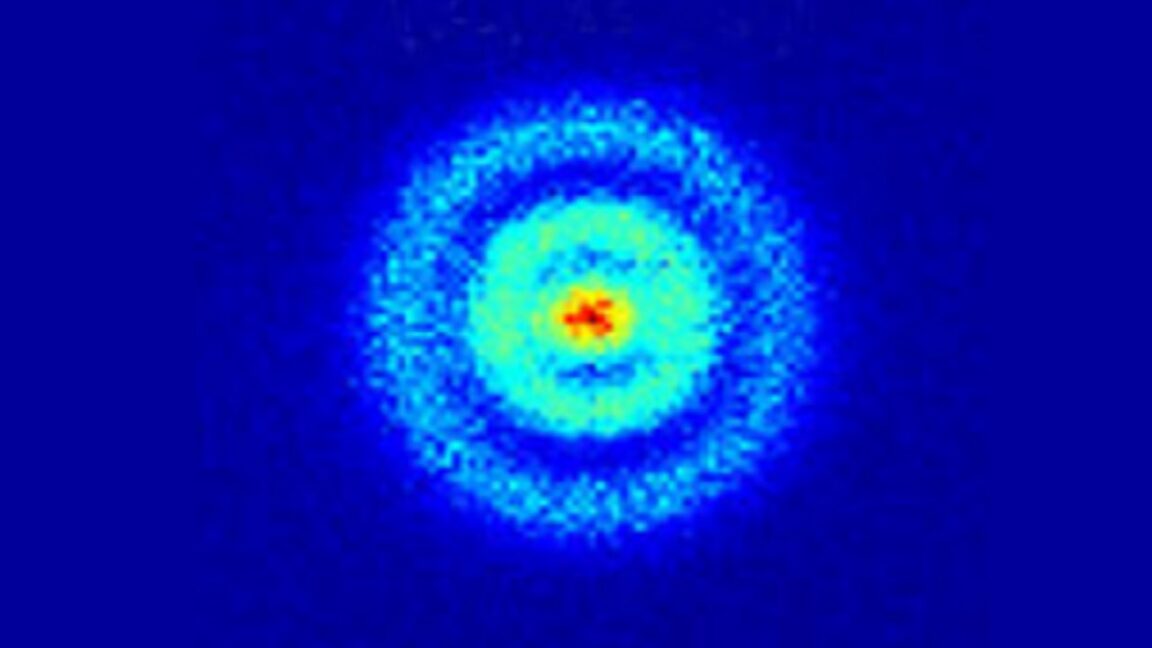
To truly grasp the significance of the proton radius puzzle, one must delve into the strange world of quantum mechanics. While popular illustrations often depict electrons orbiting a nucleus like planets around a sun (the much-maligned Bohr model), the reality is far more nuanced. According to quantum mechanics, electrons exist as probability waves, not discrete particles in fixed orbits. Their position around the nucleus is described by a wave function, a mathematical construct that encompasses all possible locations simultaneously. Only upon measurement does this wave function "collapse," yielding a specific position, which, when repeated many times, forms a fuzzy, orbit-like pattern known as an orbital. The image of a hydrogen atom’s electron orbitals, famously captured with a quantum microscope in 2013, provides a visual representation of this probabilistic distribution.
This quantum weirdness extends to the proton itself. Being composed of quarks and gluons, the proton’s charge is not concentrated at a single point but is distributed throughout a small volume. Measuring this "charge radius" involves probing how other particles interact with this charge distribution. The primary methods employed by physicists are:
- Electron Scattering Experiments: In these experiments, high-energy electrons are fired at hydrogen atoms. By observing how the electrons scatter after interacting with the proton’s charge distribution, physicists can infer its size and internal structure. The scattering angle and energy loss of the electrons are directly sensitive to the proton’s charge density profile.
- Atomic Spectroscopy (Lamb Shift Measurements): This technique involves precisely measuring the energy differences between specific quantum states of an electron orbiting a proton. These energy levels are subtly influenced by the finite size of the proton. The "Lamb shift," a tiny but measurable difference in energy levels that cannot be explained by the Dirac equation alone, is particularly sensitive to the proton’s radius. A larger proton radius would slightly alter the electron’s energy levels, providing an indirect but highly precise way to determine its size. Hydrogen atoms, being the simplest nuclei with a single proton and electron, are ideal candidates for these highly sensitive spectroscopic measurements.
The combined fuzziness of both the electron’s probability cloud and the proton’s charge distribution means that the electron can, at times, effectively be inside the proton. This interaction is crucial for these measurement techniques, as it provides the necessary sensitivity to the proton’s internal structure, allowing physicists to probe its innermost regions.
The Muon’s Revealing Role: The Puzzle’s Genesis
The comfortable consensus surrounding the proton’s size was shattered in 2010 by a pioneering experiment conducted by physicists at the Max Planck Institute of Quantum Optics. They introduced a novel approach: using "muonic hydrogen." In this exotic atom, the electron orbiting the proton is replaced by a muon – a fundamental particle that is essentially a heavier sibling of the electron. Muons are leptons, just like electrons, but they are nearly 200 times more massive and incredibly short-lived, decaying in a mere 2.2 microseconds.
The increased mass of the muon is key to its enhanced sensitivity. According to quantum mechanics, a heavier particle in orbit around a nucleus will have a much smaller and tighter "orbital" (probability cloud). For muonic hydrogen, this means the muon’s probability cloud is about 200 times closer to the proton than an electron’s. Consequently, the muon spends significantly more time inside the proton’s fuzzy charge distribution – an astounding 10 million times more probability than an electron. This close proximity makes muonic hydrogen spectroscopy an extraordinarily sensitive probe of the proton’s charge radius, allowing for measurements with unparalleled precision.
The expectation was that these muonic measurements would yield a proton radius consistent with the established electron-based value of 0.876 fm, albeit with significantly reduced uncertainty due to the enhanced sensitivity. However, the results were startling: the Max Planck team measured a proton radius of 0.841 femtometers. This value was not only smaller than the accepted world average but fell well outside its established error bars, representing a discrepancy of five standard deviations (5 sigma). In particle physics, a 5-sigma deviation is often considered the threshold for a "discovery," implying that the probability of such a result occurring by chance is exceedingly low, typically less than one in a million.
The implications were profound. Was it an undetected experimental error in the muonic hydrogen setup? Was there a subtle misapplication of quantum electrodynamics (QED) in the calculations for muonic atoms? Or, most excitingly for some, did this "shrinking proton" hint at entirely new physics, perhaps a new force or particle that interacts differently with muons than with electrons, thereby causing the perceived difference in proton size? This third possibility, while initially considered the least likely, fueled much of the subsequent research and debate. The very foundation of QED, a theory renowned for its precision, seemed to be under scrutiny, prompting a global effort to unravel the mystery.
A Chronology of Conflicting Results and Intensifying Debate
The 2010 muonic hydrogen result ignited a scientific firestorm, propelling the proton radius puzzle to the forefront of fundamental physics research. The ensuing years saw a flurry of experiments attempting to confirm or refute the initial finding, leading to a complex and often contradictory timeline:
- 2013: Confirmation of the Muonic Value: The same international team behind the 2010 discovery repeated their muonic hydrogen experiments, meticulously checking for systematic errors. Their new measurement confirmed the smaller value, reporting a radius of 0.84 fm, with an even more striking discrepancy of seven standard deviations (7 sigma) from the electron-based world average. This strengthened the case for a genuine anomaly and further deepened the puzzle, as the odds of this being a statistical fluctuation were incredibly small.
- 22016: Muonic Deuterium Experiment: To further investigate potential muon-specific interactions, researchers conducted an experiment using muonic deuterium – a hydrogen isotope where the nucleus contains both a proton and a neutron, orbited by a muon. The presence of the neutron was hypothesized to potentially alter how muons (and electrons) perceive the proton’s charge distribution. The results, however, again aligned with the smaller proton radius observed in muonic hydrogen, reinforcing the idea that the discrepancy was fundamental rather than an artifact of hydrogen’s simple structure.
- 2017: Electron-Based Confirmation of Smaller Radius: A significant turning point came with new electron-based experiments using regular hydrogen. A study published in 2017 employed highly precise laser spectroscopy on atomic hydrogen and reported a proton radius that agreed with the smaller muonic value. This was crucial because it showed that the "small proton" was not exclusive to muonic systems, suggesting a possible flaw in the earlier electron-based measurements or their theoretical interpretations rather than a muon-specific "new physics" interaction.
- 2018: Electron-Based Return to Larger Radius: Just as a consensus seemed to be forming around the smaller value, another electron-based measurement, published in 2018, unexpectedly sided with the larger proton radius, closer to the pre-2010 world average. This result threw the puzzle back into disarray, reigniting the debate about experimental consistency and theoretical models, and underscoring the extreme difficulty of these high-precision measurements.
- 2019: York University’s Contribution: Scientists at York University entered the fray with another electron-based measurement of the proton radius. Their meticulous work aimed to bridge the gap between the conflicting electron and muon results. Their finding of 0.833 femtometers further supported the smaller proton radius, aligning with the 2010 muonic study and the 2017 electron-based result. The accumulating evidence seemed to be slowly tilting towards the smaller value, but without definitive closure, the puzzle persisted, prompting further experimental ingenuity.
Throughout this period, the scientific community explored various hypotheses. Could there be subtle errors in the theoretical calculations of QED that are applied to hydrogen, particularly concerning the proton’s internal structure? Were there unrecognized systematic errors affecting some of the experiments? Or, indeed, was there a fundamental difference in how muons and electrons interact with protons, mediated by an undiscovered force? The latter, while exciting, would necessitate a significant revision of the Standard Model, potentially opening up a whole new realm of particle physics.
The Final Verdict: New Experiments Confirm Smaller Proton
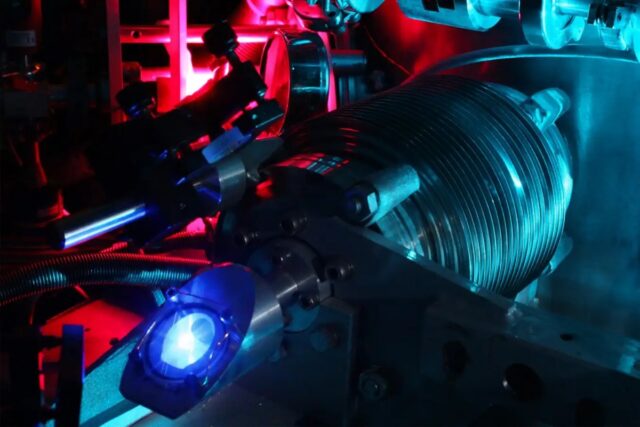
The long-standing proton radius puzzle now appears to have reached its conclusive resolution, thanks to two independent and highly precise experiments published in 2026. Both studies employed sophisticated laser spectroscopy techniques on ordinary hydrogen atoms within meticulously controlled vacuum environments, such as the vacuum chamber pictured, used to measure electron transitions in atomic hydrogen.
The first paper, co-authored by Lothar Maisenbacher and colleagues and published in Nature, focused on measuring specific energy transitions in atomic hydrogen with unprecedented accuracy. By precisely controlling the electrons with lasers and observing their energy level shifts, the team was able to infer the exact dimensions of the proton’s charge distribution. Their result pushed the boundaries of precision, reaching a coveted 5.5 sigma threshold – a statistical measure indicating an extremely low probability that the observed result is due to random chance. This measurement strongly supported a smaller proton radius, consistent with the muonic hydrogen findings.
Concurrently, a second paper by Dylan Yost et al., published in Physical Review Letters, utilized a similar approach, also employing laser spectroscopy on hydrogen atoms. Their findings corroborated the results from the Nature paper, providing an independent verification of the smaller proton radius. The precision of the Yost et al. results was roughly three times greater than the 2019 electron-based measurement, while Maisenbacher et al.’s result was twice as precise as Yost’s, showcasing a remarkable advancement in experimental techniques. This escalating precision was crucial in achieving the definitive resolution.
The combined weight of these two highly precise, independent measurements unequivocally points to a proton radius of approximately 0.84 femtometers. This value is consistent with the initial muonic hydrogen measurements that first unveiled the puzzle in 2010, as well as several subsequent electron-based experiments. The previous "world average" of 0.876 fm now appears to have been skewed by unrecognized systematic errors in some of the older experiments or their theoretical interpretations. This highlights the ongoing challenge of achieving ultimate precision in quantum measurements and the importance of continuously refining experimental methodologies and data analysis.

Juan Rojo, a physicist at Vrije University Amsterdam who was not involved in either experiment, commented on the significance of these dual confirmations to New Scientist: "The proton radius should be a universal property; it should give the same result no matter how you look at it. This is why these two papers are quite nice, because they provide different perspectives to the same number." His statement highlights the critical importance of independent verification using different experimental methodologies to ensure the universality of fundamental physical constants, a cornerstone of scientific inquiry.
Reactions from the Scientific Community
The resolution of the proton radius puzzle has been met with a mixture of relief and tempered excitement within the physics community. While the prospect of new physics is always thrilling, the validation of existing theories at such extreme precision is also a cause for celebration.
Lothar Maisenbacher’s declaration of the "final nail in the coffin" reflects the sense of closure after years of intense work and uncertainty. The collaborative effort across different experimental groups and theoretical physicists has ultimately converged on a consistent picture, demonstrating the self-correcting nature of science.
Dylan Yost, co-author of the Physical Review Letters paper, shared a nuanced perspective with Ars Technica: "When the proton radius first came out, all the normal hydrogen measurements showed good agreement with each other, and muonic hydrogen was an an outlier. This gave everyone great hope that maybe there was some new physics that was really related to the difference between muons and electrons. So this is disappointing for the discovery of new physics, but it is exciting that we are performing such stringent tests of the Standard Model." Yost’s comments perfectly capture the bittersweet nature of the resolution: while the search for a new fundamental force linked to muon-electron differences didn’t pan out, the ability to test the Standard Model to an unprecedented