David Fincher reveals The Further Mis-Adventures of Cliff Booth could be his final feature film

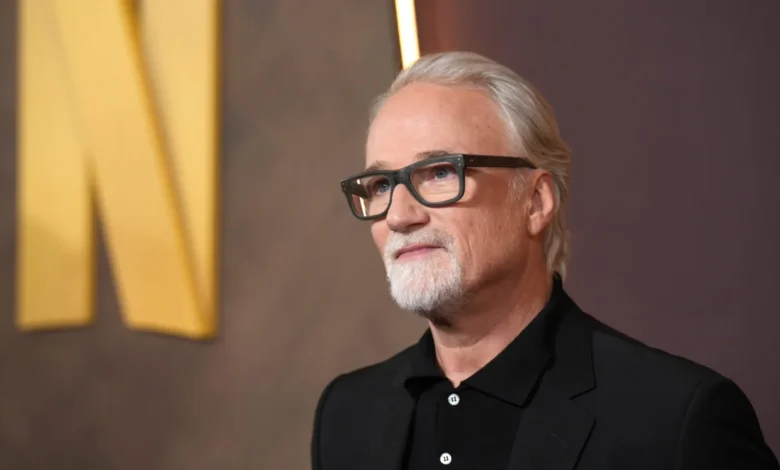
The landscape of contemporary cinema shifted slightly this week as acclaimed director David Fincher, a titan of psychological thrillers and precision-based filmmaking, suggested that his latest project, The Further Mis-Adventures of Cliff Booth, may serve as the concluding chapter of his storied feature film career. Speaking candidly during a recent appearance on The Ringer’s The Big Picture podcast, the 64-year-old auteur articulated a profound shift in his professional priorities, citing the exhaustion of decades spent within the industrial apparatus of Hollywood and a desire to reclaim the intimacy of storytelling.
This announcement arrives at a pivotal juncture in Fincher’s four-decade career. Since his directorial debut in the early 1980s, Fincher has been defined by his near-obsessive technical rigor, his mastery of the digital medium, and his ability to transform dark, complex narratives into commercial and critical successes. However, his recent comments suggest that the "freakish" ease with which he once commanded sets at the age of 20 has been replaced by a more contemplative, perhaps weary, perspective on the toll that traditional filmmaking demands.
A Career Defined by Technical Perfectionism
To understand the weight of Fincher’s potential retirement, one must examine the trajectory of his work. Born in 1962, Fincher began his career at Industrial Light & Magic before transitioning into music videos and eventually feature films with Alien 3 in 1992. Throughout the 1990s and 2000s, he became synonymous with a specific brand of visual perfectionism. Films such as Seven, Fight Club, and Zodiac are frequently cited in film school curricula as benchmarks for cinematography, editing, and atmospheric tension.
His process is legendary—or, to some of his collaborators, notorious. Fincher is known for demanding dozens, sometimes hundreds, of takes to capture the precise micro-expressions of his actors. This methodology has produced some of the most enduring images in modern film, yet it requires a grueling physical and mental investment. By his own admission, the patience required to sustain this level of control over 12-hour shooting days has begun to wane. "I don’t have as much patience as I once had," he noted during the podcast, highlighting that at 64, his physical need for rest and his shifting creative priorities have fundamentally altered his relationship with the film set.
The Industrialization of Cinema and the Human Element
At the heart of Fincher’s remarks is a critique of the modern studio system. He posits that the "greatest disservice" done to the art form is the attempt to industrialize the creative process. For Fincher, filmmaking is inherently intimate, yet the current studio model—which often prioritizes massive crews, extended production schedules, and the sheer volume of "manpower" thrown at creative problems—is increasingly at odds with his philosophy.
Fincher’s stance on the use of Artificial Intelligence and streamlined production methods is nuanced. While he acknowledges the necessity of modernizing, he rejects the idea that technology should replace the human connection between director and actor. "Anything that we’re doing that’s not photographing the actors is time not very well spent," he stated. This philosophy reflects a desire to strip away the bloated, inefficient layers of 21st-century production in favor of a more focused, human-centric approach. He argues that the solution to modern production woes is not more labor, but "more streamlined thinking," suggesting that the industry’s reliance on brute force as a solution is an outdated vestige of the 20th century.
Analyzing The Further Mis-Adventures of Cliff Booth
The film in question, The Further Mis-Adventures of Cliff Booth, represents a unique collaborative experiment. Serving as a spiritual successor to Quentin Tarantino’s 2019 epic Once Upon a Time in Hollywood, the film places Brad Pitt’s iconic character at the center of a new, Fincher-directed narrative. The project has drawn significant attention not only for its pedigree but for the stylistic tension it presents.
In his review for The Hollywood Reporter, chief film critic David Rooney observed that the film acts as a fascinating collision of two distinct creative worlds. He noted that while Pitt’s performance retains the "golden glow" of the original character, the synthesis of Fincher’s "exactingly controlled" direction and the "shaggier" storytelling style inherent in Tarantino’s screenplay is, at times, an imperfect fit. Despite these tonal frictions, the film has been praised for its "good-time vibe" and the visible affection the creative team holds for the source material.
However, the film’s reception also highlights a potential motivation for Fincher’s potential exit. If a project of such high caliber, involving a powerhouse cast and a beloved character, still leaves the director feeling the weight of the "industrialized process," it serves as a strong indicator that the system itself may no longer be compatible with his creative needs.
Broader Implications for the Industry
Should David Fincher follow through on his suggestion to retire from feature filmmaking, the industry would lose one of its most meticulous architects. His influence extends beyond his own filmography; he helped pioneer the transition from photochemical film to digital cinematography, pushing manufacturers like RED to develop cameras that could meet his exacting standards.
The implications of his departure go beyond a single director. His remarks reflect a growing sentiment among veteran filmmakers who find the current studio environment—marked by pressure for franchise expansion, streaming-first strategies, and the integration of AI—to be increasingly hostile to the "intimate" act of storytelling. When a director of Fincher’s stature expresses a desire to be in bed by 8:00 p.m. rather than navigating the logistics of a 12-hour set, it underscores a systemic burnout issue that permeates the upper echelons of Hollywood.
Looking Toward the Future
While Fincher did not explicitly announce his retirement as a definitive fact, his willingness to entertain the idea signals a major shift in his professional life. He remains a prolific creator, with significant work in the television and streaming space—notably with Netflix on series like Mindhunter and Love, Death & Robots. It is possible that if he exits the world of feature film, his focus will shift entirely to formats that offer him greater autonomy and a different set of logistical pressures.
The timeline of his career, from his early days as a technical whiz kid at 20 to his status as a legendary elder statesman of cinema at 64, highlights a journey of constant evolution. Whether The Further Mis-Adventures of Cliff Booth becomes his swan song or merely another stop in a long, storied career, Fincher’s words serve as a wake-up call to the industry. The "reckoning" he calls for—a return to the core, intimate value of human performance over the bloated machinery of mass-market content creation—is a challenge that major studios may find difficult to ignore.
As audiences and critics continue to digest the implications of his comments, the conversation surrounding the future of film production remains front and center. If a filmmaker who has spent a lifetime mastering the technical art of the cinema now feels that the process has become "wasteful," it suggests that the industry is at an inflection point. The next few years will likely determine whether Hollywood can adapt to the needs of its most visionary directors, or if those directors will continue to seek out more sustainable, intimate ways to share their stories with the world. For now, the film community remains in a state of watchful anticipation, reflecting on the profound body of work left behind and the uncertain, yet intriguing, path that lies ahead for one of cinema’s most essential voices.
Related posts: