Washington State Judge Admonished Over Inappropriate Remarks Regarding Native American Community During Sentencing Hearing

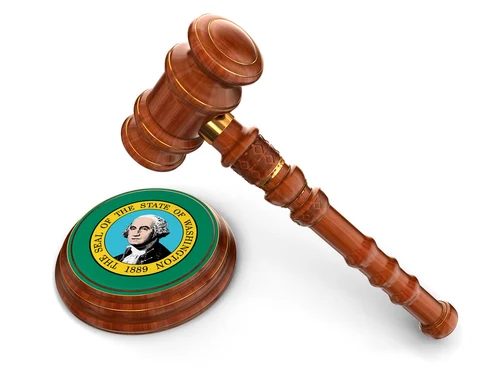
The intersection of judicial impartiality, racial sensitivity, and community trust in the legal system came under intense scrutiny following a disciplinary action handed down by the Washington Commission on Judicial Conduct. Mason County Superior Court Judge Monty D. Cobb was formally admonished after making controversial remarks generalizing violence within the Native American community during a high-stakes sentencing hearing. The incident, which took place in a courtroom filled with members of the Skokomish Tribe, has ignited broader conversations concerning systemic biases, cultural competency on the bench, and the imperative for judges to maintain both the reality and the appearance of absolute impartiality.
The disciplinary measure, finalized and announced on a Friday in late November 2026, stems from statements Judge Cobb uttered while delivering a prison sentence to a defendant who had pleaded guilty to killing a fellow member of the Skokomish Tribe. According to legal ethics reports and coverage of the proceeding, Judge Cobb remarked from the bench that it was "extremely unfortunate that I see way too many acts of violence from the Native community." This generalized assertion immediately alienated and offended numerous tribal members and community onlookers present in the gallery, prompting formal grievances to be filed with the state’s judicial oversight body.
The ensuing confidential investigation conducted by the Washington Commission on Judicial Conduct substantiated the complaints, concluding that the remarks violated core tenets of judicial ethics. As part of his sanction, Judge Cobb admitted to breaching Canon 1, Rules 1.1 and 1.2 of the Washington Code of Judicial Conduct. These rules obligate judges to uphold public confidence in the integrity and impartiality of the judiciary and to strictly avoid even the appearance of impropriety.
Chronology of Events and Investigation
The timeline leading to Judge Cobb’s admonishment highlights the rapid response of judicial oversight mechanisms when confronted with allegations of bench misconduct involving marginalized populations.
The sequence of events began during the sentencing phase of a criminal proceeding in the Mason County Superior Court. A defendant, belonging to the local indigenous population, stood before Judge Cobb after pleading guilty to the homicide of another tribal member. Sentencing hearings in violent crime cases are naturally fraught with emotional tension, grief, and community trauma. It was within this charged environment that Judge Cobb offered his off-the-cuff assessment regarding regional crime patterns and the Native American community.
Immediately following the utterance, audible reactions of shock, disbelief, and offense rippled through the courtroom. For many tribal members in attendance, the statement did not read as an objective observation of local crime statistics, but rather as an exercise in collective blame—attributing the systemic burdens of violent crime to an entire ethnic and cultural group rather than focusing strictly on the individual culpability of the defendant at bar.
Shortly after the hearing concluded, two separate formal complaints were lodged with the Washington Commission on Judicial Conduct. Recognizing the gravity of the accusations, the commission initiated a confidential investigation into the matter. Investigators reviewed the court transcripts, solicited accounts from attendees, and evaluated the context in which the remarks were made.
The commission’s formal report, released upon the conclusion of the inquiry, determined that Judge Cobb’s commentary crossed the line from judicial commentary into prejudicial generalization. The report explicitly noted that the quoted comments "caused shock and offense among the onlookers and a sense that respondent was blaming the community for its experience of high rates of violence."
Faced with the findings, Judge Cobb cooperated with the commission, acknowledging his error and admitting violations of the state’s judicial canons. Alongside his formal admonishment, the terms of his sanction required a specific restorative action: he was ordered to read the Washington Code of Judicial Conduct "in its entirety" and submit written confirmation of having done so to the commission. Interestingly, the investigation’s documentation also incorporated nuanced feedback from courtroom observers, who noted a widely held perception that Judge Cobb does not fundamentally harbor personal animus or malice toward Indigenous people or other marginalized groups, and that litigants generally receive fair treatment in his courtroom. Nonetheless, the commission underscored that intent does not override impact, and public statements from the bench carry profound weight that can erode trust regardless of a judge’s internal disposition.
Broader Context of Judicial Ethics and Indigenous Communities
To fully understand the gravity of Judge Cobb’s admonishment, it is essential to examine the historical and socioeconomic context surrounding crime, jurisdiction, and justice involving Native American populations in Washington state and across the United States.
Indigenous communities frequently face disproportionately high rates of violent crime, a crisis extensively documented by federal agencies, including the Department of Justice and the Centers for Disease Control and Prevention. Activism surrounding Murdered and Missing Indigenous Relatives (MMIR) has brought national attention to the systemic failures, jurisdictional complexities, and historical trauma that contribute to these elevated statistics.
When a judicial officer generalizes these complex socioeconomic and historical realities from the bench, it risks reinforcing harmful stereotypes. Legal ethics experts emphasize that judges must operate as neutral arbiters who isolate their personal opinions, broader societal frustrations, or regional crime observations from individual sentencing decisions. Generalizing criminal behavior to an entire racial or ethnic group undermines the foundational premise of individualized justice—the principle that every defendant is judged on their own merits and actions, and that communities should not be pathologized by the criminal actions of individuals.
Furthermore, the relationship between state courts and tribal nations has historically been fraught with tension regarding sovereignty, jurisdictional boundaries, and cultural understanding. In Washington state, where numerous federally recognized tribes share geography and jurisdiction with state municipalities, maintaining positive, respectful relations between the state judiciary and tribal communities is of paramount importance. Off-the-cuff remarks from a superior court judge regarding "violence from the Native community" threaten to undo years of collaborative efforts aimed at building cross-jurisdictional trust, improving courtroom accessibility, and ensuring cultural competency among judicial officers.
Legal Analysis and Implications for the Judiciary
The sanction imposed on Judge Cobb serves as a potent reminder to the broader legal community regarding the strict behavioral standards demanded of judicial officeholders. Canon 1 of the Washington Code of Judicial Conduct, specifically Rules 1.1 and 1.2, forms the bedrock of judicial accountability.
Rule 1.1 mandates that a judge shall comply with the law, including the Code of Judicial Conduct. Rule 1.2 requires judges to act at all times in a manner that promotes public confidence in the integrity, impartiality, and independence of the judiciary, and to avoid impropriety and the appearance of impropriety. The commentary accompanying these rules often stresses that public confidence in the judiciary is eroded by irresponsible or improper conduct by judges. Judges must avoid all impropriety and appearance of impropriety and must expect to be the subject of public scrutiny that might be viewed as burdensome by ordinary citizens.
When a judge makes statements that can be reasonably interpreted as biased or racially insensitive, the immediate casualty is public trust. For marginalized communities who have historically experienced systemic inequities within the justice system, an intemperate remark from a judge’s bench reinforces the perception that the scales of justice may not be balanced.
Legal analysts point out that while formal admonishments and mandatory ethics reading assignments are relatively mild disciplinary measures compared to suspension or removal, they carry significant professional and reputational weight. They become part of a judge’s permanent disciplinary record, serving as a public rebuke and a cautionary tale for jurists statewide.
Moreover, incidents of this nature often spark internal reviews within state court systems, prompting calls for mandatory, ongoing training in cultural awareness, implicit bias, and respectful communication with diverse communities. As the demographics of Washington state and the nation continue to evolve, the judiciary faces increasing pressure to ensure that its bench reflects cultural competency and deep sensitivity to the historical contexts of the populations it serves.
Conclusion and Future Outlook
The admonishment of Mason County Superior Court Judge Monty D. Cobb closes a specific chapter of judicial misconduct oversight, but it opens a wider dialogue on the responsibilities of those who wield judicial authority. By acknowledging his ethical breach and completing the required readings of the judicial canons, Judge Cobb has taken accountability for his actions. However, the broader implications for the Washington state judiciary remain clear: maintaining public confidence requires constant vigilance, self-awareness, and an absolute commitment to impartiality—not only in legal rulings, but in every word spoken from the bench. As courts navigate the complex realities of crime and community trauma, the imperative for respectful, unbiased, and culturally informed judicial discourse has never been more critical.
Related posts: