The American War on Trees: How Fear and Profit Drive the Unnecessary Removal of Our Urban Canopy

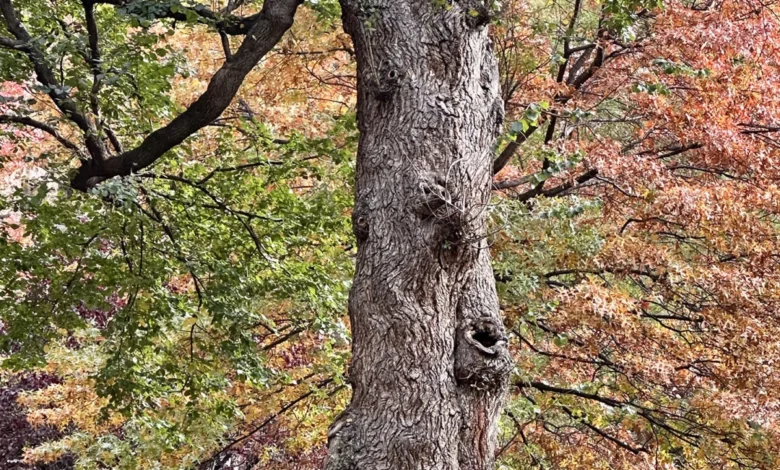
In neighborhoods across the United States, the skyline is quietly being dismantled. What was once a canopy of mature, carbon-sequestering giants is increasingly being replaced by empty air or, at best, vulnerable saplings. This trend is driven by a potent mixture of climate anxiety, aggressive industry sales tactics, and an insurance sector that views every overhanging branch as a liability. Yet, as the climate crisis intensifies, the very trees being removed are the ones most capable of mitigating urban heat islands, absorbing stormwater, and supporting biodiversity.
A Catalyst for Change: The Grosse Pointe Sycamore
The shift in perspective for many modern arborists began with singular, localized incidents of "predatory" tree removal. In 2019, two young arborists, Jack Novak and Jeremiah Sandler, were tasked with removing a 100-foot sycamore in Grosse Pointe, Michigan. The company they worked for had justified the removal to the homeowner by claiming the tree was hollow and structurally compromised.
As Novak and Sandler began the removal process, they encountered a biological reality that contradicted their employer’s claims: the tree was entirely healthy, with solid, high-quality wood throughout its massive trunk. This incident—a microcosm of a larger systemic issue—prompted both men to leave their positions. They subsequently launched "Tree First," an advocacy and consulting group dedicated to educating the public about veteran tree care and exposing the profit-driven incentives that prioritize removal over preservation.

The Economics of Removal: A High-Pressure Industry
The tree care industry is characterized by a significant lack of regulation. In many states, including major markets like Texas, Ohio, and Pennsylvania, there is no licensing requirement to operate as a tree professional. This regulatory void has allowed a proliferation of "chop and drop" businesses that use high-pressure sales tactics to target homeowners.
These operators often capitalize on post-storm anxiety or the general fear of property damage. The business model is simple: capitalize on the "peace of mind" a homeowner seeks by removing a tree before it can fall. With full removals often costing thousands of dollars, the financial incentive for a company to recommend removal over maintenance is overwhelming. Even within larger, more reputable firms, the commission-based structure for sales arborists can create an inherent conflict of interest, where the most lucrative path—removal—is often the one presented as the most necessary.
The Role of Insurance and Aerial Surveillance
The pressure to remove mature trees is no longer just coming from local contractors; it is being institutionalized by the insurance industry. Through "aerial intelligence" companies like Esri and Nearmap, insurance underwriters can monitor properties from space. These tools flag trees with branches that overhang roofs, leading insurance companies to threaten homeowners with policy cancellations unless the trees are removed.
Municipal arborists, such as Kay Evanovich in Decatur, Georgia, have reported a surge in calls from panicked residents who have been told by their insurers that their healthy, mature trees are suddenly considered "unacceptable risks." This practice ignores the nuances of tree biology. A tree may have overhanging limbs, but that does not inherently make it a hazard. The disconnect between remote data analytics and site-specific arboricultural assessments is creating a widespread, unnecessary loss of canopy that city ordinances are often ill-equipped to prevent.

The Scientific Case for Mature Trees
The ecological value of a mature tree far exceeds that of the saplings frequently planted to replace them. According to research from Portland State University, 72 percent of the 33 U.S. cities surveyed are experiencing a decline in tree canopy. While new planting initiatives are common, they fail to account for the decades—sometimes centuries—required for a new tree to provide the same environmental benefits as an established one.
Mature trees are "generating systems." They perform the heavy lifting of carbon sequestration, soil stabilization, and temperature regulation. During heatwaves, neighborhoods with dense, mature canopies can be several degrees cooler than those that have been cleared. Furthermore, recent studies have linked the presence of mature urban trees to reduced mortality rates and improved mental health for local residents. The decision to remove a tree is not merely an aesthetic choice; it is an environmental loss that affects the public good.
Challenging the Industry Norms
The pushback against unnecessary removal is gaining momentum. A group of arborists, including the late British educator Neville Fay and Canadian expert Philip van Wassenaer, has pioneered a "lifespan approach" to tree care. This method focuses on supporting trees through their maturity, senescence, and even their eventual death, rather than treating them as disposable objects.
This philosophy has practical applications. In Ontario, a 2019 court case involving a 60-year-old maple tree set a significant legal precedent. When a homeowner attempted to remove a tree that straddled their property line to facilitate a renovation, the neighbors sued to protect the tree. The court ruled in favor of the maple, with Justice E.M. Morgan noting that the destruction of such a tree is "not trivial" given the environmental and economic benefits it provides.

Innovation: Habitat Creation After Death
For trees that are truly beyond saving or that have suffered terminal damage, there are now alternatives to total removal. Tools like the "Hollowhog," developed in Australia, allow arborists to carve nesting cavities into trunks. This practice, known as "habitat creation," allows for the safe retention of a standing tree carcass. Instead of removing a dead tree, an arborist can turn it into a high-rise apartment for birds, bats, and essential pollinators. This approach reflects a paradigm shift: treating the tree as a component of a living ecosystem rather than a liability to be cleared.
The Path Forward: Regulation and Public Literacy
For homeowners, the primary defense against unnecessary removal is education. Industry experts like Peter Gerstenberger of the Tree Care Industry Association (TCIA) advise property owners to seek multiple opinions from independent, certified arborists—ideally those who do not rely on the sale of removal services. Just as one would seek a second opinion for a medical procedure, a homeowner should view a recommendation for tree removal with critical scrutiny.
Furthermore, municipal governments have a crucial role to play. While cities like Seattle have passed stricter tree protection ordinances, they often contain loopholes that allow developers to circumvent protections. Effective enforcement requires more than just code; it requires active monitoring and community engagement. Groups like "Tree Action Seattle" have demonstrated that by identifying specific trees in the path of development and organizing public campaigns, citizens can secure last-minute reprieves for trees that would otherwise be lost.
Conclusion: A Legacy of Resilience
The "Old Lady," an 1840s English Elm in Manhattan’s Gramercy Park, serves as a poignant symbol of what is possible when we choose stewardship over convenience. Despite losing a major limb during a storm in 2023, the tree was not removed. Instead, it was assessed, supported, and left to continue its cycle of life. It remains a fixture of the park, hosting wildlife and providing shade for a new generation of city dwellers.

The struggle to preserve our urban forests is, as many arborists now argue, inherently political. It pits the short-term profits of the removal industry against the long-term health of our communities. As the climate becomes more volatile, our mature trees are not the enemies of safety—they are our partners in survival. Protecting them will require a fundamental shift in how we value the living infrastructure that surrounds us, moving from a culture of fear to one of coexistence. The trees that were here before us have the capacity to outlast us, provided we grant them the space and the care to do so.
Related posts: