IDFA 2026 kicks off on a Friday the 13th as the documentary industry grapples with a new era of disruption and shifting cinematic boundaries

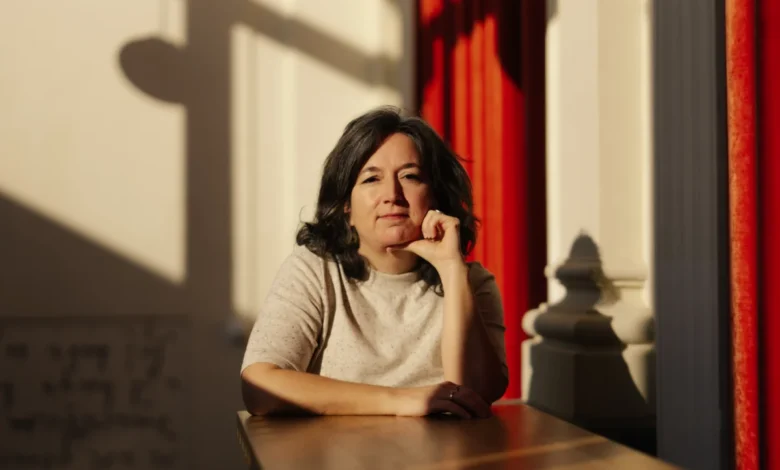
The International Documentary Film Festival Amsterdam (IDFA) commences this year on a date historically steeped in superstition—Friday the 13th. While the calendar coincidence offers a thematic nod to the disruption currently coursing through the documentary genre, the reality behind the festival’s opening is grounded in a seismic shift in how nonfiction films are produced, marketed, and consumed. As the global documentary circuit converges on the Dutch capital, the focus has shifted away from traditional industry norms toward a bold, experimental landscape defined by high-budget auteur-driven projects and complex, AI-integrated storytelling.
A Shifting Box Office Paradigm
The current festival atmosphere is inextricably linked to the commercial success of recent U.S. documentaries. Artistic director Isabel Arrate Fernandez notes that the industry is witnessing a "buzz" at the domestic box office, largely spearheaded by high-profile releases that challenge the conventional wisdom regarding the viability of documentaries in multiplexes.
Chief among these is the documentary You Can See Everything, a collaboration between Lance Oppenheim and Nathan Fielder. The film, which chronicles the rise and fall of Theranos founder Elizabeth Holmes, has defied market expectations, grossing over $80 million in the U.S. and securing its place as the third-highest-grossing domestic release for A24. This performance is significant not merely for its financial returns, but for its role in bridging the gap between niche documentary audiences and the broader cinema-going public.
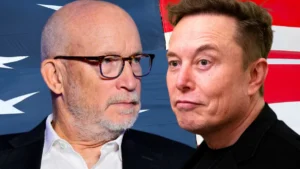
Arrate Fernandez suggests that the presence of creators like Nathan Fielder—who brings a dedicated following from his previous television work—is effectively "pollinating" the documentary space, drawing in demographics that might otherwise avoid long-form nonfiction. With films like Alex Gibney’s four-hour epic, Musk, and Oppenheim’s three-hour investigation, the festival is testing the limits of audience attention spans. These productions prove that, when backed by significant marketing and high-concept storytelling, documentaries can reclaim the collective, communal experience of the theater, effectively breaking the "fixed framework" that previously relegated documentaries to streaming platforms or limited boutique runs.
The Rise of the "Event" Documentary
The current season is marked by a divergence between the traditional, modest-budget independent film and the emergence of the "event" documentary. Titles like Musk and You Can See Everything are, by admission of the festival leadership, exceptions to the rule. They benefit from massive production budgets and aggressive, studio-led publicity campaigns.

However, IDFA is positioning itself as the critical juncture where these disparate worlds collide. As the primary European gateway for documentaries aiming for Academy Award consideration, the festival serves as a high-stakes venue for distributors and producers. With whispers growing that 2026 could be the year a documentary finally breaks the "Best Picture" ceiling, the pressure on IDFA to serve as a launchpad has never been greater.
Despite the dominance of these American behemoths, Arrate Fernandez is optimistic about the survival of the independent sector. She highlights films such as A Fox Under a Pink Moon and Rehearsals for a Revolution as evidence that smaller-budget, high-art documentaries are successfully navigating an increasingly crowded marketplace. These films, she argues, are essential to the festival’s mission, providing the "nuance and complexity" that is often smoothed over by the polish of major studio releases.
The AI Frontier: Ethics and Implementation
Beyond the box office, the defining technical and ethical conversation at IDFA 2026 is the role of Artificial Intelligence. High-profile entries like Musk and Ava DuVernay’s 14th have openly acknowledged the use of AI, a disclosure that has moved the technology from the fringes of post-production to the center of editorial discourse.
IDFA has responded by institutionalizing a new level of scrutiny. For the first time in the festival’s history, filmmakers are required to declare the use of AI, detailing how and why the technology was employed. This move is part of a broader push to establish a standard of "best practice" within the industry. Arrate Fernandez views this as a necessary, if ongoing, evolution. "It’s about developing a standard practice," she explains. "We don’t have the answers yet, but we are learning through a community-led dialogue."
The festival is hosting a series of targeted sessions that look beyond general hype to examine the nitty-gritty of AI: the protection of rights-holders, the potential for misinformation, and the political implications of machine-generated narratives in nonfiction work.
Navigating Geopolitical Sensitivity
The festival enters this year’s edition with a refined, yet strictly enforced, set of principles regarding international relations. The controversy surrounding the exclusion of Israeli institutions from the 2025 edition—a decision that saw major entities like DocAviv and the public broadcaster Kan barred from accreditation—has led to a more structured, case-by-case evaluation process for the 2026 program.

The festival’s updated guidelines emphasize that IDFA will not serve as a platform for governments accused of violating human rights. However, this policy is applied with a focus on individual projects rather than blanket nationality-based bans. "Nationality has never been an issue for us," Arrate Fernandez states. "We look at the relationship between the project and the government."
This year, the festival program features works by Israeli filmmakers such as Avi Mograbi’s Wild Asparagus and Anat Even’s Collapse. These films, however, are presented without the explicit labeling of Israel as a "production country." This is a pragmatic, and at times political, choice by the filmmakers themselves. For instance, the opening of Collapse explicitly notes that no funding was received from Israeli state institutions. Arrate Fernandez views this development with a sense of sadness, noting that the need for filmmakers to distance themselves from their country of origin—either to avoid backlash or to make a statement—reflects a broader, more polarized climate that risks stripping the documentary medium of its essential nuance.
Conclusion: The Future of the Documentary Ecosystem
As IDFA continues its run, the primary challenge remains the reconciliation of these diverse pressures: the commercial demand for "event" films, the ethical imperative to regulate AI, and the complex geopolitical landscape that threatens to simplify the intricate stories that documentaries are meant to illuminate.
The artistic director remains a staunch defender of the medium’s ability to foster understanding. "The conversation has become black and white," she says, referencing the public discourse surrounding festival exclusions. "That blurs the truth. Our goal is to maintain a space where the nuance of human experience can exist, regardless of the political or technical noise surrounding it."
Ultimately, the 2026 edition of IDFA serves as a microcosm of the wider film industry. It is a space of transition, where the old guard of independent cinema must learn to coexist with a new, technologically advanced, and commercially aggressive era of documentary filmmaking. Whether this "pollination" of ideas will lead to a more robust future for the genre remains to be seen, but as the lights dim in the Amsterdam theaters, the focus remains firmly on the power of the image to provoke, to challenge, and—above all—to endure.