Assessing the True Cost and Unequal Reach of Federal Climate Buyouts Across America


For nearly four decades, the United States federal government has quietly operated a high-stakes real estate program with a singular, urgent mission: persuading Americans to willingly abandon properties in America’s most disaster-prone flood zones and move to higher, safer ground. Managed primarily by the Federal Emergency Management Agency (FEMA), this initiative—officially rooted in the Hazard Mitigation Grant Program—has funneled over $6 billion into acquiring more than 53,000 properties nationwide. Yet, despite its long history and multi-billion-dollar price tag, a fundamental question has dogged policymakers, environmental scientists, and vulnerable homeowners alike: To what extent does this ambitious managed retreat strategy actually work, and who truly benefits from it?
A comprehensive new study published in the journal Science Advances provides the most rigorous national-scale evaluation of the federal buyout program to date. Authored by Rachel Young, an environmental economist at the University of Minnesota, the research reveals a complex and divided reality. On one hand, the program is a remarkable success in terms of physical relocation and fiscal prudence, successfully moving families out of danger zones and largely paying for itself by averting future emergency disaster relief and insurance payouts. On the other hand, the study uncovers stark systemic inequities, showing that the program’s benefits are distributed unevenly along racial and socioeconomic lines.
The findings arrive at a critical juncture in American infrastructure and climate policy. As global temperatures rise, sea levels swell, and extreme weather events become more frequent and destructive, managed retreat is shifting from an academic talking point to an urgent public policy necessity. Understanding the strengths and profound shortcomings of FEMA’s buyout framework is essential as the nation confronts a future defined by climate displacement.
Origins and Mechanics of the Federal Buyout Program
The federal government’s formal foray into property buyouts began in 1988, catalyzed by a growing recognition that repeatedly rebuilding disaster-ravaged homes in the exact same hazardous locations was an unsustainable fiscal and humanitarian strategy. Instead of perpetually bailing out repetitive-loss properties using taxpayer-funded disaster aid and subsidized National Flood Insurance Program (NFIP) payouts, FEMA reasoned it would be far cheaper and safer to buy the land outright, demolish any existing structures, and return the property to open space forever.
The scale of the problem these buyouts attempt to solve is monumental. ProPublica investigations have previously highlighted extreme outlier cases, such as a single residential property in northeast Houston that received a staggering 18 separate federal flood insurance payouts totaling $1.8 million—roughly 15 times the actual market value of the home itself.
The mechanics of a buyout are structured as a multi-layered bureaucratic process. Homeowners do not apply directly to the federal government; instead, applications must be initiated through local or municipal governments, which then petition state authorities for federal assistance. If FEMA approves the funding—which typically covers up to 75 percent of the project cost, with state or local sources covering the remainder—the government extends an offer to buy the property at its pre-disaster market value. Participation is entirely voluntary; homeowners retain the absolute right to decline the offer and remain in harm’s way. Once a property is acquired and cleared, local governments are legally bound to maintain the land as permanent open space, preventing any future residential or commercial development that could put subsequent generations at risk.
Data-Driven Insights: Mobility, Finances, and Demographics
To evaluate the real-world impact of these acquisitions, Young’s research team deployed a robust methodology combining restricted-use longitudinal administrative data with private credit bureau records. This allowed researchers to track the financial and geographic trajectories of buyout participants over many years, comparing them against control groups of similarly impacted homeowners who did not participate in the program.
The results paint an encouraging picture regarding overall mobility. Program participants were found to be approximately 20 percentage points more likely to successfully relocate within the first five years following a disaster compared to non-participants facing similar property damage. While this differential narrowed slightly over time, the increased likelihood of moving persisted for at least 15 years. Furthermore, the study tracked positive secondary financial indicators: participants typically relocated to census tracts with higher average incomes, better educational attainment, and higher employment rates, while experiencing a measurable reduction in short-term personal debt levels.
From a strictly macroeconomic and governmental perspective, the initiative has been an undeniable success. As Young noted, provided the program aggressively targets high-risk properties and ensures that participants relocate to genuinely lower-risk environments, the upfront federal investment easily recoups its costs over time through reduced emergency rescue operations, fewer repetitive insurance claims, and diminished federal disaster relief expenditures.
The Equity Crisis: Disparities in Payouts and Destinations
Despite these positive macroeconomic indicators, the Science Advances study revealed significant demographic disparities that underscore deeper structural inequalities within American disaster recovery. The data demonstrates that households from higher-income neighborhoods were not only far more likely to successfully navigate the buyout process and relocate, but they also moved to areas boasting greater economic opportunity. Conversely, households originating from majority-Black or low-income neighborhoods moved much less frequently and experienced far smaller socioeconomic improvements.
These disparities manifest directly in the financial valuations used by the program. Because FEMA buyouts rely strictly on pre-disaster market values to determine purchase offers, existing societal inequities are immediately baked into the process. Homes situated in marginalized, historically underinvested, or predominantly Black communities routinely appraise for significantly lower dollar amounts than properties in wealthier, white neighborhoods.
According to Young’s data, the average federal buyout payment was a meager $40,583 in census tracts with majority-Black populations, compared to a robust $93,977 in high-proportion white census tracts. Furthermore, the estimated increase in long-term relocation probability was roughly 18 percentage points in tracts with smaller Black populations, compared to a mere 6 percentage points in majority-Black tracts.
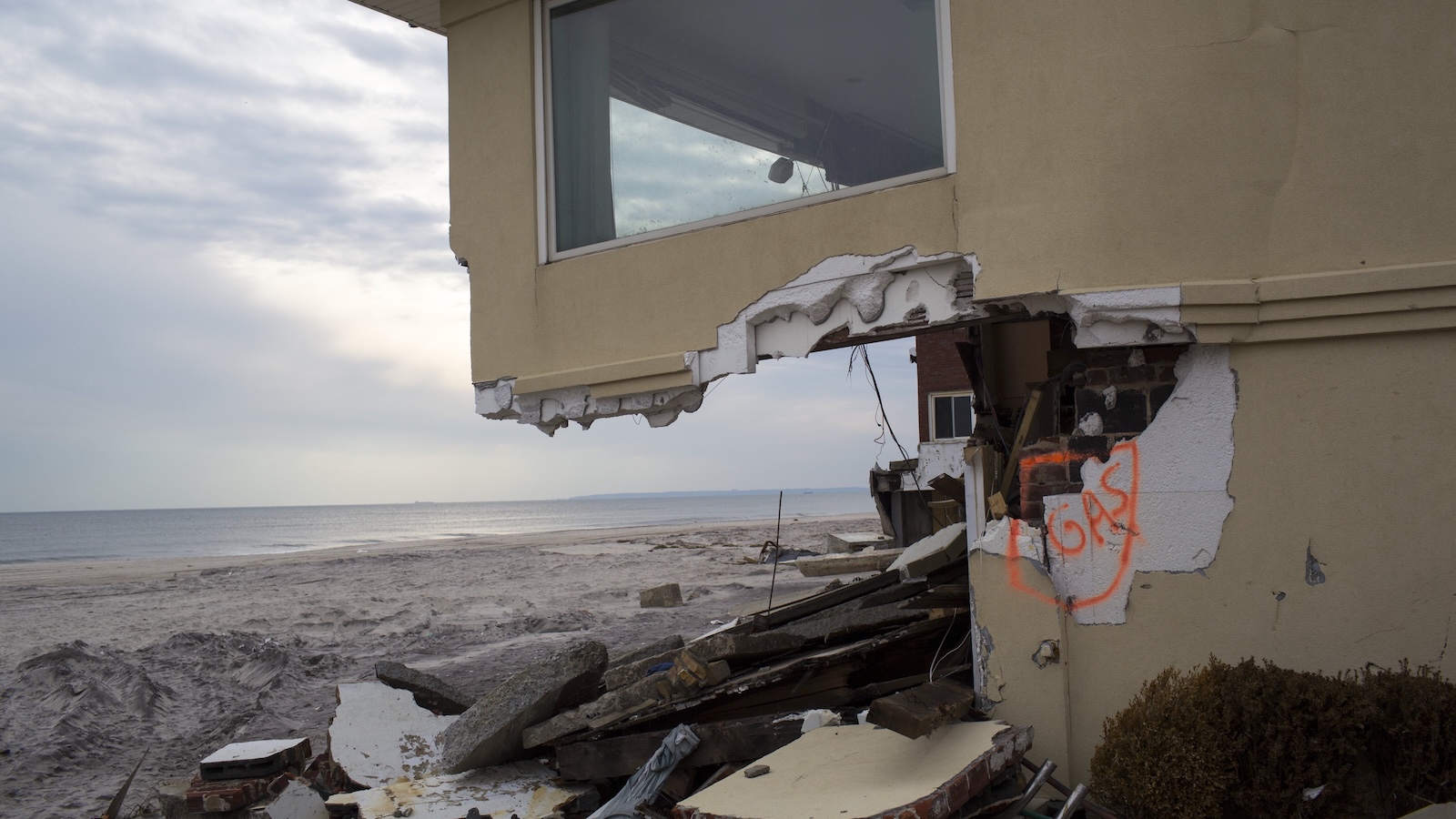
When a family in a marginalized community receives a low payout check, that sum is frequently insufficient to purchase a comparable home in a safer, higher-opportunity neighborhood. Consequently, many low-income homeowners find themselves priced out of safer ground, forced either to remain in high-risk zones or relocate to other affordable, yet equally vulnerable, flood-prone areas.
Perspectives from Academic Experts and Housing Advocates
Independent disaster sociologists and climate adaptation experts have lauded the new study for bringing national empirical weight to issues that have long been documented only on smaller, localized scales.
Jim Elliott, a sociologist at Rice University whose academic work focuses heavily on inequities in disaster recovery, emphasized the profound disconnect between how government agencies and affected citizens conceptualize the purpose of the buyout program.
"The government looks at it as a property acquisition program and a way to look out for other taxpayers," Elliott explained. "But if you’re from a damaged home, you’re looking at this as disaster recovery."
Elliott noted that the protracted administrative timeline of FEMA buyouts—which can frequently take years to finalize—leaves financially strapped disaster victims stranded in precarious, unsafe living conditions while bureaucratic wheels slowly turn. Even when buyouts are ultimately approved, relying on pre-disaster market values acts as a multiplier of existing poverty and racial injustice.
A.R. Siders, director of the University of Delaware’s Climate Change Science and Policy Hub, who was also not involved in the research, echoed these concerns. Siders pointed out that the study reinforces the urgent need to implement long-overdue structural reforms to the FEMA framework. Among the most frequently proposed changes is shifting the valuation metric from pre-disaster market value to a replacement cost model—ensuring that every displaced homeowner receives enough funding to purchase a safe, equivalent home regardless of their neighborhood’s baseline property values.
Broader Implications and the Road Ahead for Climate Adaptation
While experts agree that the federal buyout program is fundamentally sound and essential for long-term climate resilience, they caution that its current scale is drastically insufficient to meet the rising tide of climate change. Millions of American households currently reside in floodplains, along eroding coastlines, and within wildfire-perilous wildland-urban interfaces. Buyouts, as currently funded and executed, are touching only a tiny fraction of those at risk.
"This is important, but it’s not sufficient," Elliott said of the program’s current capacity. "It’s buying us some time."
Looking toward the future, researchers hope that empirical studies like Young’s will compel federal policymakers to refine, adequately fund, and expand managed retreat strategies as core components of national climate adaptation policy. International precedents already exist; scholars point to innovative managed retreat and property acquisition models in countries like New Zealand and various European nations that prioritize social equity and community cohesion during relocations.
However, political headwinds in Washington continue to complicate the landscape of federal climate spending. Past administrations, including that of Donald Trump, have repeatedly attempted to constrain or flatly curb FEMA mitigation spending, viewing such initiatives through a skeptical fiscal lens despite their long-term cost-savings profile.
Compounding the policy challenge is a glaring lack of institutional tracking. A striking revelation of the new research is that the federal government does not systematically monitor or assess where families go after participating in the buyout program. Academic researchers are routinely left to piece together the socio-economic and geographic implications of national public policy using fragmented private datasets.
"The federal government doesn’t do anything to assess where people go after the program," Young observed.
Elliott agreed, characterizing the current division of labor as profoundly backward. "It was sort of left to us to figure out what the implication of the policy is," he said. "That’s backwards."
As the frequency and severity of climate-driven disasters accelerate across the United States, reforming federal buyouts to ensure they are fast, equitable, and accessible to all communities—regardless of race or wealth—is no longer just an academic recommendation. It is a national imperative for survival.