
Federal Leaders Miss Critical Deadline for $50 Billion Rural Health Fund, Leaving States in the Dark

Federal officials overseeing a landmark $50 billion rural health initiative have missed a critical statutory deadline to announce next year’s state funding allocations, notifying state leaders of the delay via an abrupt mass email. The misstep has intensified ongoing frustrations regarding the program’s administrative complexity, rigid timelines, and heavy reporting requirements.
The notification, sent on October 30 at 4:05 p.m. Eastern time by Alina Czekai, director of the federal Office of Rural Health Transformation, stated simply that officials had "discovered an additional administrative process requirement." The message caught state health departments off guard just one day before states were expecting official confirmation of their funding figures for the second year of the nationwide effort.
The Rural Health Transformation Program, housed within the Centers for Medicare & Medicaid Services (CMS), represents a $50 billion commitment designed to distribute $10 billion annually over a five-year period. Promoted by President Donald Trump as an "unprecedented" investment aimed at revitalizing hospitals in rural communities, the program was explicitly structured to help states offset anticipated reductions in federal Medicaid funding.
However, the late-October communication from federal regulators has ignited anxieties across the country, highlighting persistent friction between federal ambitions and state-level implementation realities.
A Program Born of Speed and High Stakes
The rollout of the Rural Health Transformation Program last summer moved at a historic pace. Following the announcement of first-year awards in late 2025—which provided individual states with sums ranging from $147 million to $281 million—state leaders were given a compressed window of just over seven weeks to draft competitive applications.
Under the program’s framework, each state is guaranteed a base funding allocation of $100 million for its second year, while the remaining pool is subject to a competitive, performance-based scoring process. While Czekai’s late-October email confirmed that the baseline $100 million would be available, it revealed that the discretionary, competitive portion of the funding had hit a roadblock.
Furthermore, the email stipulated that state budget revisions triggered by the forthcoming allocations would still be "due back to CMS" by November 30, leaving state administrators with an exceedingly narrow window to adjust their financial planning once the final numbers are officially released.
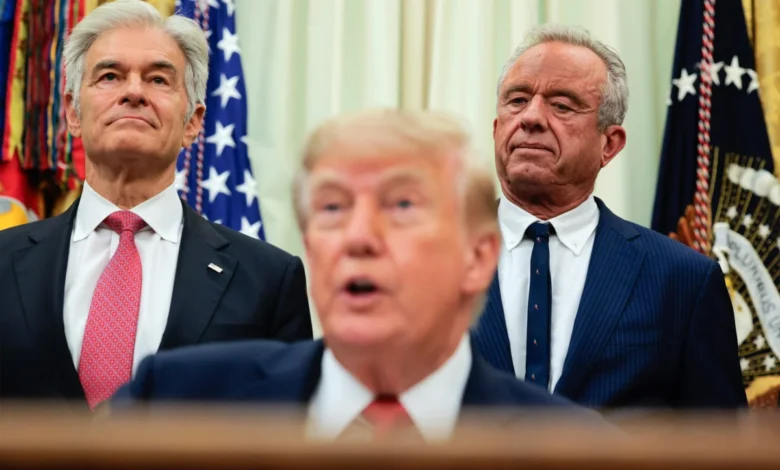
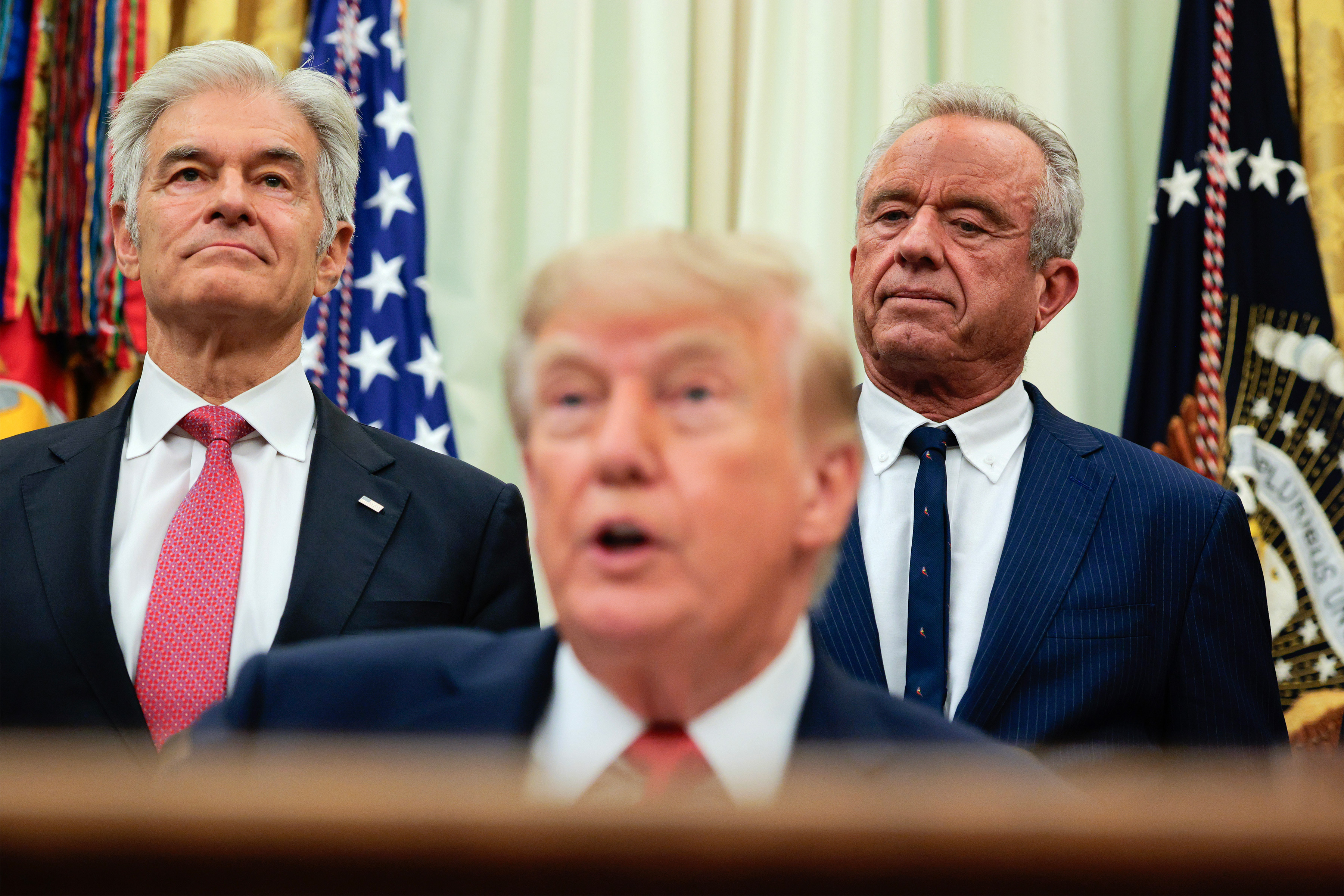
Federal officials, including CMS Administrator Mehmet Oz and Health and Human Services Secretary Robert F. Kennedy Jr., spent the weeks leading up to the announcement touring battleground states to spotlight the administration’s rural investments. Visits to states like New Hampshire and Ohio showcased multi-million-dollar grants aimed at bolstering emergency medical services and supporting rural hospital infrastructure.
Yet, beneath the public-facing campaign events, state health officials expressed growing exasperation. Multiple state leaders interviewed by KFF Health News described the funding alert as "cryptic" and noted that they had been left "in the dark." Due to concerns regarding potential federal retribution or impacts on future funding grants, several state officials spoke on the condition of anonymity.
Administrative Burdens and Consultant Spending
As states navigated the first year of the initiative, the requirement to deploy funds rapidly while complying with stringent oversight metrics proved onerous. First-year progress reports, which were due to CMS by the end of August, were not publicly released by the agency. However, records and emails gathered via public records requests provide a detailed look into how states utilized their initial awards.
A significant portion of the early funding in several states was directed toward third-party management, technology, and compliance consulting firms. Documentation shows that six states—Arizona, Connecticut, Kansas, Louisiana, Rhode Island, and South Carolina—reported multimillion-dollar contracts with consulting entities that collectively exceeded $60 million.
While proponents argue that external consultants provide essential technical expertise to manage complex federal programs, the reliance on private firms has occasionally sparked local controversy. In Montana, a high-stakes competition for a $25 million consulting and management contract to oversee a statewide "center of excellence" erupted into a formal protest. Manatt Health Strategies filed a protest letter in late August alleging a conflict of interest regarding a potential award to Florida-based Indelible Health Solutions. Following the protest, Montana state officials officially voided the potential award on September 11.
Despite administrative hurdles, many states successfully channeled funds directly to frontline healthcare providers. In Nevada, officials awarded grants to establish primary care clinics and address vast regional medical deserts where residents previously traveled upwards of 200 miles for routine care. Idaho directed approximately $7 million of its allocation directly to five Native American tribes to bridge geographic gaps in medical access, while Oregon dedicated funding toward behavioral health and expanded life-saving opioid overdose response tools.
State-Level Pushback and Bureaucratic Friction
The friction between state administrators and federal regulators is not entirely new. During a public comment period held earlier this year regarding the program’s reporting mandates, state health officials pushed back against what they characterized as a significant underestimation of the administrative burden involved.
While federal estimates suggested that completing annual progress reports would require approximately 80 hours per state, local officials sharply disagreed. Representatives from five states, including Republican-led Tennessee, submitted comments in May estimating a more realistic requirement of at least 120 hours. Meanwhile, Nebraska finance officer Ryan Daly projected that compliance reporting would demand between 400 and 520 hours of staff time.
In Colorado, Deputy Medicaid Director Cristen Bates warned in an August letter that the accelerated rollout timeline risked generating inaccurate evaluations of state and program performance, as second-year awards would necessarily be calculated based on an incomplete implementation window.
During an October rural health innovation summit in St. Louis, Jason Berry, a division director within the Office of Rural Health Transformation, announced the launch of an online portal designed to help states share best practices and learn from one another. However, when an audience member queried how to formally appeal decisions rendered by CMS project officers, Berry clarified that formal appeals did not exist within the program’s structure, advising states instead to raise concerns simply for "discussion."
Implications and the Road Ahead
The delay in announcing second-year competitive allocations arrives at a precarious political and operational juncture. Coming immediately on the heels of the midterm elections—which saw shifts in congressional majorities and key gubernatorial seats—the administrative hiccup underscores the structural challenges inherent in managing a federal funding stream of this magnitude.
Michael Baker, director of healthcare policy at the American Action Forum, noted that the complexity of the federal government’s grading metrics—which award points for initiatives ranging from rural workforce expansion to the adoption of specific physical fitness benchmarks for schoolchildren—made delays predictable. Baker and other policy analysts have called on CMS to increase transparency by publicly releasing comprehensive evaluations of state successes and deficiencies rather than simply publishing aggregate award figures.
Without clearer data and predictable timelines, health policy experts warn that it remains difficult for independent researchers and local communities to accurately gauge whether the $50 billion initiative is effectively achieving its core objective: securing a stable, sustainable future for America’s vulnerable rural healthcare infrastructure. As states await further instruction from Washington, health administrators remain on high alert, balancing the urgent needs of local hospitals against an unpredictable federal regulatory calendar.