The Shifting Landscape of American Healthcare Reform Following the 2026 Midterm Elections

LANSING, Mich. — After fifteen demanding years working as an emergency room nurse at Sparrow Hospital in Lansing, Kim Bogan has arrived at a radical conclusion: the American healthcare system cannot be repaired through incremental adjustments. In her view, the entire structure must be dismantled and rebuilt from the foundation.
On any given shift, Bogan notices that the patients arriving for triage are sicker and presenting with more advanced conditions than ever before. Many of them cannot afford the routine prescriptions dispensed upon discharge from the ER. Furthermore, when patients experience fatal outcomes, Bogan is often haunted by the persistent question of whether timely interventions could have saved them, had she not been simultaneously managing five or six other critically ill patients.
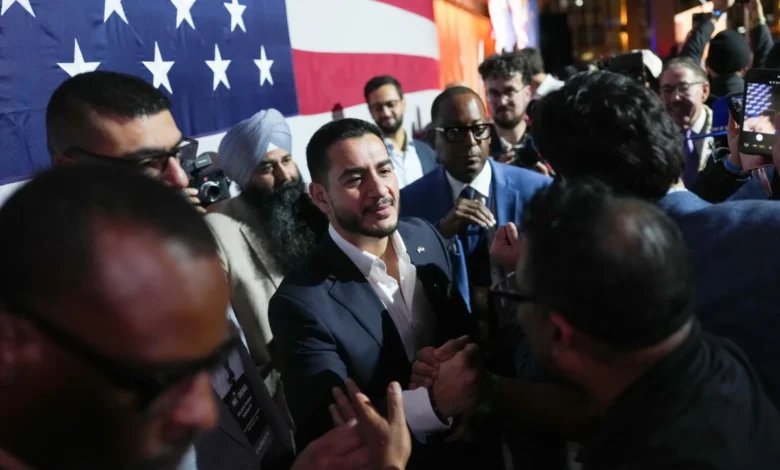
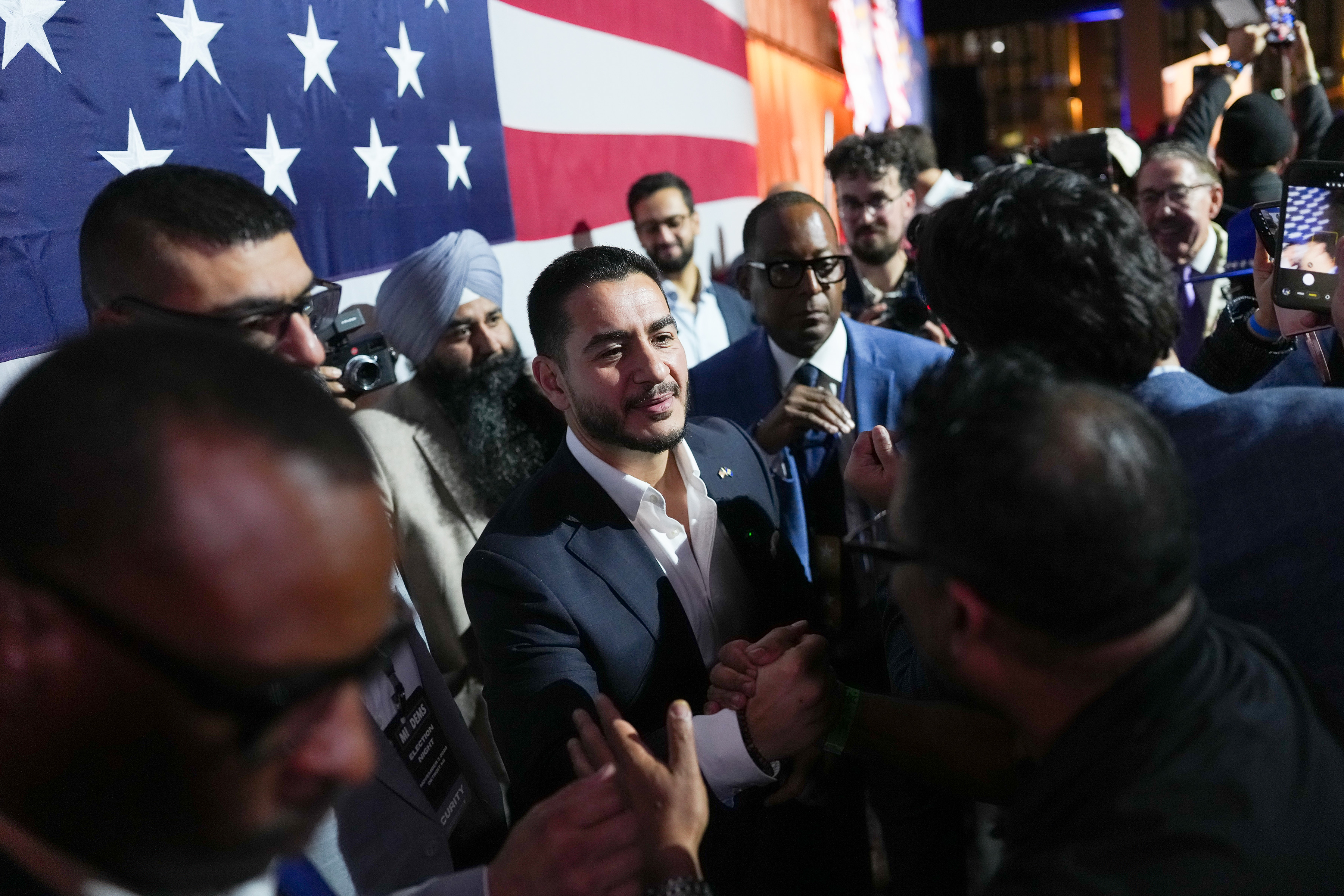
This professional disillusionment propelled Bogan to spend the past year shuttling between grueling 12-hour hospital shifts and grassroots political activism. She campaigned tirelessly for Abdul El-Sayed, a progressive Democrat who placed "Medicare for All" at the center of his congressional and subsequent senatorial campaigns, ultimately securing a victory that has elevated him to senator-elect.
Yet, Bogan and other universal healthcare advocates are acutely aware that legislative success will not come easily. Although progressive candidates campaigned on variations of universal healthcare in states including Texas, Iowa, Maine, and Michigan during the 2026 midterms, translating campaign rhetoric into legislative reality presents a monumental political challenge. "Nobody expected that," Bogan said, acknowledging the fierce battles ahead.
The Midterm Paradox: Electoral Gains Versus Policy Mandates
The debate over Medicare for All—a policy framework generally defined as a government-run health program that guarantees universal coverage by replacing most or all private insurance—has taken on renewed urgency following the 2026 midterm elections. While Democrats achieved significant electoral success in what many analysts characterized as a blue wave, political science data complicates the narrative surrounding healthcare mandates.
Critics of the single-payer model quickly point out that the most vocal champions of Medicare for All generally won their respective races by narrower margins than their more moderate Democratic counterparts. This statistical divergence highlights a persistent fault line within the Democratic Party regarding the appetite for sweeping economic overhauls.
"Whatever else people voted for in this midterm election — anger about inflation, anger about corruption, anger about the Iran war — they by and large didn’t vote to have the government take over health insurance," said Jonathan Oberlander, a professor and healthcare reform expert at the University of North Carolina-Chapel Hill.
Despite these electoral warnings, proponents of universal healthcare argue that the current political moment represents a once-in-a-generation opportunity. Years of mounting financial pressure have left millions of Americans buckling under the weight of runaway healthcare costs, creating a palpable public hunger for systemic disruption. Several states, including Oregon, are already actively exploring the feasibility of establishing state-level single-payer healthcare systems.
According to Oberlander, the underlying affordability crisis dominated the midterm cycle, and Medicare for All directly addresses public anxieties on that front. Consequently, supporters anticipate that the policy agenda will gain substantial momentum as the political apparatus shifts its focus toward the 2028 Democratic presidential primaries.
Conversely, moderate Democrats view the rising popularity of single-payer proposals as a direct threat to the fragile electoral coalitions they built in swing states and competitive districts such as Iowa, Kansas, and South Carolina.
"If Democrats want to hold those seats, which were very difficult to win, they’re probably not interested in passing Medicare for All," Oberlander explained. "That’s a huge political risk in red-leaning states. So just because Democrats have a majority doesn’t mean it’s a majority for Medicare for All."
Historical Opposition and Economic Realities
The policy hurdles facing universal healthcare are compounded by formidable opposition from the entrenched healthcare, pharmaceutical, and insurance industries. Previous national proposals for Medicare for All would have required millions of Americans to voluntarily transition away from their existing coverage, sparking unprecedented industry mobilization and lobbying expenditures.
Michael Cannon, a healthcare economist at the libertarian Cato Institute and a vocal opponent of single-payer systems, argues that the financial models underpinning progressive healthcare platforms are fundamentally flawed.
"If Medicare for All actually had the price levels that Bernie Sanders and Abdul El-Sayed envision, the industry would tear it to shreds," Cannon said. He contends that the federal government lacks the leverage to successfully dictate lower drug and medical service prices, asserting that private healthcare providers and insurers would ultimately capture and manipulate any government-run regulatory apparatus, a dynamic he argues has characterized the Medicare program since its inception in 1965.
Public opinion polling reflects this deep ambivalence. While recent data from KFF indicates that public support for Medicare for All has reached its highest levels in nearly a decade, that support remains fragile. When poll respondents are presented with common counterarguments—such as the prospect of increased federal taxation or mandated treatment delays—backing for single-payer reform routinely falters.
Personal Tolls and the Erosion of Trust
For many Americans, the decision to support or oppose government-managed healthcare is rooted in deeply personal financial struggles rather than abstract economic theory.
Jaime Bardenhagen, a former nurse residing in rural Leelanau County, Michigan, experiences a complex mix of personal conflict regarding government assistance. Bardenhagen lives with Parkinson’s disease and sialidosis, a rare genetic disorder that can provoke seizures. Raised on a farm with a strong cultural ethos emphasizing self-reliance, she admits she initially "didn’t believe in" disability benefits.
"You were supposed to work for what you needed," Bardenhagen recalled. "And I did work as hard as I could, for as long as I could."
Yet, like millions of households across the nation, Bardenhagen and her husband experienced a severe financial shock when enhanced subsidies for the Affordable Care Act (ACA) expired. Their monthly insurance premiums doubled from $700 to $1,300, accompanied by a daunting $7,500 deductible. Faced with these prohibitive costs, the couple began postponing diagnostic medical tests recommended by her physician. "We couldn’t afford that," she stated.
This financial squeeze has ruptured traditional political allegiances. Bardenhagen’s husband, a supporter of Donald Trump in the 2016 presidential election, chose to abstain from voting in the midterms. Bardenhagen, a registered Democrat, also considered sitting out the election. "I just don’t trust either party anymore," she confessed.
Nevertheless, her professional background as a nurse convinced her that private insurers, rather than medical professionals, dictate patient care by determining which prescriptions and procedures receive authorization. This realization led her to embrace government-run healthcare. In her view, placing regulatory authority in the hands of government officials is preferable to corporate insurers. "So, absolutely, the government should take it over," she said.
Bipartisan Pressures and Near-Term Legislative Options
As both political parties digest the results of the midterms, policymakers face mounting pressure to address the ongoing healthcare affordability crisis.
"With the election results, both parties are going to be under pressure to come up with solutions to address the current affordability crisis in healthcare," noted Sara Collins, a senior scholar at the Commonwealth Fund, a private health policy research foundation.
This legislative pressure could force lawmakers to pursue narrower, bipartisan agreements that previously seemed unattainable. Potential near-term compromises include reinstating expired ACA subsidies or enacting popular regulatory reforms, such as curbing insurance companies’ reliance on "prior authorizations"—a mechanism that requires patients to secure insurer approval before undergoing prescribed treatments.
"That’s probably the lowest-hanging fruit for them, I’d think," observed Patricia Votava, a political strategist based in Sullivan’s Island, South Carolina.
The urgency for legislative action is amplified by external economic forecasts. ACA marketplace premiums are projected to increase by double digits during the upcoming open enrollment period. Simultaneously, corporations are shifting a larger share of escalating insurance costs onto their employees, and looming cuts to Medicaid threaten to expand the uninsured population significantly over the coming decade.
The Future of the Democratic Health Agenda
In the wake of the midterms, the internal debate within the Democratic Party may pivot toward structural alternatives that bridge the gap between incremental reform and total system replacement.
Oberlander suggests that the election results could push the party’s healthcare platform further left, leading some lawmakers to rally around a public option—a government-sponsored health plan that competes alongside private insurance. Alternatively, others may advocate for a modified version of Medicare for All that establishes a universal baseline of government-guaranteed health insurance while preserving employer-sponsored or union-negotiated plans.
During his campaign, El-Sayed articulated this nuanced approach, emphasizing consumer choice: "If you like your insurance from your employer or from your union, that can still be there for you."
Regardless of the specific policy vehicle chosen, political analysts warn that lawmakers cannot afford prolonged inaction. Public patience with incrementalism is wearing thin, and voter expectations remain high. As Oberlander observed, "If the window opens, you better jump right through."