Federal Judge Advances Class Action Lawsuit Alleging McDonald’s McRib Misleads Consumers Regarding Ingredients

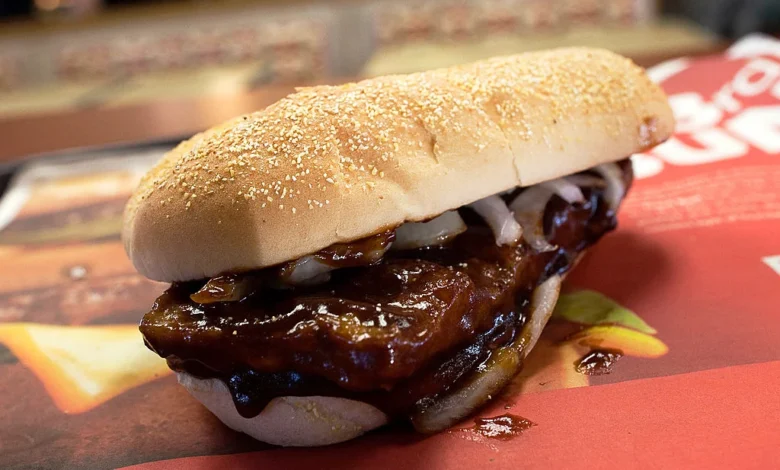
The ongoing legal scrutiny facing one of the fast-food industry’s most iconic and elusive menu items intensified significantly following a pivotal federal court ruling in Illinois. U.S. District Judge April Perry of the Northern District of Illinois issued a carefully reasoned decision declining to dismiss a proposed class action lawsuit that targets McDonald’s Corporation over the composition and marketing of the McRib sandwich. The litigation, which addresses consumer protection laws, false advertising claims, and deceptive trade practices, centers on whether the famous pork sandwich’s name, visual presentation, and promotional campaigns falsely imply to a reasonable consumer that the product contains authentic pork rib meat rather than lower-cost, restructured trim pork cuts.
While Judge Perry trimmed certain peripheral claims from the plaintiffs’ original complaint, the core allegation—that McDonald’s intentionally or misleadingly trades on the anatomical implications of the word "rib" alongside a distinct, bone-shaped molded patty—survived to move forward into the rigorous evidentiary and discovery phases of federal litigation. The ruling marks a major hurdle for the fast-food conglomerate, which has successfully defended various product-labeling and consumer lawsuits in the past, and sets up a fascinating legal battle over truth in fast-food marketing.
The Legal Core of the McRib Controversy
At the heart of the federal lawsuit is a fundamental clash over consumer expectations versus corporate marketing conventions. The plaintiffs in the class action argue that the naming convention "McRib"—combined with advertisements showcasing the product molded with simulated ridges and a curved shape reminiscent of a rack of ribs—deceives everyday shoppers and diners into believing they are purchasing genuine rib meat. Instead, the lawsuit contends, the sandwich is manufactured using cheaper, highly processed pork trimmings, while allegedly incorporating unappealing or non-rib animal tissues such as hearts, tripe, and stomach, though McDonald’s has vigorously denied the inclusion of these specific offal ingredients.
Priced typically around $7 depending on the regional market, the McRib is marketed as a premium, limited-time offering that creates a frenzy of consumer demand whenever it returns to menus. The plaintiffs assert that this artificial scarcity, paired with aggressive marketing, capitalizes on a manufactured perception of quality and authenticity that the underlying ingredients simply do not support.
In her ruling handed down in Chicago, Judge Perry rejected McDonald’s primary defense, which asserted that no reasonable consumer could possibly expect a fast-food sandwich purchased for a modest sum to contain actual rib meat carved from an animal’s skeletal structure. Judge Perry wrote in her opinion that the plaintiffs’ proffered understanding of the term "McRib" is neither unreasonable nor fanciful. She noted that advertisements featuring distinctly rib-shaped patties could plausibly constitute an attempt to mislead or defraud consumers, though she emphasized that the plaintiffs would ultimately need to provide robust evidentiary proof to substantiate these claims as the case progresses toward trial or settlement negotiations.
A Historical Timeline of the McRib Phenomenon
To fully understand the weight of the current litigation, it is necessary to examine the long and culturally unique history of the McRib sandwich, which has occupied a distinct space in American fast-food culture for over four decades.
- 1981: Following extensive test marketing in regions such as Kansas City, Kansas, McDonald’s officially introduces the McRib nationwide. The sandwich is created by corporate chef René Arend, who sought a way to utilize surplus pork belly and shoulder cuts efficiently. The distinctive molded shape is designed to fit standard hamburger buns while evoking the visual appeal of traditional barbecued pork ribs.
- 1985: Due to fluctuating pork market prices and lackluster initial sales compared to other core menu items, McDonald’s quietly removes the McRib from its permanent nationwide menu, relegating it to regional availability.
- 1989–2005: The McRib transitions into a sporadic, highly anticipated promotional item. McDonald’s begins utilizing the limited availability of the sandwich as a strategic marketing tool to drive traffic during specific seasonal windows, generating significant consumer loyalty and cultivating a dedicated subculture of fans known as "McRib hunters."
- 2005–2012: McDonald’s launches the "McRib Farewell Tour" in 2005, ostensibly retiring the sandwich, only to bring it back repeatedly due to consumer demand and social media campaigns. During this era, the sandwich becomes a staple of internet culture and pop-culture references, appearing in television shows and news segments.
- 2014–2020: The sandwich maintains an irregular annual or biannual release schedule, with McDonald’s leaning heavily into digital marketing, mobile app notifications, and geographic tracking tools to alert fans of its return.
- 2022: McDonald’s announces what it brands as the final "Farewell Tour" for the McRib, prompting massive nationwide lines and heightened media coverage. However, true to form, the sandwich returns to menus in subsequent years, demonstrating that the corporate strategy of manufactured scarcity remains an effective sales driver.
- November 2026: U.S. District Judge April Perry denies McDonald’s motion to dismiss the class action lawsuit, allowing claims regarding deceptive advertising and ingredient misrepresentation to proceed in the Northern District of Illinois.
Corporate Responses and Public Relations Strategy
In the wake of Judge Perry’s ruling, representatives for McDonald’s Corporation have maintained a steadfast defense of their product labeling and marketing integrity. The corporation issued a formal, strongly worded statement condemning the litigation as baseless and built upon a foundation of distorted facts.
"This lawsuit distorts the facts, and the claims are meritless," a McDonald’s spokesperson stated following the court’s decision.
The fast-food giant contends that product names within the fast-food and restaurant industries frequently utilize fanciful, imaginative, or stylized terminology that reasonable consumers understand as branding rather than literal descriptions of exact biological anatomy. McDonald’s legal team argued that terms like "McRib," "Chicken McNuggets," or "Filet-O-Fish" are well-understood by the general public as proprietary trademarks designating specific flavor profiles, textures, and recipes rather than explicit scientific or agricultural declarations of raw material composition.
Furthermore, McDonald’s has pushed back against the more sensational allegations contained within the original class action complaint—specifically assertions regarding the inclusion of internal organs such as hearts, tripe, and stomach. The company maintains rigorous quality control standards and transparent supply chain disclosures, asserting that the pork used in McRib patties consists of standard shoulder and belly cuts combined with water, seasonings, dextrose, and preservatives, completely devoid of the unappealing offal cited by the plaintiffs.
Broader Industry Impact and Legal Implications
The advancement of the McRib class action lawsuit carries significant broader implications for the American fast-food industry, as well as the wider landscape of consumer protection and false advertising law. Food and beverage manufacturers, restaurant chains, and corporate legal departments are closely monitoring the progression of the case in the Northern District of Illinois.
In recent years, consumer advocacy groups and class-action law firms have increasingly targeted major food corporations over ingredient labeling, nutritional representations, and marketing aesthetics. Recent high-profile lawsuits have challenged everything from the true tuna content in popular sandwich shop sub ingredients to the amount of beef in fast-food hamburgers, and the real fruit content in beverages marketed as natural.
If the plaintiffs in the McRib case successfully clear the upcoming hurdles of class certification and expert witness testimony, it could establish a powerful legal precedent regarding the boundaries of fanciful product naming versus deceptive marketing. Specifically, the case addresses whether visual marketing—such as molding a processed meat product into the recognizable shape of a bone-in animal cut—crosses the line from creative commercial styling into actionable consumer fraud.
Conversely, if McDonald’s ultimately prevails at the summary judgment stage or at trial, it will reinforce the legal standard that reasonable consumers possess a baseline level of common sense regarding mass-produced fast food, protecting corporations from liability when utilizing stylized brand names and artistic advertising depictions.
As the litigation moves forward, both legal scholars and fast-food consumers alike will be watching closely to see whether the legendary McRib ultimately retains its untouchable status or if the corporate giant will be forced to alter its marketing language—or its recipe—to satisfy the demands of federal regulators and consumer advocates.