Mexico City Grand Prix chaos highlights mechanical fragility and tactical tension in 2026 Formula One season

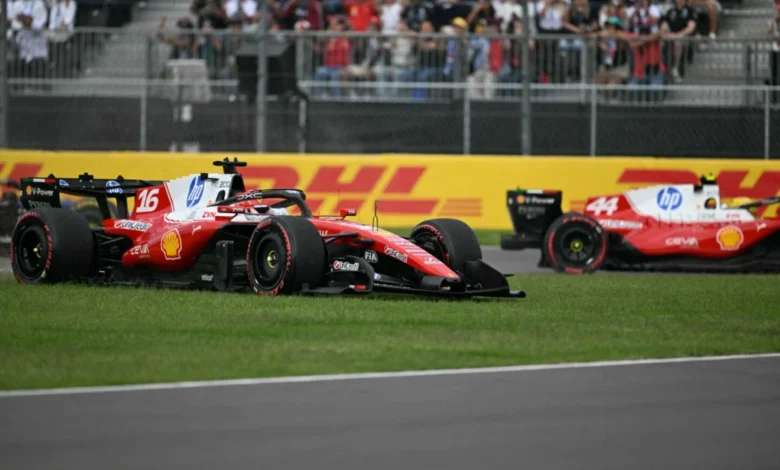
The 2026 Mexico City Grand Prix, held at the historic Autódromo Hermanos Rodríguez, proved to be a grueling test of endurance and mechanical fortitude, serving as a microcosm for the reliability struggles that have defined the current Formula One season. Max Verstappen secured a hard-fought victory at the high-altitude circuit, navigating a race punctuated by catastrophic component failures, multiple safety car deployments, and a dramatic red-flag restart. For Ferrari, the event concluded with a sense of frustration, as their drivers, Charles Leclerc and Lewis Hamilton, engaged in a high-stakes internal battle that arguably cost them a legitimate shot at challenging the Red Bull dominance.
A Chronology of Attrition
The race began under high tension, with the thin air of Mexico City—situated over 2,200 meters above sea level—placing immense strain on the power units and cooling systems of all twenty cars. Early signs of the technical volatility appeared as early as the seventh lap. Lance Stroll, driving for Aston Martin, saw his race come to an abrupt end when his car suffered a terminal mechanical failure, triggering an immediate safety car period. The incident underscored the recurring reliability issues that have plagued the Aston Martin team throughout the 2026 campaign. In a double blow for the Silverstone-based outfit, Fernando Alonso was forced to retire his vehicle to the garage shortly thereafter, ending the team’s participation in the Grand Prix before the race had even matured.
The most harrowing moment of the afternoon occurred on lap 44. Valtteri Bottas, driving for Cadillac, experienced a violent front-left suspension failure while navigating the high-speed approach to Turn 1. The resulting impact with the barrier was significant, scattering debris across the track and forcing race control to deploy a red flag. The stoppage allowed track marshals to conduct urgent repairs to the safety barriers, effectively resetting the field for a standing start.
The Turning Point: Tactics and Tire Management
When the lights went out for the second standing start, Verstappen maintained his composure and the lead, showcasing the superior power output of the Red Bull power unit. While the altitude usually mitigates power advantages, Red Bull’s deployment strategy appeared perfectly tuned to the conditions.
Behind him, the Ferrari garage watched in dismay as Charles Leclerc and Lewis Hamilton engaged in a reckless display of wheel-to-wheel racing. Both drivers overshot Turn 4, a maneuver that arguably ceded the advantage to their rivals. Leclerc, attempting to recover from the error, suffered a severe lock-up, causing a flat spot on his tires so deep that it reached the cords. This critical degradation hampered his pace for the remainder of the stint.
Meanwhile, the chaos continued on lap 59. A collision between Arvid Lindblad’s Racing Bull and Oscar Piastri’s McLaren necessitated yet another safety car intervention. This period allowed the field to bunch up once more, but by then, the structural integrity of the front-runners had been established. Hamilton, though closely trailing Verstappen by mere tenths of a second, lacked the requisite speed differential to initiate a clean overtake.
Performance Data and Technical Analysis
The 2026 regulation set has placed a premium on aerodynamic efficiency and low-speed cornering agility. Ferrari’s performance this weekend highlighted a car that excelled at riding the curbs and generating punchy acceleration out of low-speed sectors. This allowed them to fend off a late-race charge from Lando Norris, the 2025 World Champion, whose McLaren struggled to match the Ferrari’s mechanical grip in the stadium section of the track.
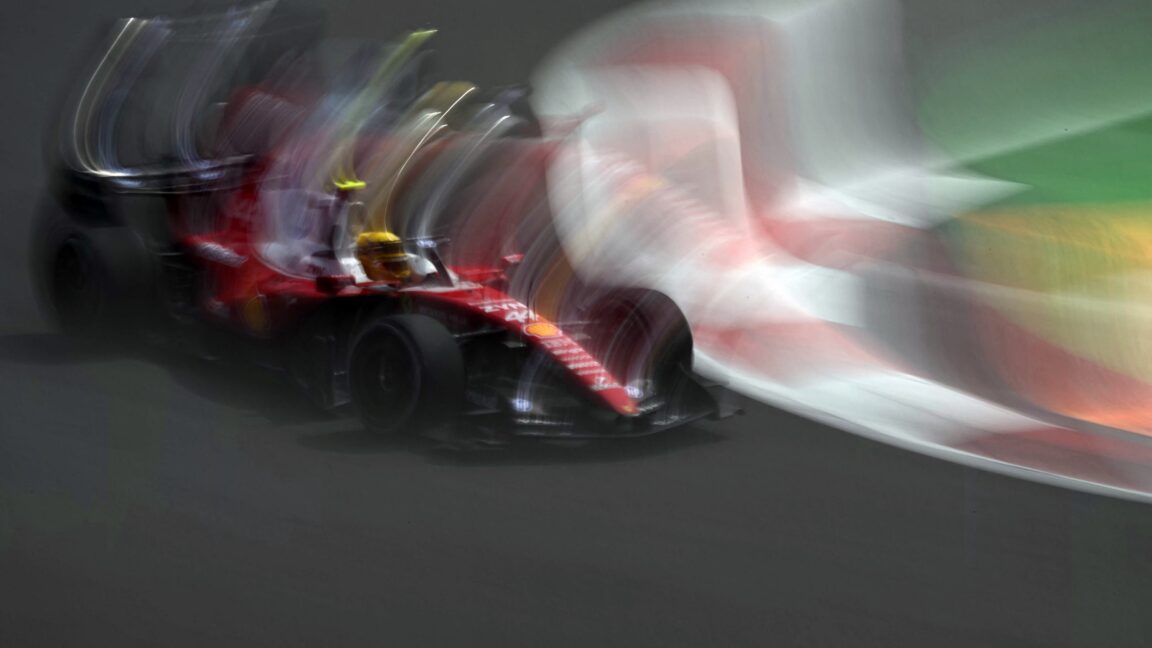
Norris ultimately secured fifth place, a result that reflects the narrowing performance gap between the top three constructors. However, the data from the Mexico City event suggests that reliability remains the primary differentiator. While Ferrari produced a car capable of podium-level pace, the inability of the drivers to manage their equipment—specifically in the case of Leclerc’s flat-spotted tires—prevented them from translating that pace into a win.
Official Reactions and Team Sentiment
The post-race atmosphere at the Ferrari hospitality unit was one of somber reflection. Team Principal Fred Vasseur did not mince words regarding the internal dynamics of his drivers.
"I always expect everyone to show respect for the brand, the team, our partners and, above all, the 2000 people working for us back home," Vasseur stated in a post-race press conference. "They put an incredible amount of effort into what we do, working day and night at the factory to improve the car and bring upgrades to the track. That’s why missing out on a win in this way is difficult to accept."
Vasseur’s comments are widely interpreted as a direct rebuke of the aggressive tactics displayed by Hamilton and Leclerc, which effectively compromised the team’s strategic flexibility. When drivers prioritize personal rivalry over team objectives, the risk of technical error—such as the tire damage sustained by Leclerc—increases exponentially.
The Broader Implications of the 2026 Season
The 2026 season has become a war of attrition. As manufacturers push the boundaries of energy recovery systems and turbocharger efficiency, the margin for error has vanished. The Cadillac suspension failure is currently under investigation by the FIA, with early reports suggesting that the high-frequency vibrations common at the Mexico City circuit may have exacerbated an existing material fatigue issue.
For Cadillac, this represents a significant setback in their efforts to establish themselves as a top-tier constructor. For the sport, the high rate of mechanical retirements—from Aston Martin’s recurring issues to the Cadillac crash—raises questions about the stress levels these new power units are subjected to during long-distance racing.
Furthermore, the championship standings are tightening as the season approaches its final stages. Verstappen’s victory solidifies his position at the top of the leaderboard, but the consistency of the Ferrari and McLaren packages ensures that the Constructors’ Championship remains a three-way fight. The Mexico City Grand Prix serves as a reminder that in Formula One, speed is only one half of the equation; the ability to preserve the machine under extreme environmental pressure is what ultimately secures the trophy.
As the paddock moves on to the next round, the focus will shift toward reliability audits and internal team management. Ferrari, in particular, faces a critical period of adjustment. If they are to challenge for the title in the closing rounds, they must balance the competitive fire of their drivers with the disciplined strategic execution that defines championship-winning teams. The events at the Hermanos Rodríguez circuit have provided a masterclass in how quickly a promising weekend can unravel, leaving the grid to wonder which team will be the next to succumb to the mechanical and tactical demands of the 2026 season.