OpenAI Prepares Major Political and Public Relations Strategy Ahead of Midterm Elections and the 2028 Presidential Race


As artificial intelligence systems demand unprecedented computational power, the physical infrastructure supporting the technology has become a lightning rod for community resistance, environmental scrutiny, and intense political debate. Data centers, once viewed as anonymous warehouses of fiber optics and servers, are now recognized as massive consumers of electricity and water, sparking local pushback from British Columbia and Manitoba to various U.S. states. Recognizing that public perception poses a critical threat to industry expansion, OpenAI is rolling out a sophisticated public relations and policy offensive.
According to strategic outlines revealed in late 2026, OpenAI is orchestrating a comprehensive messaging overhaul. The cornerstone of this strategy involves rebranding traditional data centers as “AI compute campuses,” part of a broader political navigation plan set to deploy immediately following the midterm elections. With shifting congressional power dynamics and the 2028 presidential election on the horizon, the artificial intelligence sector is bracing for an era where technological capability and political viability are inextricably linked.
The Political Landscape and the Post-Midterm Shift
The timing of OpenAI’s strategic pivot is closely tied to the shifting sands of American politics. Following the November 2026 midterm elections, political analysts and industry insiders anticipated a recalibration in Washington, D.C. With Democrats projected to capture the House of Representatives and potentially secure a governing majority in the Senate, federal oversight of emerging technologies is poised to intensify.
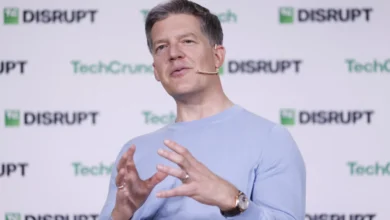
Chris Lehane, OpenAI’s chief global affairs officer, characterized the midterm results not just as a shift in legislative power, but as a preview of things to come. In discussions with policy analysts, Lehane described the late 2026 elections as a “movie trailer” for the 2028 presidential cycle. In that upcoming national contest, artificial intelligence is projected to emerge as a defining wedge issue, influencing voters across demographic and economic lines.
To prepare for this heightened scrutiny, OpenAI’s leadership is drafting a proactive agenda. Rather than reacting defensively to legislative proposals or regulatory crackdowns, the company aims to frame the national conversation around innovation, national security, and economic empowerment. This involves a multi-pronged approach encompassing regulatory guardrails, international standards, and a complete linguistic makeover for the physical architecture of AI.
Rebranding Infrastructure: From Data Centers to Compute Campuses
Public opposition to the relentless expansion of AI infrastructure has reached a boiling point. Local communities near proposed server farm sites have raised concerns over strain on municipal power grids, depletion of local water supplies for cooling, and noise pollution generated by heavy industrial cooling units. This grassroots friction has forced tech giants to alter their community engagement models. Major players like Amazon and Microsoft recently announced they would eliminate non-disclosure agreements (NDAs) in negotiations with local governments, yielding to demands for transparency.
OpenAI is tackling this PR crisis by targeting the nomenclature itself. By systematically replacing the clinical, industrial term “data center” with the softer, more academic phrasing of “AI compute campus,” the company hopes to shift public imagery away from sterile, resource-draining server warehouses toward hubs of innovation, education, and regional economic vitality.
During public briefings, Lehane addressed the grassroots backlash directly, describing the intense public debate over infrastructure placement as a “good and healthy” phenomenon. He emphasized that local communities must hold technology corporations strictly accountable, ensuring that regional populations reap genuine, transformative benefits rather than bearing the sole environmental and infrastructural costs.

Policy Proposals: Guardrails, Standards, and Empowerment
OpenAI’s post-midterm strategy extends far beyond mere semantics. The company is actively positioning itself as a responsible industry steward by championing several key policy initiatives designed to appease both lawmakers and wary citizens.
Among these proposals is the concept of AI “speed limits”—structured regulatory frameworks and safety protocols designed to pace the rollout of frontier models, giving society and governance structures adequate time to adapt. This aligns with broader industry discussions led by peers such as Anthropic regarding responsible scaling limits and risk management.
Additionally, OpenAI is pushing for the United States to take an aggressive leadership role in establishing global regulatory standards. As nations race for sovereign compute capabilities, Washington faces mounting pressure to ensure that international AI governance reflects democratic values rather than authoritarian controls.
Domestically, the company is formulating communication strategies aimed at everyday consumers. Recognizing that many citizens view AI primarily as a threat to employment or privacy, OpenAI is seeking ways to demonstrate how artificial intelligence actively empowers individuals in their daily lives, ranging from small business productivity to advancements in healthcare diagnostics.
The Chronology of Escalating AI Infrastructure Tensions
The friction between rapid technological advancement and community infrastructure capacity has evolved rapidly over recent years:
- Early 2024 to 2025: Generative AI adoption surges globally, triggering an unprecedented corporate land grab for specialized GPU chips and vast tracts of land suitable for high-density power consumption.
- Mid-2025: Municipalities across North America begin experiencing unexpected strain on electrical grids. Local resistance movements organize in regions designated for massive server installations, particularly in parts of the U.S. Pacific Northwest, Texas, and Canadian provinces like British Columbia and Manitoba.
- Late 2025 to Early 2026: Public protests challenge sovereign compute initiatives. Critics question the environmental footprint of cooling systems and the localized economic benefits of automated facilities that create relatively few permanent jobs.
- October 2026: Amid mounting public outrage and transparency demands, industry leaders like Amazon and Microsoft announce they will abandon the use of NDAs in municipal negotiations, bowing to pressure for open dialogue.
- November 1, 2026: Following the midterm elections, OpenAI outlines its extensive public relations and policy blitz, introducing the concept of “AI compute campuses” and signaling its preparation for the 2028 presidential debate.
Implications for the Future of Artificial Intelligence
The unfolding strategy by OpenAI highlights a maturing industry that can no longer afford to operate purely in a digital vacuum. As artificial intelligence systems demand the energy output of entire cities, the physical footprint of the technology has made it a matter of intense public concern.
The success or failure of OpenAI’s PR offensive will likely set a precedent for how the entire tech sector interacts with local municipalities and federal regulators. If the rebranding of infrastructure and proactive engagement can successfully mitigate community hostility, tech companies may find smoother pathways for deploying the next generation of computing power. Conversely, if the public views these semantic shifts as superficial spin, the backlash could harden into rigid legislative restrictions, potentially slowing the pace of AI development in North America.
As the political spotlight shifts toward the 2028 presidential election, the intersection of energy policy, technological sovereignty, and community rights will remain a defining battleground. OpenAI’s preemptive maneuvers signal that the fight for the future of artificial intelligence will be fought not just in code repositories and research labs, but at town hall meetings, legislative committees, and ballot boxes across the country.