Beyond the Fitting Room: The Architecture of Character and Costume Design in Modern Cinema

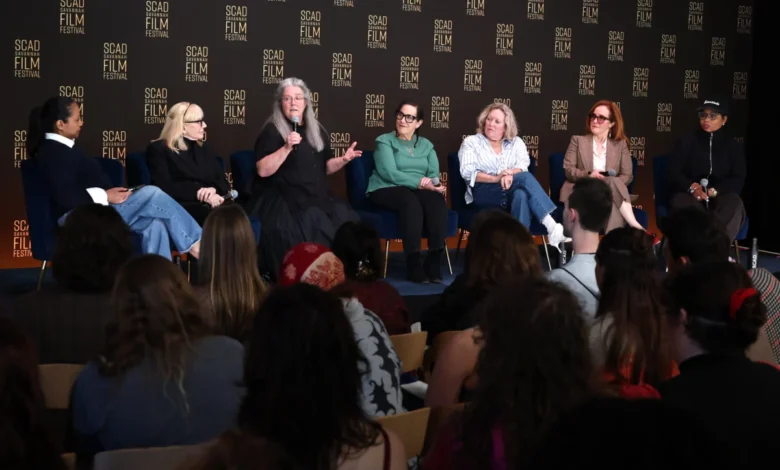
The art of costume design in contemporary cinema remains one of the most misunderstood and undervalued pillars of filmmaking, frequently reduced by casual observers to the simple act of shopping. However, at the recent Costume Design Roundtable held at the SCAD Savannah Film Festival, a panel of industry veterans—moderated by Variety’s Senior Artisans Editor Jazz Tangcay—dismantled this misconception. Featuring luminaries such as Molly Rogers, Ellen Mirojnick, Arianne Phillips, Linda Muir, Amy Roth, and Marci Rodgers, the discussion highlighted that costume design is not merely about aesthetic appeal; it is a rigorous, research-intensive discipline that serves as a visual language for storytelling, social history, and character psychology.
The Myth of the Stylist versus the Costume Designer
A recurring theme throughout the panel was the professional distinction between "shopping" and "designing." Molly Rogers, whose career includes pivotal work on The Devil Wears Prada and its highly anticipated sequel, expressed a firm stance on the creative requirements of the role. "When someone comes up to me and says, ‘I really want to learn and work with you. I love to shop,’ that’s an automatic exit," Rogers noted. Her sentiment resonated with the group, as the panelists emphasized that their work involves deep narrative construction.
For a costume designer, the process begins long before a garment is selected. It involves breaking down a script to understand the socio-economic status, history, and emotional trajectory of a character. When these elements are ignored in favor of surface-level trends or brand-driven product placement, the integrity of the film suffers. The designers argued that their primary responsibility is to act as advocates for the character, ensuring that every piece of clothing—from a pair of boots to a vintage accessory—authentically reflects the world the director is attempting to build.
Contemporary Design as Historical Documentation
While period pieces are often praised for their intricate research, the panelists noted that contemporary costume design is arguably more challenging. Ellen Mirojnick, whose iconic work on films such as Wall Street, Basic Instinct, and Fatal Attraction helped define the visual language of the 1980s and 90s, pointed out that contemporary design functions as a form of historical record-keeping.
"In the beginning of my career, I did a lot of contemporary costume, and I loved it," Mirojnick explained. "I loved being able to document what New York was like at that period, because yes, it was for film, but it also documented the history of what we were like." Creating a look that feels both elevated and grounded in a specific time and place requires a delicate balance. It must be authentic enough to be recognizable, yet stylized enough to serve the heightened reality of cinema.
Marci Rodgers echoed this sentiment, recounting her early experience working with Spike Lee on She’s Gotta Have It. To understand the visual cadence of the setting, she spent time observing background casting to absorb the natural sartorial habits of New Yorkers. When developing the wardrobe for the character Nola Darling, Rodgers utilized thrift stores rather than luxury retailers to reflect the character’s personality and her artistic inspirations, such as Prince. By incorporating subtle nods like "tidbits of purple," she maintained the character’s authenticity without resorting to obvious tropes.
The Corporate Pressure: Branding and Financing
As the film industry continues to evolve, the influence of luxury brands and product placement has introduced new obstacles for designers. Arianne Phillips, known for her work on Nocturnal Animals and The Invite, highlighted the friction between artistic vision and the financial demands of studio executives.
"I’ve been in rooms with studio executives—they’re rich. They make a lot of money. They have a relationship to shopping, someone shopping for them," Phillips stated. "They can afford what they want, and they’re experts." This dynamic often leads to conflicts where executives or actors push for specific high-end brands that may not align with the narrative truth of the character. Phillips warned that as film financing becomes increasingly reliant on brand partnerships, designers must remain vigilant in choosing directors who prioritize storytelling over commercial interests.
Case Studies in Technical Precision
The roundtable provided deep insight into the technical demands of recent high-profile projects:
-
The Odyssey and Queen Penelope: Ellen Mirojnick managed a massive production, crafting over 5,300 costumes for Christopher Nolan’s epic. To maintain visual cohesion, she utilized a specific color palette—burned red—to represent the House of Ithaca. For Penelope’s climactic return scene, Mirojnick designed a blue dress that functioned as "armor," using fine pleats and minimal jewelry to convey strength and resilience, proving that a costume can dictate the emotional weight of a scene.
-
The Northman and Material Research: Linda Muir provided a masterclass in period accuracy. Her work on The Northman and Werwulf required an obsession with the historical significance of materials. In Viking society, wool was a proxy for wealth, and Muir went to great lengths to source fabrics that reflected this hierarchy. The logistical difficulty of finding artisans who could recreate ancient weaving, jewelry, and metalwork techniques underscores the sheer labor required to build a believable world from scratch.
-
The Devil Wears Prada Sequel: Addressing the "curse of the sequel," Molly Rogers faced the monumental task of honoring a beloved predecessor while evolving the characters. Her decision to reintroduce the iconic cerulean sweater, albeit transformed into a vest, served as a bridge between the original film and the new iteration. The collaborative nature of this process—where Anne Hathaway’s own input led to the creative choice of cutting the sleeves—illustrates how actors and designers work in tandem to evolve a character’s identity over decades.
-
Recreating Michael Jackson’s Thriller: Marci Rodgers’ work on the film Michael involved a rigorous adherence to archival detail. Working with a massive research book, she discovered that the iconic red leather look was not as simple as it appeared. Through collaboration with Levi’s, she meticulously dyed jeans and color-matched beads, demonstrating that even for a well-known image, the "color value" and material history are essential to maintaining the audience’s suspension of disbelief.
Implications for the Future of the Industry
The panel’s collective testimony suggests that the role of the costume designer is becoming more complex, not less. As technology advances and the line between commercial marketing and cinematic art continues to blur, the need for designers who possess both historical knowledge and a sharp eye for character psychology is greater than ever.
The implications for production budgets and schedules are clear: if studios wish to maintain the high standard of visual storytelling that defines the best of contemporary cinema, they must grant designers the autonomy and support necessary to execute their vision. The designers expressed a collective desire for more respect from those "sitting behind desks moving numbers around," noting that a failure to support the costume department inevitably manifests as a failure on screen.
Conclusion: The Silent Narrator
Ultimately, the Costume Design Roundtable at the SCAD Savannah Film Festival served as a reminder that every stitch, every color choice, and every vintage find is a narrative decision. Whether it is recreating the gritty reality of a Chicago barbershop or the regal armor of an Ithacan queen, costume designers are the silent narrators of film. Their work provides the texture, the period context, and the psychological cues that allow audiences to fully inhabit the worlds on screen. As the industry moves forward, recognizing costume design as a creative discipline rather than a shopping errand will be essential to fostering the next generation of visual storytellers.