Bong Joon Ho Returns to the Sci-Fi Genre with Mickey 17 Starring Robert Pattinson

The cinematic world is turning its attention back to visionary South Korean filmmaker Bong Joon Ho, whose historic sweep at the 92nd Academy Awards cemented his status as a global titan in contemporary cinema. Four years after his darkly satirical masterpiece Parasite became the first non-English-language film to capture the Academy Award for Best Picture, Bong is preparing to unveil his next major directorial venture. Titled Mickey 17, the upcoming science-fiction feature adapts Edward Ashton’s acclaimed novel Mickey 7. Slated for a theatrical release on March 29, 2024, the film promises to blend high-concept speculative fiction with the biting social commentary and intricate character work that have come to define Bong’s illustrious filmography.
Production on Mickey 17 is spearheaded by Plan B Entertainment, the renowned production company co-founded by Brad Pitt, Dede Gardner, and Jeremy Kleiner, which has a proven track record of bringing ambitious, auteur-driven projects to the screen. Behind the camera and in the writer’s room, Bong has taken the creative lead not only as director but also as the sole screenwriter, adapting Ashton’s literary source material. Industry insiders and literary fans alike anticipate that Bong’s screenplay may diverge from the novel in notable ways, introducing signature tonal shifts, expanded subplots, and thematic depth characteristic of his previous adaptations, such as Okja and Snowpiercer.
Furthermore, the production reunites Bong with key creative personnel from his past triumphs. Notably, composer Jae-il Jung, whose pulsating, genre-defying score for Parasite played an instrumental role in building tension and emotional resonance, returns to score Mickey 17. Jung’s involvement signals a continuation of the distinct auditory landscape that helped propel Parasite to international acclaim.
A Deep Dive into the Premise of Mickey 17
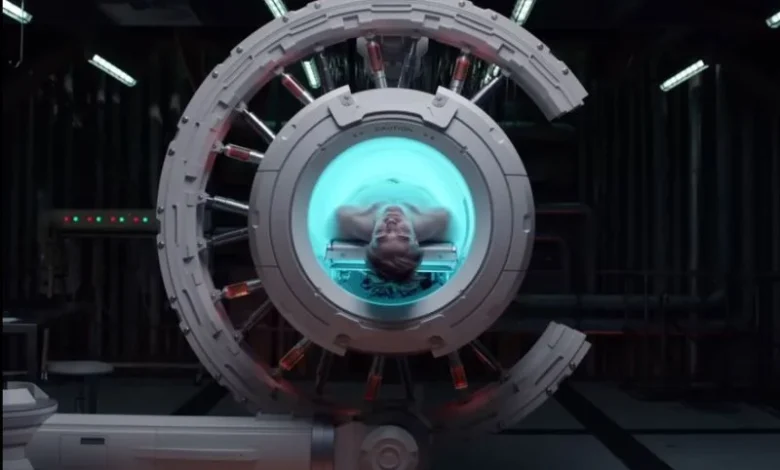
At the narrative heart of Mickey 17 is a bleak yet fascinating premise centered around the concept of disposable labor in deep-space exploration. The story follows Mickey 7, a "Expendable"—a genetically engineered, clone-based employee participating in a hazardous human expedition dispatched to colonize Niflheim, a hostile ice world covered in glaciers and freezing temperatures.
In this dystopian corporate-colonial future, the Expandables are utilized for humanity’s most perilous tasks. Whenever a mission proves fatal—whether through radiation exposure, toxic atmospheric conditions, or hostile alien fauna—a new body is printed with most of the previous iteration’s memories intact. The protocol allows the colonizing mission to bypass the traditional risks of human mortality, treating human life as replaceable hardware.
The central conflict of Ashton’s novel arises when Mickey 7 goes missing and is presumed dead during a reconnaissance mission on Niflheim. Surviving against the odds, Mickey 7 manages to crawl back to the human base, only to discover that his superiors have already initiated the printing of his successor, Mickey 8. The narrative explores the psychological horror, existential dread, and bureaucratic absurdity of two identical iterations of the same man forced to coexist in secret, as the revelation of a duplicated Expendable carries severe penalties under the expedition’s strict legal frameworks.
A Star-Studded Ensemble Cast
While Bong Joon Ho is celebrated for his precise framing and visionary direction, he is equally renowned for assembling powerhouse ensemble casts capable of navigating complex moral ambiguity. Mickey 17 boasts a star-studded international lineup led by Robert Pattinson, who takes on the demanding dual role of the film’s cloning protagonist. Pattinson, who has steadily transitioned from mainstream blockbusters to working with visionary auteurs like Christopher Nolan, Robert Eggers, and Claire Denis, brings a reputation for intense physical commitment and psychological depth to the project.
Pattinson is joined by an impressive roster of critically acclaimed actors. Academy Award nominee Steven Yeun, who previously delivered a powerhouse performance in Lee Chang-dong’s Burning and starred in Jordan Peele’s Nope, takes on a prominent role. Yeun’s inclusion marks a continuation of high-profile collaborations between top-tier talent across Hollywood and the global Asian film community.
The supporting cast further elevates the film’s pedigree, featuring British actress Naomi Ackie, celebrated for her roles in *The End of the F**ing World and Whitney Houston: I Wanna Dance with Somebody; Australian icon and Academy Award nominee Toni Collette, known for her harrowing work in Hereditary and The Sixth Sense; and Mark Ruffalo, an Academy Award nominee and veteran of massive cinematic universes who brings a versatile dramatic weight to the production. The combination of such diverse, high-caliber talent has heightened expectations for the interpersonal dynamics and character-driven stakes within the sci-fi epic.
The Chronology of Bong Joon Ho’s Global Ascent
To understand the immense anticipation surrounding Mickey 17, it is necessary to examine the meteoric trajectory of Bong Joon Ho’s career leading up to this point. Over two decades, the filmmaker has meticulously built a body of work that balances commercial accessibility with profound artistic integrity.
In 2003, Bong gained international recognition with Memories of Murder, a chilling police procedural based on the country’s first confirmed serial murders. This was followed by the genre-redefining monster movie The Host in 2006, which shattered box office records in South Korea and established Bong as a master of blending horror, dark comedy, and social commentary.
His international footprint expanded further with the dystopian allegory Snowpiercer (2013), his first English-language production, which adapted the French graphic novel Le Transperceneige. The film demonstrated Bong’s ability to handle large-scale Hollywood budgets while maintaining an uncompromisingly critical view of class warfare and hierarchical structures. This theme was further refined in Okja (2017), a satirical adventure film produced by Netflix that explored corporate greed and animal rights, earning a controversial yet celebrated premiere at the Cannes Film Festival.
The pinnacle of Bong’s career arrived in February 2020 at the 92nd Academy Awards. Parasite made history by winning four of the night’s most prestigious honors: Best Picture, Best Director, Best Original Screenplay, and Best International Feature Film. It marked the first time in the 92-year history of the Academy Awards that a non-English-language film claimed the top prize. The unprecedented victory served as a watershed moment for international cinema, breaking down long-standing cultural and linguistic barriers in Hollywood and signaling a shift toward more globally inclusive recognition of artistic excellence.
Following the global phenomenon of Parasite, industry watchers eagerly awaited Bong’s next move. The announcement of Mickey 17 in late 2022 generated immediate buzz, positioning the film as one of the most anticipated science-fiction projects of the decade.
Contextualizing the Sci-Fi Genre and Corporate Satire
Mickey 17 enters a rich tradition of philosophical science-fiction that uses speculative futures to critique contemporary socio-economic realities. Films such as Blade Runner, Moon, Gattaca, and Total Recall have long utilized tropes of cloning, corporate exploitation, and off-world colonization to explore what it means to be human in a society driven by industrial utility.
Bong Joon Ho’s historical integration of sharp social satire into genre filmmaking suggests that Mickey 17 will be more than a standard space-adventure blockbuster. By framing the protagonist’s existence around corporate disposability, the narrative directly mirrors modern anxieties regarding labor precarity, late-stage capitalism, and the commodification of human life. The concept of the "Expendable" serves as an extreme metaphor for the treatment of marginalized workers within global supply chains, where productivity often supersedes individual well-being.
Furthermore, the choice of Niflheim as a cold, desolate alien frontier provides a stark visual and thematic backdrop. The icy isolation of the landscape mirrors the cold detachment of the colonizing corporation, forcing characters to confront not only external environmental hazards but also the internal crisis of identity. When an individual can be reprinted at a moment’s notice, questions regarding consciousness, continuity of the self, and the sanctity of life take center stage.
Industry Implications and Box Office Projections
As Hollywood continues to navigate a shifting landscape defined by streaming competition, franchise fatigue, and evolving audience demographics, original high-budget science-fiction films face a unique set of challenges and opportunities. Studios are increasingly hesitant to invest heavily in non-IP-driven projects; however, director-driven spectacles helmed by proven auteurs like Bong Joon Ho represent a vital exception to this trend.
The backing of Warner Bros. Pictures, combined with Plan B Entertainment’s production pedigree, demonstrates significant studio confidence in the commercial viability of Mickey 17. While the film is adapted from Edward Ashton’s novel, the project is largely being driven by Bong’s singular artistic vision rather than an existing cinematic universe or legacy franchise. This positions the movie as a litmus test for whether audiences will continue to turn out in large numbers for sophisticated, original science-fiction storytelling on the big screen.
Financial analysts and box office prognosticators will be watching closely as marketing campaigns roll out ahead of the March 2024 release date. Given the global brand recognition Bong earned following the historic success of Parasite, coupled with the star power of Robert Pattinson and an acclaimed supporting cast, Mickey 17 is projected to generate substantial international box office revenue. The film’s cross-cultural appeal—bridging Hollywood star power with South Korean directorial mastery—underscores the ongoing globalization of the film industry.
Looking Ahead to March 2024
As the theatrical release date approaches, anticipation continues to build across fan communities and critical circles alike. The journey from Edward Ashton’s speculative novel to the ambitious cinematic adaptation helmed by Bong Joon Ho represents one of the most exciting creative transitions in recent cinematic history.
By uniting a visionary director known for subverting genre expectations with an ensemble of world-class actors, Mickey 17 is poised to challenge viewers intellectually while delivering the striking visual storytelling that has become Bong’s hallmark. Whether exploring the dark humor of corporate bureaucracy, the existential dilemmas of cloning, or the sheer survival instincts of a man forced to outlive himself multiple times over, the film stands ready to leave a lasting imprint on the science-fiction genre when it arrives in theaters on March 29, 2024.