Stephen Curry Explosive 44-Point Night Lifts Warriors Over Timberwolves 119-114 Despite Late Collapse

MINNEAPOLIS — In the high-stakes environment of the National Basketball Association’s regular season, resilience is often measured not just by how a team secures a victory, but by how it survives its own lapses in execution. This reality was put on full display inside a charged Target Center on Wednesday night, where the Golden State Warriors managed to hold off a furious late-game charge by the Minnesota Timberwolves to escape with a narrow 119-114 win.
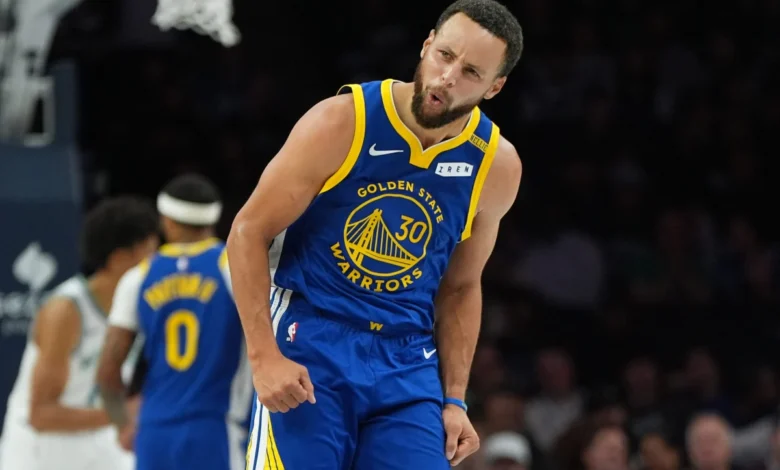
Playing without their cornerstone guard Anthony Edwards—who is currently sidelined and facing impending knee surgery—the Timberwolves initially struggled to establish a cohesive rhythm against a polished Golden State squad. However, a monumental, season-best performance from Warriors superstar Stephen Curry proved to be the decisive factor. Curry poured in 44 points, navigating defensive pressure with clinical precision and anchoring an offense that desperately needed every single one of his contributions to stave off a historic meltdown.
For the Warriors, the victory halts an early-season narrative that has begun to plague the locker room: a dangerous tendency to surrender massive advantages in the final frames of regulation. Though Golden State once commanded a comfortable 24-point cushion in the second half, a familiar defensive slumber and careless ball-handling nearly handed Minnesota their second fourth-quarter collapse in just five games.
A Game of Two Halves: Building the Lead
The contest began with an unmistakable sense of uncertainty for the home team. The absence of Anthony Edwards forced Minnesota head coach and his staff to radically adjust their offensive schemes and defensive assignments. Jonathan Kuminga, facing off against the franchise that drafted him seventh overall in the 2021 NBA Draft before trading him away the previous February, stepped into a heightened role to help shoulder the load. Kuminga put up a commendable 20 points, attempting to fill the massive void left by Edwards, but the adjustment period was evident early on.

Golden State capitalized on the Timberwolves’ initial disorganization with surgical efficiency. Moving the ball with crisp, veteran execution, the Warriors dismantled Minnesota’s perimeter defense. Curry was instrumental during this phase, dictating the pace and orchestrating a blistering offensive sequence that saw the visitors build a commanding 78-54 advantage midway through the third quarter.
The Warriors’ depth also showed flashes during this dominant stretch. Yaxel Lendeborg contributed significantly with 26 points, showcasing an ability to attack the rim and finish through contact. Alongside Curry and Lendeborg, guard Brandon Williams provided vital minutes off the bench, finishing as the only other Golden State player to reach double figures with 11 points. By all metrics, the game appeared to be heading toward a routine blowout—the kind of comfortable evening that would allow Warriors head coach Steve Kerr to empty his bench and rest his veteran starters down the stretch.
The Collapse: Momentum Shifts in the Third
That comfortable script was rewritten the moment Curry checked out of the game at the 5:01 mark of the third quarter. With their offensive engine resting on the sidelines, the Warriors’ machine sputtered.
Golden State’s second unit struggled against a rejuvenated defensive effort from Minnesota. Sloppy passing and poor floor spacing led to a flurry of turnovers, transforming a potential blowout into a live-wire contest. Lendeborg, despite his impressive scoring tally, struggled with ball security, committing seven of Golden State’s 16 total turnovers on the night. The Timberwolves eagerly converted those miscues into fast-break transition points, injecting life into the Target Center crowd and igniting a palpable shift in momentum.
Minnesota began chipping away at the deficit methodically. Jaden McDaniels and T.J. Shannon led the charge for the shorthanded hosts, each pouring in 19 points through a combination of aggressive drives and timely perimeter shooting. Four different Timberwolves players ultimately finished in double figures as the team discovered a gritty, decentralized identity on the fly.

By the time the third quarter buzzer sounded, the once-impenetrable 24-point lead had been violently slashed. Golden State’s advantage shrank to just 12 points, sitting at 93-81 as the game entered the final frame. The specter of an epic fourth-quarter collapse hung heavily over the Warriors’ bench, serving as an uncomfortable reminder of similar late-game struggles earlier in the young campaign.
Curry Closes the Door at the Line
As the fourth quarter unfolded, the Timberwolves continued to slice into the lead, drawing within a single possession as Golden State’s offense remained stagnant. Recognizing the existential threat to a game they had dominated just an hour prior, the Warriors reinserted Curry to steady the ship.
Curry’s response was masterclass-level poise. Denying any completion of the Minnesota comeback, the veteran guard took control of the ball-handling duties, mitigating the turnover bug that had infected his teammates. When Minnesota’s defense collapsed on him to prevent open looks from beyond the arc, Curry utilized his elite basketball IQ to draw contact and punish the Timberwolves at the charity stripe.
While Lendeborg’s trips to the foul line were largely restricted to the game’s final minutes—where Minnesota was forced to intentionally foul to stop the clock and preserve time—Curry lived at the free-throw line throughout the game’s critical sequences. Showing the ice-water veins that have defined his storied career, Curry calmly stepped to the line 16 times and converted every single attempt, finishing a flawless night from the charity stripe.
Those clutch free throws, combined with timely defensive stops engineered by veteran leader Draymond Green, finally put the game out of reach. When the final buzzer sounded, the scoreboard read 119-114, sealing a hard-fought, albeit deeply stressful, road victory for Golden State.

Implications and the Road Ahead
Analyzing the implications of Wednesday night’s thriller reveals both promising strengths and glaring vulnerabilities for the Golden State Warriors as the 2026-27 NBA season gathers steam. On the positive side, Stephen Curry’s conditioning and scoring capacity remain at an elite, MVP-caliber tier. When the offense requires a bailout, the four-time champion continues to demonstrate an unmatched ability to bend opposing defenses to his will. Furthermore, strong supporting contributions from players like Yaxel Lendeborg and Jonathan Kuminga—who proved he could handle the emotional and competitive weight of playing his former team—demonstrate that Golden State possesses versatile talent beyond its traditional core.
However, significant concerns linger regarding the team’s durability and focus over a full 48-minute contest. Surrendering a 24-point lead and committing 16 turnovers—nearly half of which came from a single player—are symptomatic of lapses in concentration that championship contenders cannot afford. Steve Kerr and his coaching staff will undoubtedly pore over the film of the third and fourth quarters, searching for ways to stabilize the second unit when Curry is forced to rest.
For the Minnesota Timberwolves, the loss stings, but the competitive fight displayed in the absence of Anthony Edwards offers a silver lining. Playing their first game without their franchise cornerstone, the team avoided a demoralizing blowout and instead forged a resilient identity on the fly. As McDaniels, Shannon, and Kuminga continue to gel under altered rotations, the Timberwolves will look to stabilize their roster while awaiting updates on Edwards’ recovery timeline.
Ultimately, the night belonged to Stephen Curry, whose historic 44-point masterclass ensured that the Warriors left Minneapolis with a win rather than a cautionary tale. As the season progresses, Golden State will need to learn how to close out games with authority, ensuring that future victories require less late-game panic and more steady execution from opening tip to final buzzer.