HBO Expands Its Wizarding World as Harry Potter Season 2 Enters Fast-Track Production and Adds Major New Cast Members

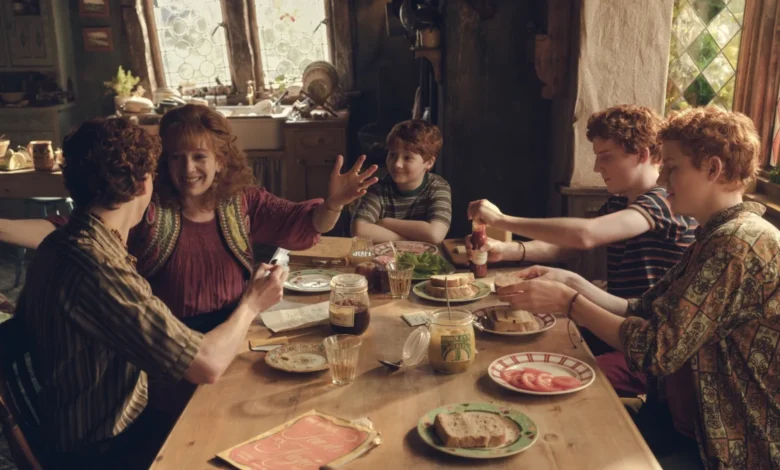
HBO’s ambitious adaptation of J.K. Rowling’s globally celebrated Harry Potter book series is pushing forward at an unprecedented pace. Even as the highly anticipated first season prepares to make its landmark debut on Christmas Day 2026, network executives and production teams are already laying the foundational groundwork for a sophomore outing. With an accelerated production schedule designed to minimize the notoriously long hiatuses that plague modern prestige television, Season 2 is slated to begin filming this autumn.
The expanding scope of the television adaptation has brought forth a wave of high-profile casting announcements, creative restructuring behind the scenes, and a strategic leadership shift designed to manage the immense logistical demands of bringing the magical universe to the small screen. As HBO charts a course that intends to dedicate one distinct season to each of Rowling’s seven novels, the network is pulling out all the stops to ensure the franchise’s television incarnation becomes a defining cultural touchstone for a new generation of viewers.
An Accelerated Production Timeline and Behind-The-Scenes Expansion
The decision by HBO to aggressively fast-track the production of Harry Potter Season 2 underscores the immense financial and strategic weight the network has placed on the franchise. Traditionally, high-budget fantasy series on streaming and premium cable require anywhere from eighteen months to three years between seasonal installments due to intricate visual effects requirements, sprawling set constructions, and complex scheduling. However, HBO leadership is explicitly aiming to upend this trend.
Casey Bloys, Chairman and CEO of HBO and Max Content, addressed the network’s scheduling strategy following the Emmy Awards, emphasizing that the network wants to deliver content to subscribers as rapidly as possible without sacrificing quality. Bloys explicitly noted that audiences will not have to endure a standard two-year wait between the first and second seasons, pointing to a compressed calendar that keeps the creative momentum alive.
To facilitate this demanding operational tempo, major structural changes have been implemented within the creative hierarchy. Jon Brown, whose previous writing credits include the critically acclaimed HBO juggernaut Succession, has been elevated to co-showrunner for Season 2. Brown worked closely as a writer during the development and execution of the first season and will now share top operational duties alongside Season 1 showrunner Francesca Gardiner.
Gardiner praised the appointment, noting that the overlapping production schedules—which see Season 1 wrapping up its physical production around the Christmas holiday while Season 2 simultaneously gears up for its autumn cameras—necessitated a division of labor. According to Gardiner, bringing Brown on as co-showrunner was the singular key to maintaining creative momentum and operational stability across multiple concurrent units. The core executive producing team remains robust, featuring Gardiner alongside Mark Mylod—who has also directed multiple episodes—J.K. Rowling, Neil Blair, and Ruth Kenley-Letts of Brontë Film and TV, alongside David Heyman of Heyday Films. The series is produced by HBO in association with Brontë Film and TV and Warner Bros. Television.
Major Casting Additions and High-Profile Recasting for Season 2
As the production shifts its focus to adapting the events of Harry Potter and the Chamber of Secrets, the second-season call sheet has seen a massive influx of talent, ranging from established screen veterans to rising young actors.
Among the most notable updates is a key recasting for a central character. Bonnie Hill has officially been tapped to take over the role of Ginny Weasley, the youngest of the Weasley siblings and the eventual romantic partner of Harry Potter. Hill steps into the role following the departure of Gracie Cochrane, who originally portrayed the character for Season 1. Cochrane stepped away from the series due to unforeseen personal circumstances, prompting a swift recasting process for a character whose diary becomes the catalyst for the central mystery of the second book.
Joining the younger ensemble is Lenny Rush, recognized for his critically acclaimed work in Am I Being Unreasonable?, who will step into the iconic role of Dobby, the fiercely loyal house-elf bound to the Malfoy family. Meanwhile, Billy Barratt—who holds the distinction of being the youngest International Emmy Award winner in history—has been cast as the teenage Tom Riddle, the brilliant yet sinister manifestation of the boy who would become Lord Voldemort.
The casting process for the flamboyant and egotistical Defense Against the Dark Arts professor Gilderoy Lockhart generated considerable industry buzz. Deadline initially broke the news that Nicholas Hoult was in line for the role. However, due to unavoidable scheduling conflicts, Hoult departed the project. Kit Harington, who famously portrayed Jon Snow in Game of Thrones and who has previously voiced Lockhart in official audiobook adaptations, stepped up to fill the vacancy, bringing instant prestige and gravitas to the role of the fraudulent wizard.
Further enriching the wizarding world are several key supporting additions. Molly Hewitt-Richards will step into the spectral shoes of Moaning Myrtle, the brooding ghost haunting the second-floor girls’ bathroom. Rafe Spall has been cast as the affable patriarch of the Weasley clan, Arthur Weasley. Notably, Rafe Spall is the biological son of Timothy Spall, the veteran actor who famously portrayed Peter Pettigrew, also known as Wormtail, starting from the third cinematic installment, Harry Potter and the Prisoner of Azkaban.
Additionally, Jasper Ambrose has been secured to portray Colin Creevey, the eager young muggle-born Gryffindor whose omnipresent camera plays an essential narrative role in the second installment. Harry Gilby has joined the cast to play Charlie Weasley, Ron’s older brother who works extensively with dragons in the wilds of Romania. Finally, the tragic lineage of the series’ protagonist will be filled by Jasper Talbott and Hannah Chinn, who will appear as James and Lily Potter, Harry’s deceased parents.
Strategic Vision and Franchise Implications
The systematic rollout of the Harry Potter television franchise represents a calculated high-stakes gamble for Warner Bros. Discovery and its streaming platform, Max. By committing to a strict one-book-per-season format, HBO is attempting something unprecedented in the modern era of adaptation: a complete, unhurried, and exhaustive screen translation of a sprawling literary universe that allows characters to age in real-time alongside their actors, much like the original film series did, but with the narrative depth afforded by long-form television.
The financial implications of this strategy are vast. Warner Bros. Discovery is leveraging its most lucrative intellectual property to anchor subscriber retention for Max and drive linear viewership on HBO. By locking in a compressed production timeline, the studio aims to keep subscriber churn to a minimum, ensuring that audiences remain engaged with the wizarding world year after year rather than facing multi-year gaps that typically dampen fan enthusiasm.
However, the production has not been entirely immune to external controversies and industry discourse. The ongoing cultural debates surrounding author J.K. Rowling’s public commentary have continued to cast a long shadow over new iterations of the franchise, occasionally sparking friction within the broader creative community regarding participation in the project. Despite these external headwinds, the corporate machinery behind the series continues to push forward aggressively, banking on the unyielding global appeal of the source material.
With the first season locked in for a prestigious Christmas Day 2026 global premiere on HBO and Max, and production on the second season commencing shortly thereafter, the network is systematically constructing a multi-year television event. As casting finalizes and cameras prepare to roll on the darker, more complex narrative corridors of The Chamber of Secrets, HBO’s monumental gamble on the boy wizard is rapidly transforming from a corporate announcement into a tangible, fast-moving television reality.