Justice Department moves to charge former FBI Director James Comey in unprecedented legal maneuver

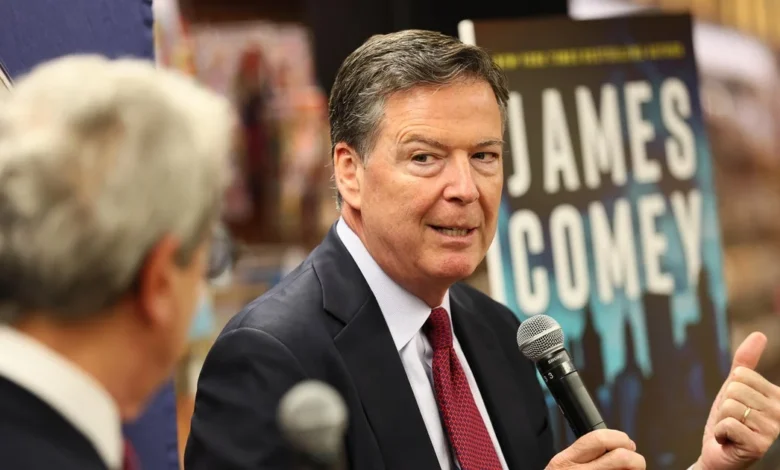
The United States Department of Justice has initiated a highly unusual legal action to charge former FBI Director James Comey with two counts of violating the Espionage Act, marking the third attempt by federal prosecutors to secure criminal indictments against the former bureau chief. Court records unsealed this week by U.S. District Judge Trevor McFadden reveal that prosecutors filed a "criminal information" against Comey, a strategy the government claims is intended to preserve the statute of limitations regarding allegations that Comey leaked national defense information to the press in 2016.
This development escalates a years-long legal struggle between the former FBI director and the Trump administration, characterized by a series of failed or dismissed indictments. The current filing centers on an October 2016 incident in which The New York Times published a report regarding Yahoo’s email surveillance protocols. Prosecutors allege that Comey directed staff to share classified details with a reporter to correct public record inaccuracies stemming from a previous Reuters story.
The Mechanism of Criminal Information
In the American federal justice system, a criminal information is a charging document that bypasses the traditional grand jury process. While it functions as an accusation of criminal conduct, it does not require a finding of probable cause by a magistrate judge or a panel of citizens. Historically, this tool is utilized when a defendant has agreed to waive their right to a grand jury indictment, typically as part of a plea bargain.
The Justice Department’s decision to use this mechanism to "toll," or pause, the statute of limitations has drawn sharp criticism from legal scholars and former prosecutors. A spokesperson for the Department of Justice maintained that the action is a "widely recognized practice," yet defense attorneys, including former DOJ Inspector General Michael Bromwich, have characterized the move as an "end-run" around standard judicial procedure. The statute of limitations for the alleged offense is ten years; without this filing, the government’s ability to bring charges would have expired in October of this year.
A History of Legal Friction
The pursuit of James Comey has been a recurring theme in the legal landscape of the past decade. The relationship between the two men fractured early in the first Trump administration, following Comey’s dismissal as FBI Director—a move that eventually led to the appointment of Special Counsel Robert Mueller.
The timeline of these legal challenges reflects a pattern of high-stakes litigation:
- 2017: Former U.S. Attorney John Durham investigates the 2016 media leaks. Despite identifying that Comey had instructed FBI General Counsel James Baker to communicate with the media, Durham concluded that no criminal charges were warranted.
- 2020: The "Tropic Vortex" investigation, conducted by the U.S. Attorney’s Office for the District of Columbia, examines similar allegations and concludes without bringing charges.
- September 2025: An indictment is filed against Comey regarding his testimony to Congress. The charges are later dismissed by a judge who ruled that the presiding U.S. Attorney had been improperly appointed.
- April 2026: Comey is indicted in North Carolina for an Instagram post featuring seashells arranged in the pattern "86 47," which prosecutors allege constituted a criminal threat against the President. That case remains pending.
- October 2026: The Department of Justice files the current criminal information under seal, which is subsequently unsealed by Judge McFadden.
Defense and Institutional Pushback
James Comey’s legal team, led by attorney Patrick Fitzgerald, has consistently denied the allegations, characterizing the repeated investigations as a form of "vindictive prosecution." In a public video statement, Comey remarked on the repetitive nature of the government’s efforts, stating, "It would almost be funny if it weren’t such an appalling abuse of the Department of Justice."
The defense maintains that the underlying allegations were thoroughly vetted during the first Trump administration and deemed insufficient for prosecution. Furthermore, the defense revealed that during the week leading up to Columbus Day, Comey was under surveillance by federal law enforcement, leading to concerns that an "after-hours" arrest was imminent. An emergency court hearing resulted in the government agreeing to a 30-day stay on seeking an arrest warrant, though the government argued at the time that the defense’s attempt to dismiss the information was premature.
Broader Implications for the Justice Department
The use of a criminal information to hold a case over a former high-ranking official has raised significant questions regarding the politicization of the Department of Justice. Critics argue that the tactics employed—including the use of special assistant U.S. attorneys from outside the District of Columbia—suggest a deviation from standard prosecutorial norms.
Attorney General Todd Blanche has defended the department’s actions, asserting that decisions are made by local prosecutors and agents without input from the White House. During an earlier interview with CBS News, Blanche emphasized that the President has more pressing responsibilities than the internal operations of the DOJ. However, the optics of the case remain complicated. The fact that the charging documents were signed by senior officials—Acting Deputy Attorney General Trent McCotter and Principal Associate Deputy Attorney General Aakash Singh—highlights the level of institutional weight being placed on these proceedings.
Judicial Oversight and Public Interest
Judge Trevor McFadden’s decision to unseal the docket was grounded in the principle of public transparency. In his order, McFadden noted that the charges against a former FBI director regarding his official conduct are matters of "significant public interest." By mandating the unsealing of the records, the court has effectively forced the government to justify its procedural choices in the public square.
The case also touches upon the legal standard for "selective prosecution." Comey’s team argues that the government is targeting political adversaries, citing other cases—such as the unsuccessful attempts to prosecute New York Attorney General Letitia James—as evidence of a broader pattern. In the case of Letitia James, grand juries twice refused to return indictments, a potential indicator of how jurors might perceive the strength of these cases if they were to reach a trial.
Analysis of the Espionage Act Charges
The charges of violating the Espionage Act by "transmitting national defense information" are among the most serious that can be brought against a government official. The Espionage Act requires the government to prove that information was handled with gross negligence or willful intent to harm the United States or aid a foreign power.
Legal analysts note that the government’s burden of proof will be substantial, particularly given the previous investigations that concluded no criminality occurred. The defense is likely to emphasize the "public interest" justification—that the information shared was intended to correct the public record rather than compromise national security. Whether the "criminal information" will hold up under the scrutiny of a federal court remains to be seen. If the case proceeds to an indictment, the government will be required to move beyond the current administrative filing and establish the merits of the case before a judge or jury.
The Path Forward
The immediate future of the case rests on the upcoming expiration of the 30-day stay agreed upon during the October emergency hearing. With the statute of limitations issue looming, the Justice Department is under pressure to either formalize the charges through a grand jury indictment or face the possibility that the case will be dismissed entirely.
As this legal saga continues, it remains a focal point for observers of executive power and the independence of the federal judiciary. The case is not merely a dispute over a 2016 media leak; it is a battle over the limits of prosecutorial discretion and the degree to which administrative tools can be used to hold political figures accountable. For James Comey, the case represents the latest in a series of challenges that have forced him back into the center of the American political discourse, testing the resilience of his legal defenses and the impartiality of the justice system he once oversaw.