Justice Department demands California review voter rolls for potential noncitizen mail-in ballots

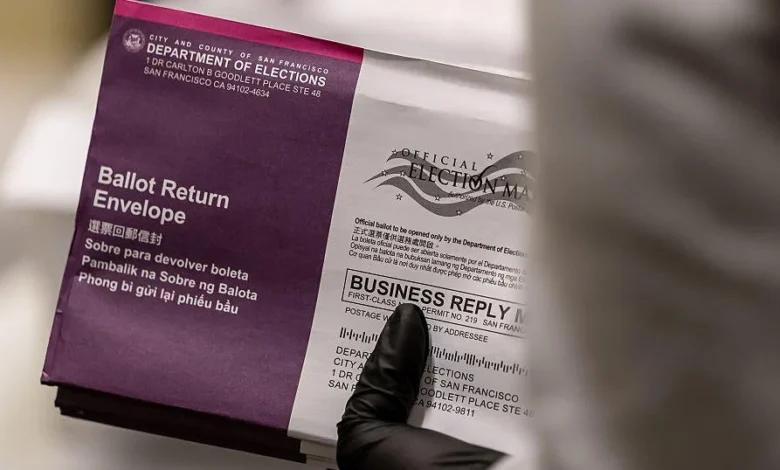
The United States Department of Justice has issued an urgent directive to California election officials, mandating an immediate review of a list of individuals suspected of being non-U.S. citizens who may have been issued mail-in ballots for the upcoming November election. In an official correspondence dated October 13, 2026, acting Deputy Attorney General Trent McCotter imposed a strict 48-hour deadline for state and local authorities to verify the citizenship status of the individuals identified on a provided, password-protected thumb drive.
The directive, which signals a significant escalation in federal oversight of state election procedures, requires that if officials cannot independently verify the citizenship of the listed persons, they must segregate those individuals’ ballots rather than cancel them, pending further investigation. Furthermore, the Justice Department has instructed that any individuals on the list who have not yet been sent a ballot should be denied one until their status is confirmed. This development marks a high-stakes standoff between the federal government and California, raising profound questions regarding the boundaries of federal authority, state sovereignty in election administration, and the integrity of the electoral process in an increasingly polarized political climate.
Chronology of Federal Intervention
The current conflict is the culmination of a months-long campaign by the Trump administration to scrutinize voter rolls in states deemed "blue" or Democratic-leaning. The timeline of this push began in earnest during the summer of 2026:
- July 2026: Secretary of Homeland Security Markwayne Mullin formally notified California’s Secretary of State, Shirley Weber, that federal intelligence suggested the presence of noncitizens on the state’s voter rolls.
- July 2026: Harmeet Dhillon, serving as Assistant Attorney General for the Civil Rights Division, initiated a nationwide campaign by sending letters to all 50 states, threatening criminal repercussions for any jurisdiction that knowingly maintained noncitizens on their active voter registration lists.
- Late Summer/Early Autumn 2026: The Department of Justice initiated a series of 31 legal challenges against various states, seeking to compel the disclosure of unredacted voter roll data. The stated objective was to cross-reference these lists with Department of Homeland Security records to identify potential noncitizen registrants.
- October 13, 2026: The Justice Department issued the specific demand to California, delivering the list via a physical USB drive to local election offices, triggering the current standoff.
Technical and Legal Obstacles to Compliance
The federal government’s delivery method has become a central point of contention. Local election officials, most notably Dean Logan, the registrar-recorder/county clerk of Los Angeles County, have expressed significant concerns regarding the security and legality of the Justice Department’s methodology.
"The letter included a USB drive purportedly containing the referenced records, along with a handwritten note providing a password. We have not accessed the drive because doing so would conflict with established data privacy and information security protocols," Logan stated. His refusal is rooted in the "Zero Trust" cybersecurity frameworks adopted by most major jurisdictions, which prohibit the insertion of unknown external media into secure, air-gapped government systems.
Furthermore, legal experts point out that the Justice Department’s request places local officials in a "Catch-22." Under the National Voter Registration Act (NVRA) and various state statutes, removing voters from registration lists is a highly regulated, time-sensitive process that requires notice and, in many cases, a verifiable legal determination. Forcing a manual, rapid-fire segregation of ballots based on unverified, externally provided data lists risks violating the due process rights of legitimate voters who might be caught in a clerical error.
Official Responses and Political Reactions
California Secretary of State Shirley Weber has been vocal in her rejection of the Justice Department’s tactics. In a statement, Weber characterized the federal actions as an "unlawful" attempt to seize control of state election data. "The USDOJ’s relentless efforts to unlawfully gain access to states’ protected voter data and purge voter rolls serve only to cause chaos and fuel public distrust in our elections," Weber asserted.
The sentiment from the California Secretary of State’s office is that the federal government is attempting to bypass established legal channels for verifying voter eligibility. The state maintains that its existing protocols for cross-referencing voter data with Department of Motor Vehicles (DMV) records and Social Security Administration databases are sufficient and that the federal government’s intervention lacks both procedural transparency and legal foundation.
Conversely, the Department of Justice, under the current administration, argues that it has an affirmative duty to ensure the integrity of federal elections. Proponents of this intervention suggest that even if the number of noncitizens on voter rolls is statistically small, the potential for them to cast ballots constitutes a violation of federal law that warrants federal intervention.
Data Analysis: The Scope of the Issue
The controversy over noncitizen voting is frequently framed as a massive systemic failure by some, while others view it as a statistical anomaly. A Reuters data analysis published in September 2026 highlighted that since the year 2000, approximately 30,000 self-declared noncitizens may have been added to voter rolls across various states. However, the report concluded that these additions were largely the result of "software glitches and clerical errors" during the processing of driver’s licenses and state IDs, rather than intentional, coordinated fraud.
To put this in context, the scale of these errors is marginal. According to U.S. Census Bureau data, there were approximately 174 million registered voters in the 2024 presidential election. The 30,000 figure represents less than 0.02% of the total electorate. Independent researchers and organizations like the Brennan Center for Justice have consistently found that documented instances of noncitizen voting are exceedingly rare and have never reached a threshold capable of altering the outcome of a national or state-level election.
Implications for the 2026 Election Cycle
The standoff between the Department of Justice and California carries significant implications for the credibility of the upcoming November election. The administration’s focus on this issue is part of a broader strategy, as evidenced by the fact that the DOJ has already filed 31 lawsuits—losing 26 of them—in its quest to force states to surrender voter data.
The legal failures to date suggest that the judiciary remains skeptical of the Justice Department’s current approach to "cleansing" voter rolls. However, by shifting the pressure from long-term legal battles to immediate, high-pressure directives sent directly to county clerks, the administration is attempting to change the battlefield. By forcing local officials to either comply with an unverified list or face potential federal scrutiny, the administration is effectively creating a state of administrative paralysis.
If counties choose to follow the DOJ’s directive to segregate ballots, they face the risk of being sued by civil rights organizations for disenfranchising qualified voters. If they ignore the directive, they risk being the target of a federal investigation or public criticism from the executive branch.
The Broader Context of Electoral Integrity
The debate over noncitizen voting touches on the core of American political discourse: the tension between administrative efficiency, the protection of the franchise, and the maintenance of public trust. The administration’s assertion that it is protecting the "sanctity" of the vote resonates with a segment of the population that remains skeptical of election administration. Meanwhile, state officials and voting rights advocates argue that these interventions are "performative" and intended to undermine confidence in democratic institutions rather than improve them.
As the 48-hour deadline passes, the next phase of this conflict will likely play out in the federal courts. If the Justice Department attempts to seek an injunction to force compliance, the courts will have to weigh the federal government’s interest in investigating potential fraud against the states’ constitutional authority to manage their own elections. Regardless of the legal outcome, the situation underscores a deepening divide between federal authorities and state governments, a tension that is likely to define the electoral landscape for the foreseeable future. With the election mere weeks away, the potential for confusion at the polls and the subsequent fallout regarding the legitimacy of the results remains a primary concern for election monitors and the American public at large.
Related posts: